Rice is the world’s most consumed staple grain, with global production exceeding 530 million tonnes annually. For food manufacturers, commercially traded rice types differ in grain length, starch composition, processing method, and origin, and each of these variables directly affects pricing, functionality, and end-product performance.
What procurement teams should know:
Rice classification follows three primary axes: grain length, processing method, and starch composition. Understanding these distinctions is essential for matching rice types to specific food manufacturing applications.
By grain length:
By processing:
By starch profile:
Starch composition is what actually determines cooking behavior. Rice starch consists of amylose and amylopectin. High-amylose rice (25-30%) cooks dry and fluffy. High-amylopectin rice (glutinous/sticky rice, less than 5% amylose) becomes very sticky. Most commercial varieties fall between these extremes.
Long-grain rice dominates global trade and food manufacturing. The primary varieties differ substantially in aroma, price, and origin.
Basmati rice is the premium long-grain variety, distinguished by its characteristic aroma and exceptional grain elongation, basmati grains can extend to 2-2.5x their dry length when cooked. India and Pakistan produce virtually all commercial basmati. Grades range from traditional Basmati 370 to the commercially dominant 1121 variety, which offers the longest post-cook grain length. For a detailed breakdown, see our basmati rice varieties guide.
Jasmine rice (Khao Dawk Mali) is Thailand’s signature aromatic rice. Slightly stickier than basmati, with a softer texture and floral aroma. Thai Hom Mali is the premium grade, with moisture content capped at 14%. Vietnam and Cambodia also produce jasmine rice at lower price points, though aroma intensity typically differs. You can easily find jasmine rice suppliers through Nutrada.
Standard long-grain white rice non-aromatic varieties from the Americas, India, and Southeast Asia, serves as the cost-effective base for food manufacturing. These varieties lack the aroma but perform well in rice blends, seasoned rice products, and institutional catering.
Indian rice types extend well beyond basmati. Sona Masoori, a medium-grain variety from southern India, is popular in Indian ready meals. Ponni rice and Matta rice (red parboiled) serve specific regional cuisine applications. When a buyer says “Indian rice,” clarifying whether they mean basmati or a regional variety saves weeks of back-and-forth.
Japanese rice deserves its own section because the quality standards and trade practices differ fundamentally from other origins.
Sushi rice (Japonica) is a short-grain variety that becomes sticky and slightly sweet when cooked. Koshihikari is the premium cultivar, priced well above standard Japonica. For food manufacturing applications (particularly sushi kits and onigiri) the grade of Japonica rice directly determines end-product quality. California and Italy produce Japonica rice as alternatives to Japanese-grown varieties, at significantly lower price points. Spain (specifically the Ebro Delta) also produces significant Japonica rice in Europe.
Glutinous rice (also called sticky rice or sweet rice) contains almost entirely amylopectin starch. Despite the name, it contains no gluten. Used in mochi, rice cakes, and desserts. Thai and Lao origins dominate supply.
For European food manufacturers, medium-grain Italian varieties deserve separate attention. See our comparison of Arborio vs Carnaroli vs Vialone Nano for risotto-specific sourcing guidance.
Specialty rice varieties are growing in demand as consumers seek whole-grain, nutrient-dense ingredients. These varieties have higher prices over standard white rice.
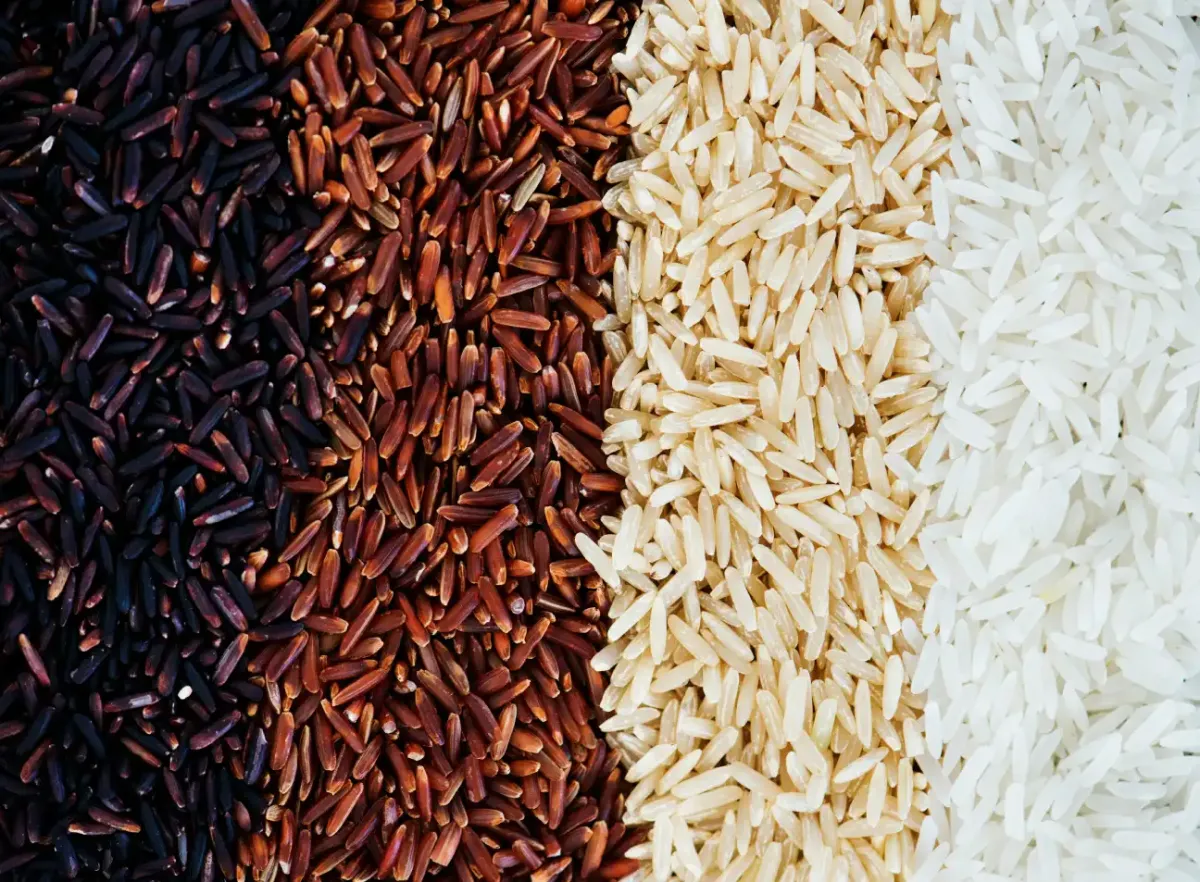
Black rice (also called forbidden rice or purple rice) retains its dark bran layer, which is rich in anthocyanins; the same antioxidant compounds found in blueberries. Primarily sourced from China, Indonesia, and Thailand. Why is black rice called forbidden rice? Historically, it was reserved for Chinese royalty. Today, it’s priced at roughly €2-5/kg. You can view black rice in bulk listings on Nutrada.
Red rice varieties include Camargue red rice (France), Bhutanese red rice, and Thai red cargo rice. The bran layer provides a nutty flavor and chewy texture. Red rice is increasingly used in ready meals and grain bowls.
For a deeper comparison of the nutritional profiles, pricing dynamics, and manufacturing considerations of these specialty varieties, see our black rice vs brown rice vs red rice comparison guide.
Wild rice (Zizania palustris) is technically not rice but an aquatic grass. Harvested primarily in the Great Lakes region of North America and in Canada, wild rice has a distinctive nutty flavor and firm texture. Pricing is high (€6-15/kg) due to limited cultivation and partial wild-harvest supply. Check out wild rice suppliers on Nutrada.
Rice quality parameters vary by type, but several specifications are universal.
Broken percentage is the primary grade determinant. Premium grades contain less than 5% broken grains. Standard grades allow 15-25%. Broken rice is traded separately at substantial discounts. If you’re making rice flour or rice starch, sourcing 100% broken rice is significantly more cost-effective.
Moisture content should be below 14% for white rice and below 13% for brown rice. Brown rice has a shorter shelf life due to the oil-containing bran layer, which can go rancid.
Milling degree for white rice indicates how much bran has been removed. Well-milled rice is whiter and stores longer. Under-milled rice retains a yellowish tint and has inferior shelf stability.
Pesticide residues and contaminants deserve attention, particularly arsenic levels in rice. Paddy rice absorbs arsenic from soil and water more readily than most crops. EU Regulation 2023/915 sets maximum arsenic levels for rice. Always request a comprehensive Certificate of Analysis covering heavy metals and pesticide residue panels. Suppliers with food safety certifications like BRC or IFS provide greater assurance.
The ten most commercially significant rice types are: basmati, jasmine, standard long-grain white, parboiled, arborio, carnaroli, sushi (Japonica), brown rice, black rice, and wild rice. Each differs in grain length, starch composition, aroma, and price. Selecting the right type depends on your specific food manufacturing application. All available rice types and derivatives can be found on our rice wholesale category page.
It depends entirely on the application, there's no single answer. Basmati is the standard for fluffy, separate grains in pilaf-style dishes. Arborio and carnaroli exist specifically for risotto. Parboiled rice is the go-to for ready meals and industrial processing because it holds shape through reheating cycles. For cost-sensitive manufacturing where aroma doesn't matter, standard long-grain white rice delivers the best price-to-performance ratio.
Basmati is often called the “king of rice” due to its exceptional grain elongation, aroma, and premium positioning. Within basmati, the 1121 variety holds the longest post-cook grain length, while traditional Basmati 370 is considered the original premium cultivar. Indian PB 1121 is the most widely exported grade.
Jasmine rice comes in both white and brown versions. White jasmine is milled with the bran removed. In B2B trade, 'jasmine rice' means white unless you specify otherwise.
Japanese rice (Japonica) is a short-grain variety with high amylopectin starch content, giving it a sticky, slightly sweet character when cooked. Standard “normal” rice in Western markets is typically long-grain Indica, which cooks dry and fluffy. Japanese rice is graded differently. Premium cultivars like Koshihikari are assessed on appearance, taste, aroma, and stickiness.

Find the right supplier for your food ingredients in under a minute with Nutrada. Nutrada - Sourcing made easy.