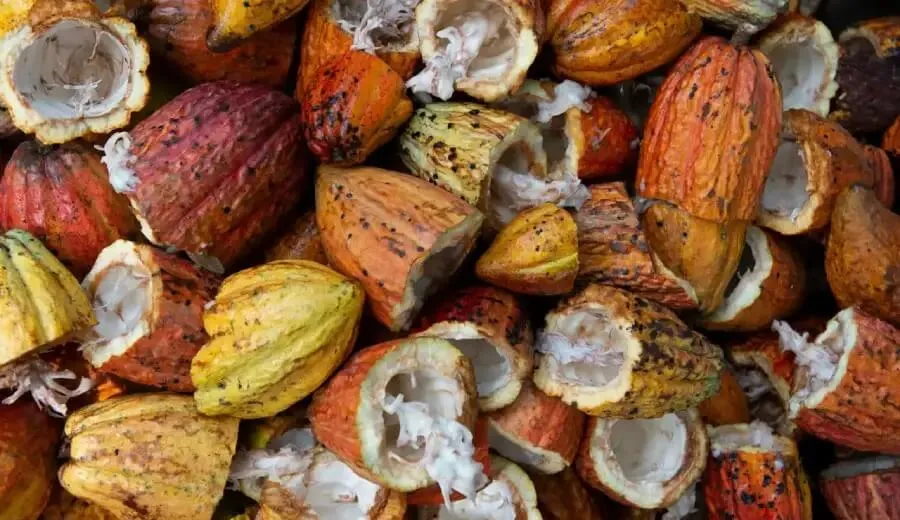
Verifying cadmium levels is the primary challenge when sourcing cacao in bulk, especially from Latin American origins where volcanic soils contain higher natural concentrations. Nutrada lists GFSI-certified cacao suppliers covering beans, powder, butter, liquor, nibs, and carob from West Africa, South America, and Southeast Asia.
| Value | Description |
| Product types | Cacao beans, cacao butter, cacao liquor, cacao nibs, cacao powder (natural and alkalized), carob powder |
| Processing forms | Natural cocoa powder, alkalized cocoa powder, liquor (paste), butter (deodorized and non-deodorized), nibs (roasted and raw) |
| Applications | Chocolate manufacturing, bakery, confectionery, beverages, supplements, cosmetics |
| Certifications | GFSI (BRC, IFS, FSSC 22000), EU Organic, USDA NOP, Fairtrade, Rainforest Alliance, UTZ |
| Packaging | 20-25 kg bags (PE-lined), vacuum-sealed blocks, cartons, big bags, drums |
| MOQ range | 25 kg–25,000 kg depending on product type and supplier |
| Category | Cacao |
Cacao is a highly versatile ingredient, ideal for a range of applications in the food and beverage industry. Nutrada’s cacao category includes an extensive selection of cacao products, each backed by verified supplier profiles with comprehensive information:
Cacao powder has the highest cadmium levels because it contains more solid content.
Products available in bulk include cacao powder in alkalized or natural forms, cacao butter in chunks, wafers, or blocks, cacao liquor as paste or powder, and beans as whole or nibs.
Suppliers typically offer packaging in 20–25 kg bags, PE-lined cartons, or vacuum-sealed blocks. Buyers must confirm fat percentage specifications for powder (10-12% or 20-22%) before committing to orders.
EU Regulation 2023/915 sets maximum cadmium levels at 0.60 mg/kg for cocoa powder sold to final consumers, so B2B buyers sourcing for EU markets should request laboratory analysis confirming cadmium content in beans.
The largest organic cocoa bean suppliers to the EU in 2020 were the Dominican Republic, Sierra Leone and Peru. The Dominican Republic supplied 28,000 tonnes of organic cocoa beans to the EU in 2020, representing 79% of the country's total EU exports.
EU Organic certification requires 95% organic content, full supply chain traceability, and certification by authorized control bodies in each EU country.
Retail-ready cacao products are packaged in pouches, jars, tins, sachets, and stick packs for consumer-facing brands. Powder for drinking chocolate is supplied in retail tubs or resealable bags.
Suppliers provide private label services for cacao powder, nibs, butter, or blends with support for regulatory labeling, origin claims, barcoding, and organic or conventional lines with low MOQs for new product development. The buyer must confirm alkalization level, fat content, and microbial specifications before production starts.
Cacao processors are based in West Africa, Latin America, Southeast Asia, and Europe, with procurement decisions driven by origin-specific cadmium risk profiles.
Cadmium is naturally occurring in soils, with Latin American countries showing higher levels due to volcanic activity, forest fires, and environmental factors. Request certificates of analysis, GFSI certification, and EU deforestation regulation (EUDR) compliance documentation from suppliers.
Nutrada lists GFSI-certified cacao suppliers covering natural and alkalized powder, butter, liquor, and beans across conventional and organic supply. All orders are placed directly with certified suppliers, with no intermediary.
Further reading:
Last updated: Apr 6, 2026

Find the right supplier for your food ingredients in under a minute with Nutrada. Nutrada - Sourcing made easy.