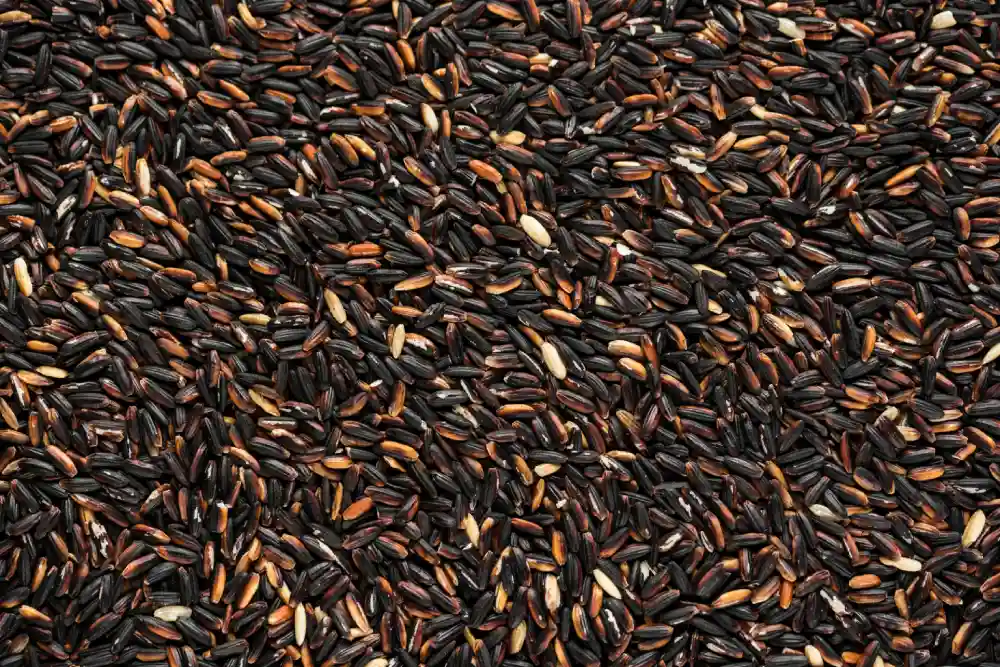
Asian countries account for the majority of European black rice supply. Find GFSI-certified wholesale black rice suppliers from both origins on Nutrada, filterable by anthocyanin content and MOQ. Black rice suppliers listed on the platform offer whole grain, flour, and puffed forms for health food manufacturers requiring premium antioxidant-rich grains.
| Field | Detail |
| Botanical name | Oryza sativa |
| Available forms | Whole grain, flour, puffed |
| Origins | China, Italy, Indonesia, Thailand, USA |
| Certifications | GFSI schemes, EU Organic, USDA NOP, Non-GMO, gluten-free |
| Common applications | Health food products, ready meals, natural food colouring, cosmetics |
| Packaging | 10-25 kg bags |
| MOQ | 25kg |
| Category | Rice Wholesale |
| Form/Grade | What it means for procurement | Typical application |
| Whole grain non-glutinous | Standard unpolished grain, 30-35 minute cooking time | Health food products, rice bowls, ready meals |
| Glutinous (sticky) | Higher starch content, becomes sticky when cooked | Asian desserts, puddings, traditional preparations |
| Black rice flour | Milled into flour form, gluten-free | Bakery products, gluten-free formulations |
| Puffed black rice | Heat-expanded grains, ready-to-eat texture | Breakfast cereals, snack bars, confectionery |
| Semi-polished | Partially milled to reduce cooking time while retaining colour | Quick-cooking products, convenience foods |
Chinese Forbidden Rice is the most traded variety globally, while Thai black glutinous rice serves the sticky rice market segment.
Black rice originates from Asian regions including India, China, and Thailand, where it has been cultivated for centuries, and most commercial supply still moves through these origins, making origin traceability a key question at the specification stage.
Italy produces Venere black rice in the Po Valley region around Vercelli and Novara, where controlled irrigation systems and IGP certification infrastructure support premium European positioning.
Thailand specializes in glutinous black rice varieties with harvest windows from November to January, while Indonesian production focuses on medium-grain types with higher protein content than Chinese varieties. California grows Black Japonica as a specialty crop, blending japonica and indica genetics for the North American health food market.
Buyers sourcing pigmented whole grains typically evaluate red rice alongside black rice, as the two share a similar functional food positioning but differ in anthocyanin profile and colour output. Those building out a broader whole grain range often add brown rice to the same shortlist, though the procurement criteria diverge significantly once processing format and end application are confirmed.
Black rice absorbs moisture more readily than white rice due to its intact bran layer, requiring storage below 15 degrees Celsius and maximum 14% moisture content to prevent rancidity. Standard packaging uses 10-25 kg polypropylene bags with moisture barrier linings to protect anthocyanin compounds from oxidation. Check the anthocyanin content on the CoA before ordering, as levels vary significantly between origins and can affect the final product's antioxidant claims. Shelf life ranges from 6-12 months under proper storage conditions, shorter than white rice due to oil content in the bran layer.
China and Italy both offer EU Organic certified black rice, with Italian Venere varieties typically carrying dual EU-USDA certification for export flexibility. Thai organic black glutinous rice suppliers maintain USDA NOP certification but face longer lead times due to smaller organic acreage compared to conventional production.
Consumer packaging includes 500g pouches, 1kg stand-up bags, and retail-ready cartons for health food positioning. MOQ for private label typically starts at 1000 units per SKU due to specialized packaging requirements for preserving colour stability. Confirm label claims for anthocyanin content with the supplier before production starts, as levels must match analytical testing for regulatory compliance.
Manufacturers concentrate in China's Heilongjiang province and Italy's Piedmont region, with both locations offering established quality control systems for anthocyanin testing and colour stability verification. Request batch-specific CoA showing anthocyanin levels, protein content, and microbiological parameters, plus moisture analysis to confirm storage requirements. Nutrada lists GFSI-certified black rice suppliers from China, Italy, and Southeast Asia, covering whole grain, flour, and puffed forms across conventional and organic supply. All orders are placed directly with certified suppliers, with no intermediary.
Further reading:
Last updated: Apr 6, 2026

Find the right supplier for your food ingredients in under a minute with Nutrada. Nutrada - Sourcing made easy.