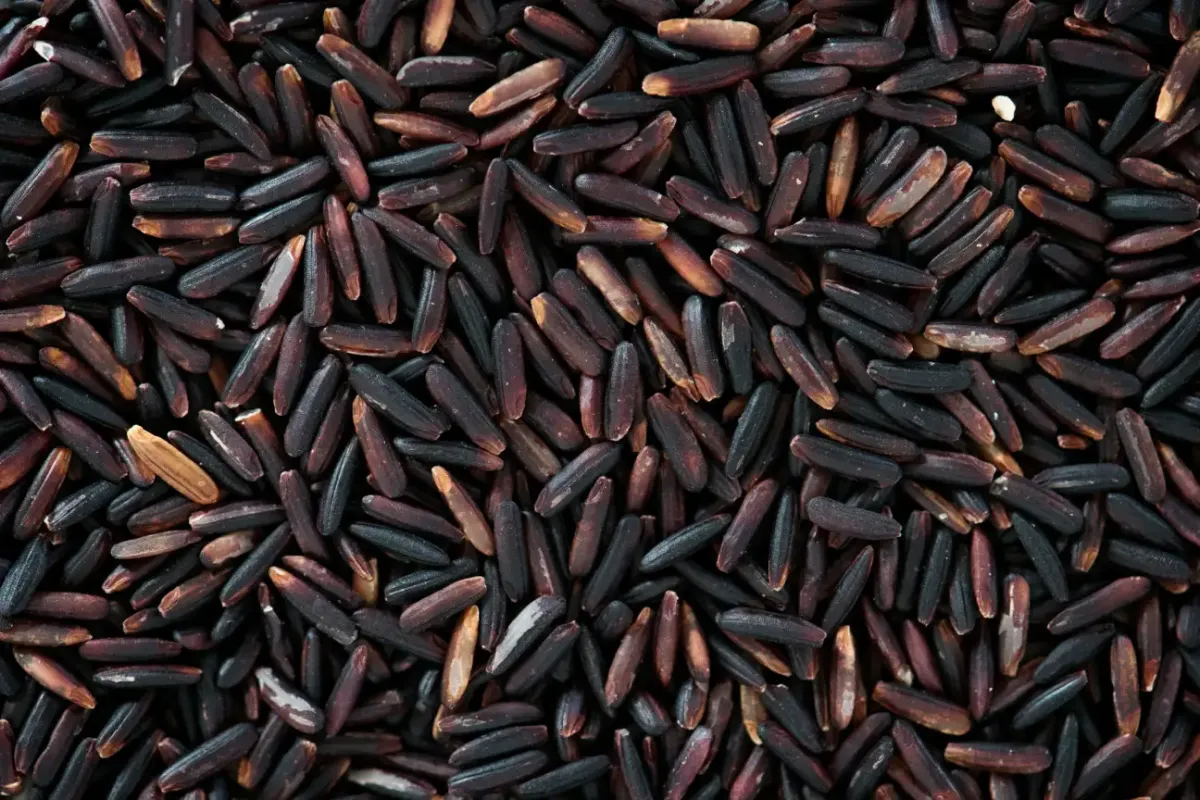
Black, brown, and red rice are whole-grain varieties that retain their bran layer, offering higher fiber, more micronutrients, and, distinct visual appeal compared to white rice. For food manufacturers targeting health-conscious consumers, these specialty rices provide differentiation. However, they differ significantly in pricing, shelf life, sensory profile, and supply chain availability.
In short:
All three are whole-grain rices, meaning they retain the bran, germ, and endosperm. This gives them higher fiber, protein, and micronutrient content compared to milled white rice. The differences between them are more nuanced.
| Parameter | Black Rice | Brown Rice | Red Rice | White Rice |
| Calories (per 100g dry) | 356 | 362 | 358 | 365 |
| Protein | 8.9g | 7.5g | 7.0g | 6.7g |
| Fiber | 4.9g | 3.4g | 3.3g | 0.4g |
| Iron | 1.8-2.4mg | 1.5mg | 1.2mg | 0.8mg |
| Anthocyanins | High (present) | None | None | None |
| Glycemic index | 42-45 | 50-55 | 48-52 | 70-80 |
| Shelf life | 6-8 months | 6-8 months | 6-8 months | 24+ months |
Black rice stands out for its anthocyanin content, the same class of antioxidant compounds found in blueberries, açaí, and purple sweet potatoes. This is a genuinely unique nutritional differentiator that can support marketing claims, provided they comply with EFSA nutrition claims regulations. Find black rice wholesalers on Nutrada.
Brown rice offers the most straightforward whole-grain proposition: widely available, well understood by consumers, and supported by established supply chains. It’s the safe choice for health-positioned products. Brown rice in bulk is available from multiple certified origins on Nutrada.
Red rice provides visual and flavor differentiation. Camargue red rice from southern France carries a premium origin story for European products. Thai red cargo rice and Bhutanese red rice offer different flavor profiles at lower prices. Red rice wholesale supply is more limited than brown rice, but growing.
For a broader overview covering all commercial rice varieties, including basmati, jasmine, parboiled, and sushi rice, see our complete types of rice guide.
Beyond nutrition, procurement decisions should factor in these practical realities:
Pricing: Black rice costs €2-5/kg wholesale, compared to €0.50-1.50/kg for brown rice and €1.50-3.50/kg for red rice. This 3-5x premium limits black rice to products where the visual impact and nutritional story justify the ingredient cost.
Shelf life: All three share the 6-8 month shelf life limitation inherent to whole-grain rice. The bran layer contains oils that oxidize over time, leading to rancid off-flavors. This is shorter than the 24+ month shelf life of white rice and requires tighter inventory management. From a practical standpoint, we recommend ordering whole-grain rice in quantities you can use within 4-5 months to build in a safety margin.
Cooking behavior: Brown rice takes 35-45 minutes to cook (vs 15-20 for white). Black rice takes 30-35 minutes. Red rice takes 25-35 minutes depending on the variety. For ready-meal manufacturers, longer cook times increase energy costs and production cycle times. Parboiled brown rice is an alternative that reduces cooking time while retaining most nutritional benefits.
Color bleeding: Black rice releases anthocyanin pigment during cooking, turning cooking water and any adjacent ingredients purple-blue. This is a feature in some products (purple porridge, colored rice bowls) and a problem in others (mixed-grain products where color uniformity matters). Red rice can also bleed color, though less intensely.
Practical tip from our experience: If you're developing a multi-grain product that includes black rice, request a small sample batch first and test the cooking process in your facility. The degree of color transfer varies significantly between suppliers and even between harvests from the same origin. We've had buyers reject shipments because the black rice turned everything purple, and others specifically request high-anthocyanin batches for that exact reason.
Supply stability: Brown rice has the most diverse and stable supply chain, available from virtually every rice-producing country. Black rice supply is concentrated in China, Indonesia, and Thailand. Red rice supply depends on the variety: Camargue production is limited by geography, while Asian red rice varieties are more broadly available.
For all specialty rice procurement, check availability and pricing on the rice wholesale category page.
On paper, yes. Black rice has more protein (8.9g vs 7.5g per 100g), more fiber, a lower glycemic index, and anthocyanin antioxidants that brown rice lacks entirely. But brown rice costs a fraction of the price and is far easier to source. Both are significantly healthier than white rice.
The name originates from ancient China, where black rice was reportedly reserved for the emperor and nobility, commoners were forbidden from eating it. Today, the name persists as marketing heritage. Black rice is widely cultivated in China, Indonesia, Thailand, and increasingly in Italy, making it commercially accessible despite its premium positioning.
Yes, but the color transfer is significant, black rice will turn everything purple-blue during cooking. This is unavoidable when cooking together. Manufacturers handle this in two ways: either they market the color transfer as a feature or they cook and package each variety separately, combining them post-cooking. For frozen ready meals, separate cooking is standard practice.
All three whole-grain rices (black, brown, red) share a 6-8 month shelf life due to bran-layer oxidation. Parboiled brown rice offers a partial solution, the parboiling process stabilizes bran oils, extending shelf life to 12-18 months while retaining most nutritional benefits. Vacuum packaging or nitrogen-flushed packaging can also extend shelf life.


Find the right supplier for your food ingredients in under a minute with Nutrada. Nutrada - Sourcing made easy.