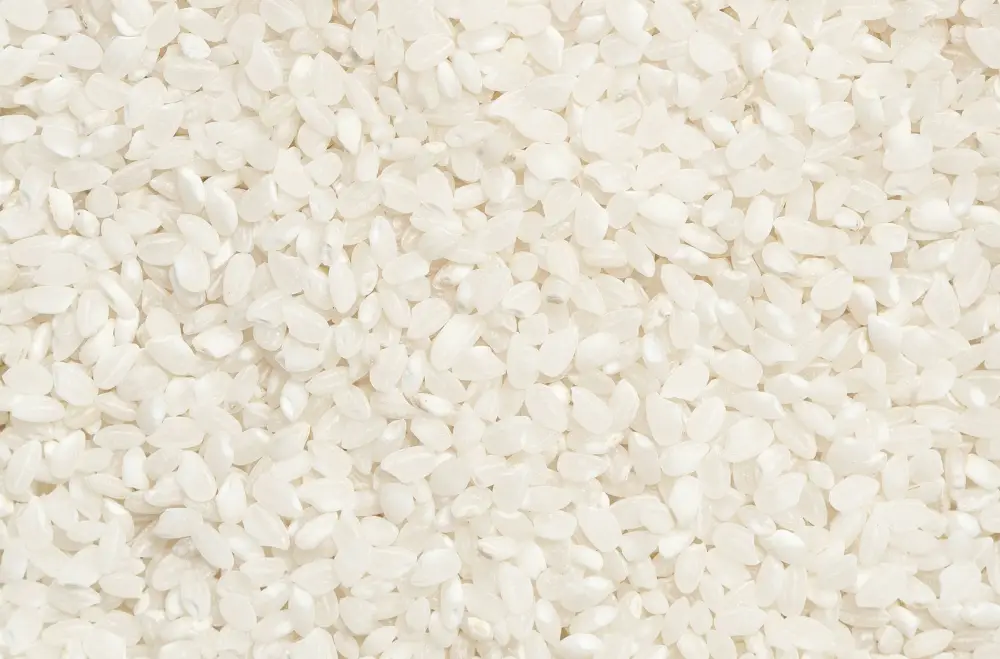
Risotto rice is a category of Italian medium-grain varieties characterized by high amylopectin starch content, which creates the creamy texture essential to risotto. Three varieties dominate commercial trade: Arborio, Carnaroli, and Vialone Nano. Each produces a different balance of creaminess and grain integrity, and chefs, food manufacturers, and procurement teams have strong opinions about which is best.
How they compare:
| Parameter | Arborio | Carnaroli | Vialone Nano |
| Grain size | Large (7mm+) | Large (7mm+) | Medium-small (5.5-6mm) |
| Starch release | High | Medium-high | Medium |
| Al dente retention | Moderate - narrows quickly | Excellent - wide cooking window | Good |
| Creaminess | Very creamy | Creamy with structure | Creamy, absorbs flavor well |
| Cooking time | 16-18 minutes | 16-20 minutes | 14-16 minutes |
| Price tier | Standard | Premium (+15-30%) | Premium (+10-25%) |
| Availability | Widely available globally | Primarily from Italy | Primarily from Verona region |
| Best for | Consumer retail, meal kits | Foodservice, premium ready meals | Venetian-style risotto |
Arborio is the risotto rice most buyers know. Its large grains and high starch release produce the creamiest result, but Arborio has a narrow cooking window, it transitions from al dente to mushy within 1-2 minutes. For manual foodservice cooking, this is manageable. For automated food manufacturing where cooking time precision is harder to control, Arborio is riskier. Arborio rice in bulk is available from Italian and US origins.
Carnaroli is the professional’s choice. It releases enough starch for creaminess while maintaining a firm core that resists overcooking. This wider cooking window is its key advantage for food manufacturing, a 2-3 minute variation in cook time won’t ruin the product. Italian-origin Carnaroli costs 15-30% more than Arborio, but the yield improvement from reduced overcooking often offsets the premium. Buy Carnaroli rice in bulk on Nutrada.
Vialone Nano is the traditional rice for Veneto-style risotto (all’onda, more liquid than Milanese risotto). Its smaller grain absorbs broth and flavors more readily. Vialone Nano Veronese holds IGP status from the Ente Nazionale Risi, Italy’s rice regulatory body. Its limited production area makes it less suitable for large-volume manufacturing but excellent for premium product lines.
Short answer: no. Basmati rice is a high-amylose, long-grain variety that cooks dry and fluffy, the opposite of what risotto requires. Risotto depends on the gradual release of amylopectin starch from medium-grain rice to create its characteristic creaminess. Using basmati produces a pilaf, not a risotto.
For food manufacturers producing “risotto-style” products in non-Italian markets, there’s sometimes pressure to substitute cheaper rice. In our experience, any rice that doesn’t release sufficient starch will require starch additions (modified food starch, cream) to achieve risotto texture, which adds ingredient cost and complicates the label. Using the correct rice from the start is almost always cheaper than engineering around the wrong one.
Risotto rice in bulk can be found on Nutrada including all three major varieties from Italian and European origins.
For most food manufacturing applications (particularly ready meals, meal kits, and frozen risotto) Carnaroli is the recommended choice. Its resistance to overcooking, consistent starch release, and ability to maintain grain structure through reheating make it the most reliable variety for industrial production. The 15-30% price premium over Arborio is justified by lower production waste and superior end-product quality.
For consumer retail risotto rice (sold as a dry ingredient), Arborio remains the standard due to its name recognition and lower price point. Most consumers know “Arborio” as a synonym for risotto rice.
For premium or artisanal positioning, Vialone Nano IGP provides an origin story and protected designation that justifies premium retail pricing.
View all risotto varieties that are available in bulk on Nutrada on the rice wholesale category page.
Italian medium-grain varieties like Arborio, Carnaroli, or Vialone Nano are the only suitable options. Carnaroli is considered the premium choice because it releases starch for creaminess while maintaining al dente grain integrity. Arborio is more widely available and affordable. Long-grain rice like basmati or jasmine cannot produce risotto texture.
The three main risotto rice varieties are Arborio (the most common, with high starch release and a narrow cooking window), Carnaroli (the premium choice with the widest cooking window and best grain integrity), and Vialone Nano (a smaller grain from Verona with IGP protection, preferred for Venetian-style liquid risotto).
Carnaroli is superior for most applications due to its wider cooking window and better grain retention. Arborio transitions from al dente to overcooked in 1-2 minutes, while Carnaroli allows a 3-4 minute window. For food manufacturing, Carnaroli’s consistency reduces production waste. Arborio’s advantage is price (15-30% cheaper) and wider name recognition.
No. Basmati is a high-amylose grain that cooks dry and separate, the opposite of what risotto needs. Risotto depends on amylopectin starch release from medium-grain varieties to create creaminess. Using basmati means adding external starches to compensate, which costs more and complicates the label.


Find the right supplier for your food ingredients in under a minute with Nutrada. Nutrada - Sourcing made easy.