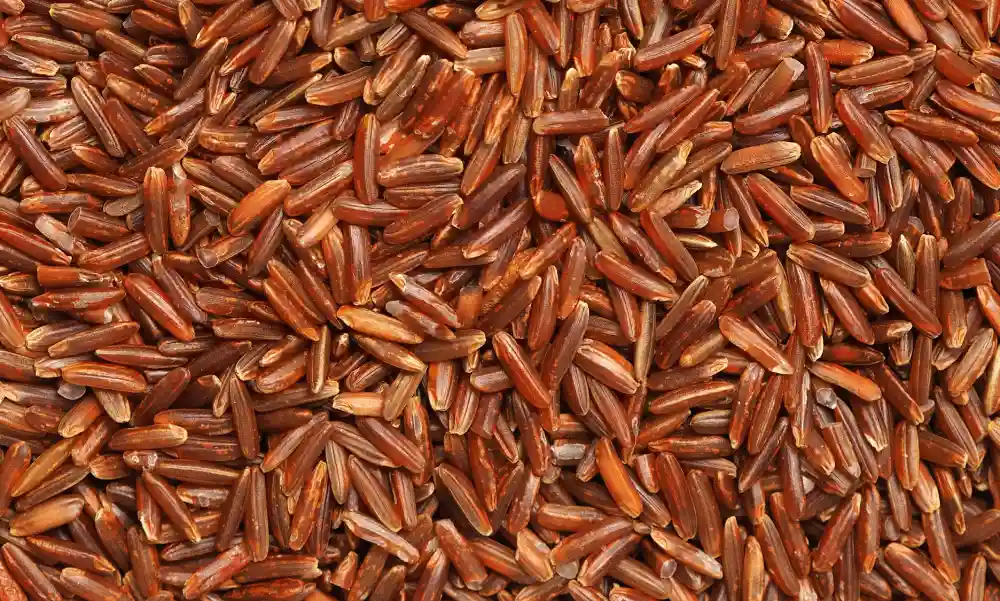
Find GFSI-certified red rice suppliers on Nutrada offering whole grain, flour, and puffed forms from Thailand, France, and Bhutan. Red rice suppliers on Nutrada provide conventional and organic options with verified certifications for procurement teams sourcing specialty grain ingredients wholesale.
| Field | Detail |
| Botanical name | Oryza sativa |
| Available forms | Whole grain (unpolished, partially milled), flour, puffed |
| Origins | Thailand, France (Camargue), Bhutan, India, USA (California), Sri Lanka |
| Certifications | GFSI schemes (BRCGS, IFS, FSSC 22000), EU Organic, USDA NOP, Camargue PGI |
| Common applications | Health food products, ready meals, salad bowls, rice blends |
| Packaging | 5-25 kg bags |
| MOQ | 25kg |
| Category | Rice Wholesale |
| Form/Grade | What it means for procurement | Typical application |
| Whole grain unpolished | Complete bran layer retained, maximum anthocyanin content, 30-40 minute cooking time | Health food positioning, premium rice blends |
| Partially milled | Some bran removed for faster cooking, reduced anthocyanin vs unpolished | Ready meals requiring shorter cooking times |
| Red rice flour | Ground whole grain, red pigment intact, gluten-free | Bakery applications, specialty flour blends |
| Puffed red rice | Heat-expanded grains, crunchy texture | Breakfast cereals, snack food ingredients |
Varieties differ significantly in texture and cooking requirements. Brown Rice offers similar nutritional positioning but without the anthocyanin content that gives red rice its market premium.
Thailand dominates red rice exports with Red Cargo Rice, harvested October-November with established supply chains to European markets. France produces Camargue Red Rice under PGI protection, limiting production to specific Rhône delta zones and commanding premium pricing. Bhutan specializes in high-altitude varieties that cook faster than Thai Red Cargo due to different starch structure. California produces Wehani and Red Japonica varieties primarily for North American markets, with harvest concentrated in September-October. Indian Himalayan regions grow traditional varieties but export infrastructure remains limited compared to Thailand's commercial scale operations.
Red rice requires storage below 15 degrees Celsius and maximum 14% moisture to prevent rancidity in the bran oils. Standard packaging uses 25kg woven polypropylene bags or 1000kg big bags for container shipments. Shelf life ranges from 6-12 months depending on storage conditions, significantly shorter than White Rice due to the retained bran layer. Request the latest harvest date and storage history from suppliers before committing to large orders.
Thailand and California hold both EU Organic and USDA NOP certifications for red rice production. Camargue producers in France focus primarily on EU Organic certification due to domestic market demand. Organic supply is more limited than conventional, with Thai suppliers typically requiring 6-8 week lead times for organic Red Cargo Rice compared to 2-3 weeks for conventional grades.
Consumer packaging formats include 500g stand-up pouches, 1kg retail bags, and 2kg family packs for health food positioning. Premium varieties like Camargue Red Rice often use clear windows to showcase the grain color. MOQ for private label typically starts at 500-1000kg depending on packaging complexity. Specify the variety clearly on pack design, Bhutanese Red Rice and Thai Red Cargo have different cooking instructions that affect consumer satisfaction.
Red rice manufacturers concentrate in Thailand's central plains, France's Camargue region, and California's Sacramento Valley, each offering different varieties suited to specific market positioning. Request batch-specific certificates of analysis covering moisture content, anthocyanin levels, and microbiological parameters from potential suppliers. Nutrada lists GFSI-certified red rice suppliers from Thailand, France, and Bhutan, covering whole grain and flour forms across conventional and organic supply. All orders are placed directly with certified suppliers, with no intermediary.
Further reading:
Last updated: Apr 6, 2026

Find the right supplier for your food ingredients in under a minute with Nutrada. Nutrada - Sourcing made easy.