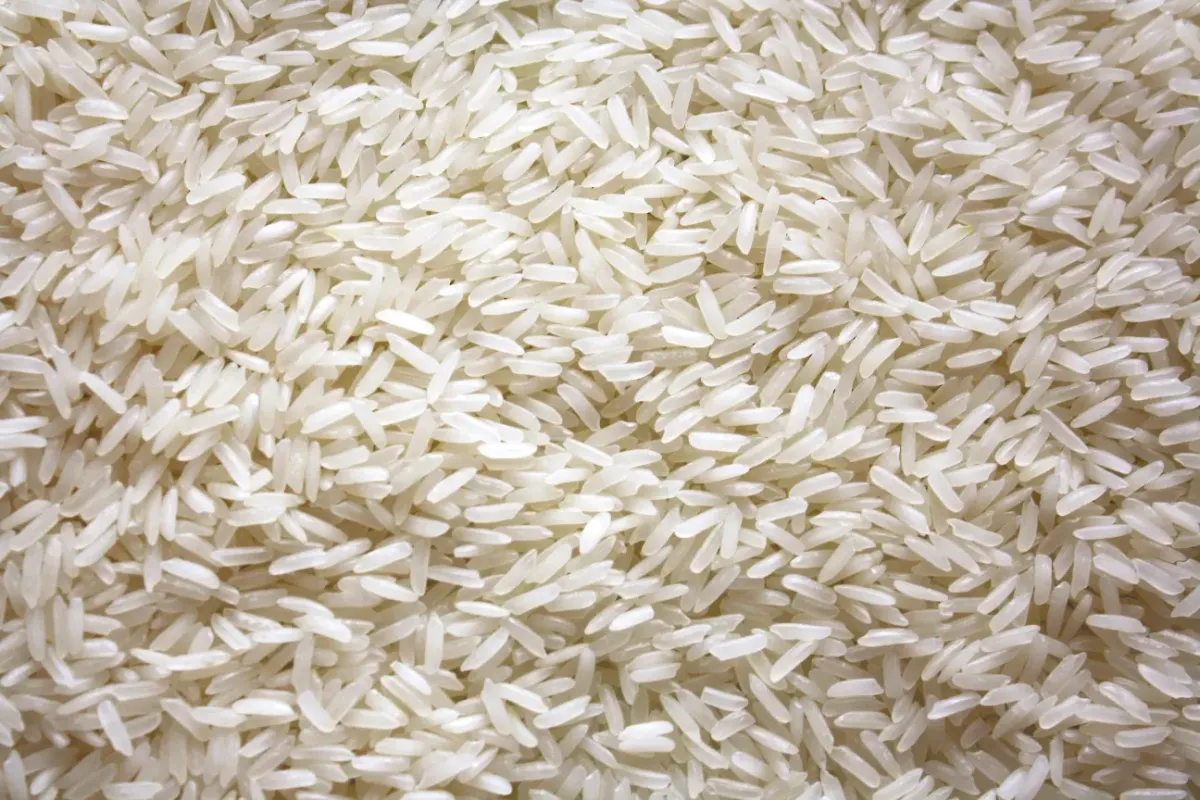
Basmati rice is a long-grain aromatic variety grown primarily in the Indo-Gangetic plains of India and Pakistan. The name derives from the Sanskrit word vasmati, meaning “fragrant.” Over 30 basmati cultivars exist, but five dominate international trade: 1121, 1509, Pusa Basmati, Traditional Basmati 370, and Super Kernel. Each variety differs in grain length, aroma intensity, elongation ratio, and price.
What matters for procurement:
1121 Basmati is the main choice of the global basmati trade. Developed in India, it offers the longest grain elongation of any commercial variety; cooked grains reach 20-22mm. This visual impact makes it the default choice for foodservice and retail brands where grain length is a selling point. Most European basmati rice wholesalers trade with 1121.
What is 1121 basmati? It’s a cultivar developed through selective breeding, registered in 2003, bred specifically for export. Its long grains and consistent cooking performance have made it the most commercially successful basmati variety, though traditionalists argue it sacrifices aroma for grain length.
1509 Basmati is the cost-effective alternative. It has shorter grains than 1121 but similar cooking properties. If your product doesn’t market grain length as a feature, 1509 delivers comparable quality at 15-25% lower cost. We’ve seen procurement teams switch from 1121 to 1509 for ready-meal applications without any consumer complaints.
Super Kernel is Pakistan’s premium export variety and the most direct competitor to Indian 1121. Pakistani basmati generally has a slightly different aroma profile. Some buyers prefer it, others don’t. The difference is subtle enough that blind tastings rarely yield consistent preferences.
This question comes up in every basmati procurement conversation, but it really depends on your requirements.
Indian basmati benefits from strict export standards enforced by APEDA. All Indian basmati exports must be registered and tested, providing baseline quality assurance. India offers a wider range of varieties (1121, 1509, Pusa, Traditional 370, Sugandha), giving buyers more options across price points. Indian suppliers typically offer CIF or CFR terms to European ports.
Pakistani basmati (primarily Super Kernel) is often priced 5-15% below equivalent Indian varieties. Quality is comparable for commercial applications, though availability can be less consistent. Pakistani exporters generally offer FOB Karachi, requiring the buyer to arrange freight. Thus, understanding Incoterms is essential when comparing Indian and Pakistani quotations.
For European food manufacturers, the practical differences come down to supplier reliability, certification availability, and total landed cost rather than inherent quality differences between origins. Both countries produce excellent basmati. Ensure your supplier holds valid food safety certifications recognized in Europe.
Aged basmati is stored for 12-24 months after harvest before sale. During aging, the rice loses residual moisture (dropping from ~13% to ~11%), starch granules harden, and aroma compounds concentrate. The result: aged basmati cooks fluffier, elongates more, and has a more pronounced aroma than freshly harvested rice.
Premium aged basmati has a 10-20% higher price over new-crop rice. For food manufacturers, aged basmati delivers more consistent cooking results, critical for automated production lines where uniform grain behavior reduces waste. However, for cost-sensitive applications like ready-meal rice portions, new-crop basmati performs adequately.
Basmati grading focuses on several measurable parameters:
Broken percentage: Premium grades contain 0-2% broken grains. Standard export grades allow up to 5%. Anything above 5% should be priced significantly lower. Always specify maximum broken percentage in your purchase contract.
Grain length: Specify minimum raw grain length (APEDA sets a minimum of 6.61mm for basmati classification). Post-cook length should be specified for applications where visual grain length matters.
Moisture: Maximum 13% for export. Aged rice naturally sits at 11-12%.
Chalky grains: Maximum 3-5% for premium grades. Chalky grains are opaque rather than translucent and indicate incomplete grain filling during growth.
Color and aroma: Subjective parameters that are harder to specify contractually. Request pre-shipment samples before committing to new suppliers. Photos and specifications alone don’t capture the full picture.
All grades and varieties that you can find on Nutrada are listed on the rice wholesale category page, including brown rice in bulk options for health-positioned product lines.
Neither is inherently better, they serve different applications. Basmati has a nutty aroma, cooks dry and fluffy, and elongates significantly (up to 2.5x). Jasmine rice is slightly sticky, has a floral aroma, and doesn’t elongate as much. For European ready meals, basmati is more common. For Asian cuisine products, jasmine is the standard.
Over 30 basmati cultivars are registered, but five dominate international trade: 1121, 1509, Pusa Basmati, Traditional 370 (India), and Super Kernel (Pakistan). 1121 accounts for the largest share of global basmati exports due to its exceptional grain elongation and consistent cooking performance.
Depends who you ask. Traditionalists say Basmati 370 for its superior aroma. The export market says 1121 as it dominates global trade due to its exceptional grain elongation. 1121 is the variety most European importers will encounter.
India and Pakistan both produce excellent basmati. India offers more variety selection (1121, 1509, Pusa, Traditional 370) and stricter export regulation through APEDA. Pakistan’s Super Kernel competes directly with Indian 1121 at slightly lower prices. For procurement purposes, total landed cost and supplier certification matter more than origin alone.


Find the right supplier for your food ingredients in under a minute with Nutrada. Nutrada - Sourcing made easy.