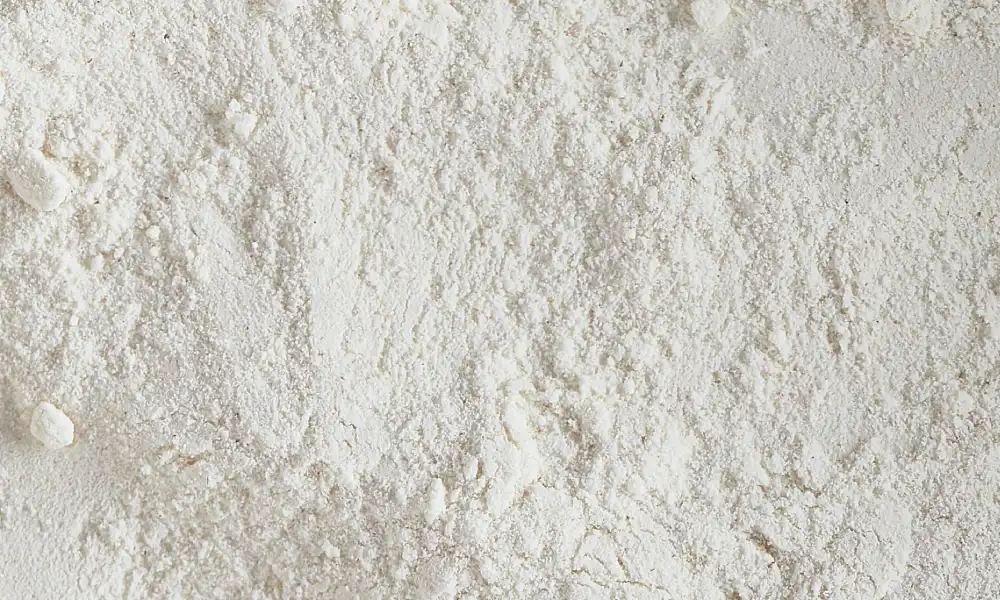
Rice flour is sourced in standard grind and superfine grind, two procurement decisions that require different supplier qualifications. Filter by particle size on Nutrada to find GFSI-certified suppliers and request bulk quotes. Rice flour suppliers on Nutrada offer white, brown, and glutinous rice flour from Thailand, China, and India, covering conventional and organic supply.
| Field | Detail |
| Available forms | Standard grind, superfine, glutinous, pre-gelatinised, organic |
| Origins | Thailand, China, India, Vietnam, USA, Japan |
| Certifications | GFSI, gluten-free, organic, non-GMO, kosher, halal |
| Common applications | Gluten-free baking, noodle production, tempura batter, thickener |
| Packaging | 20-25kg bags, big bags |
| MOQ | 25kg |
| Category | Rice Wholesale |
| Form/Grade | What it means for procurement | Typical application |
| White rice flour | Standard product, light texture, 5-7% protein | Gluten-free bread, cookies, general baking |
| Brown rice flour | Higher fibre content, 7-8% protein, shorter shelf life | Premium gluten-free products, health foods |
| Glutinous rice flour | Different starch profile, sticky texture when cooked | Mochi, Asian desserts, specialty confectionery |
| Superfine (<100 mesh) | Smooth particle size for batter consistency | Tempura coating, cake flour substitute |
| Pre-gelatinised | Instant solubility in cold water | Soup thickener, instant mixes |
| Toasted rice flour | Nutty flavour profile | Traditional Asian preparations |
Rice flour is milled from white or brown rice and serves two distinct buyer profiles with different specification requirements. In Asian food manufacturing, it is a primary input for rice noodles, tempura batter, and infant foods, where particle size consistency and damaged starch content are the critical processing variables that determine performance.
For European and North American buyers, the driver is the FDA's gluten-free standard, rice is a naturally gluten-free grain, making flour derived from it a compliant base ingredient for bakery and confectionery formulations targeting celiac and gluten-intolerant consumers.
Glutinous rice flour uses glutinous rice varieties with different starch properties than regular rice flour, these products are not interchangeable in recipes requiring specific texture outcomes.
Thailand, India, and Vietnam are the main export origins, supported by established milling infrastructure and direct access to raw paddy supply.
China supplies large-scale conventional production with standardised particle size grades across multiple provinces. India produces significant volumes for domestic and export markets, with organic certification infrastructure concentrated in Punjab and Haryana regions.
Buyers comparing processed rice ingredient formats for manufacturing applications often shortlist rice starch alongside flour when applications require a purer starch fraction, while those evaluating the broader range also consider rice flakes from the same supplier base.
Rice flour absorbs moisture rapidly and requires storage below 14% moisture content to prevent clumping and maintain flow characteristics. Standard packaging uses 20-25kg paper bags or big bags with moisture barrier liners for industrial buyers. Check the arsenic testing protocol with suppliers before ordering, EU Regulation 2023/915 sets specific limits for rice flour that differ from whole grain rice limits. Shelf life ranges from 6-12 months depending on storage conditions, with brown rice flour requiring faster turnover due to higher oil content.
Thailand and India hold both EU Organic and USDA NOP certifications for rice flour production. Chinese suppliers increasingly offer dual-certified organic rice flour, though supply depth varies by region. Organic glutinous rice flour has limited availability compared to conventional supply.
Consumer packaging includes 500g pouches, 1kg bags, and 5kg retail packs for gluten-free and specialty food channels. MOQ for private label typically requires higher minimums than bulk orders. Choose the mesh size specification before production starts, superfine creates smoother textures but requires different supplier milling capabilities.
Manufacturers concentrate in major rice-producing regions with established milling infrastructure, offering cost advantages through integrated supply chains. Request batch-specific CoA showing arsenic levels, moisture content, and gluten-free verification, cross-contamination testing is essential for gluten-free market positioning. Ask for particle size distribution data when sourcing for specific baking applications where texture consistency affects product performance. Nutrada lists GFSI-certified rice flour suppliers from Thailand, China, and India, covering standard grind through superfine grades across conventional and organic supply. All orders are placed directly with certified suppliers, with no intermediary.
Last updated: Apr 6, 2026

Find the right supplier for your food ingredients in under a minute with Nutrada. Nutrada - Sourcing made easy.