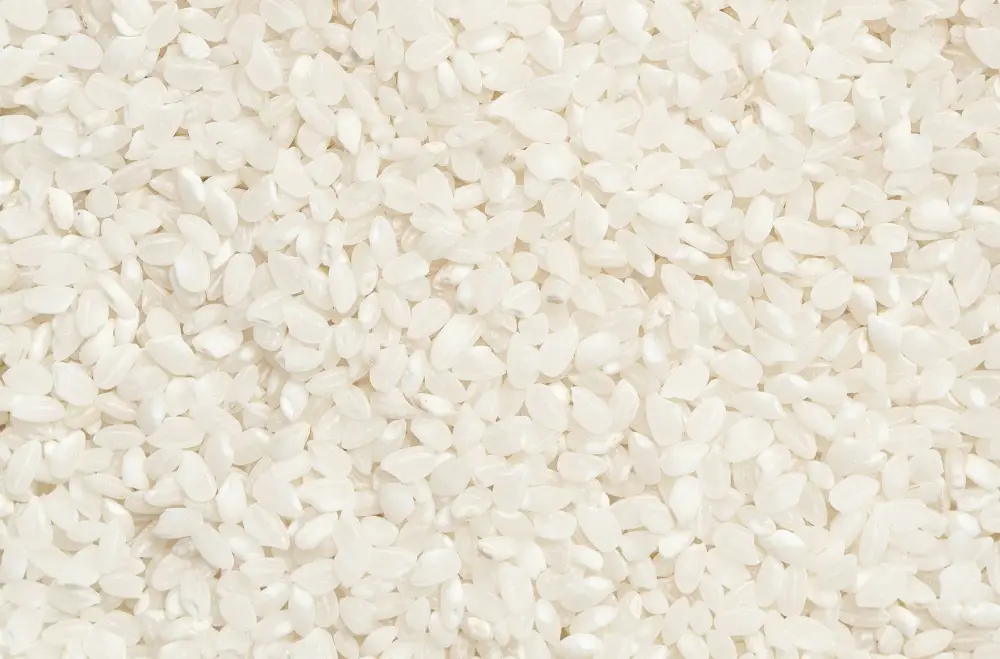
Find GFSI-certified risotto rice suppliers on Nutrada offering Arborio, Carnaroli, and Vialone Nano from Italy's Po Valley. Risotto rice suppliers on Nutrada provide Superfino and Fino grades with batch-specific CoA documentation for wholesale buyers.
| Field | Detail |
| Botanical name | Oryza sativa subsp. japonica |
| Available forms | White polished, semi-integral, aged |
| Origins | Italy (Po Valley), Spain (Valencia), USA (California), Argentina |
| Certifications | BRCGS, IFS, FSSC 22000, EU Organic, PGI/DOP |
| Common applications | Risotto, ready meals, arancini, rice pudding |
| Packaging | 1-25 kg bags, container loads |
| MOQ | 500 kg minimum |
| Category | Rice Wholesale |
| Form/Grade | What it means for procurement | Typical application |
| Superfino grade | Grain length >6.6mm, highest quality classification | Premium risotto, fine dining |
| Fino grade | Medium grain size, standard commercial grade | Ready meals, foodservice |
| Arborio | 19% amylose, most widely traded variety | Commercial risotto production |
| Carnaroli | 24% amylose, preferred by chefs for shape retention | Restaurant kitchens, premium products |
| Vialone Nano | PGI protected, traditional Veneto variety | Regional specialties, artisan products |
| Semi-integral | Partial bran removal, higher fiber | Health-focused product lines |
| Aged | 12+ months storage, improved cooking properties | Premium retail positioning |
Italy's Po Valley remains the benchmark origin for risotto rice, with harvest concentrated in September-October across Lombardy, Piedmont, and Veneto regions. Italian rice producers maintain strict classification systems under EU regulation, with PGI protection for specific varieties like Vialone Nano from Grumello. California produces Arborio for the North American market, offering cost advantages but requiring specification verification against Italian standards. Spanish Valencia region grows Bomba rice, a related Japonica variety suitable for paella but requiring different cooking protocols than traditional risotto varieties. Argentine production supplies regional markets with Arborio-type rice at lower price points.
Risotto rice requires moisture control below 14% to prevent mold development during extended storage periods. Standard packaging uses 25 kg woven polypropylene bags with moisture barrier linings for container shipments. Storage temperature should remain below 20°C with relative humidity under 65% to maintain an 18-month shelf life. Verify the amylose content with suppliers before ordering, as this determines starch release rate and final texture consistency in production.
Italian organic risotto rice holds both EU Organic and USDA NOP certifications, with Carnaroli and Arborio varieties readily available from Po Valley producers. California organic Arborio offers dual certification with shorter lead times for North American buyers. Spanish organic production remains limited to specialty varieties with premium positioning.
Private label options include 500g retail pouches, 1kg consumer boxes, and 5kg foodservice bags with custom branding capabilities. MOQ typically starts at 5,000 units for private label packaging. Buyers must specify the exact variety name on consumer packaging, as "risotto rice" alone does not meet EU labeling requirements for varietal identification.
European risotto rice manufacturers concentrate in Northern Italy's rice-growing regions, offering direct mill relationships and consistent quality control systems. Request grain size analysis, amylose testing, and microbiological reports for each batch. Professional chefs increasingly specify Carnaroli Rice over Arborio Rice for its superior cooking performance. Nutrada lists GFSI-certified risotto rice suppliers from Italy, Spain, and California, covering Superfino and Fino grades across conventional and organic supply. All orders are placed directly with certified suppliers, with no intermediary.
Further reading:
Last updated: Apr 6, 2026

Find the right supplier for your food ingredients in under a minute with Nutrada. Nutrada - Sourcing made easy.