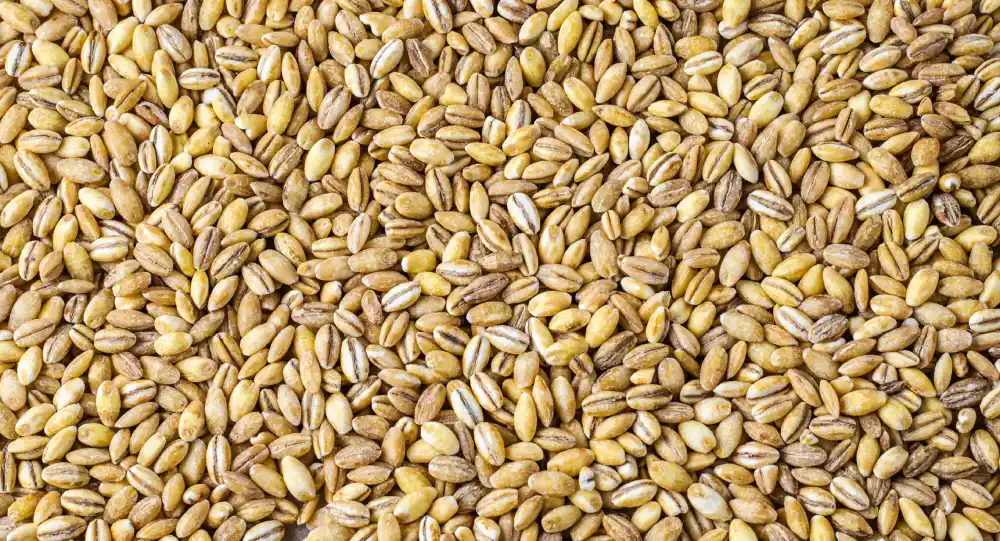
Find GFSI-certified wheat suppliers on Nutrada offering whole grain, milled flour, and specialty varieties from France, Germany, Poland, and Romania. Compare suppliers and request quotes directly.
| Value | Description |
| Botanical name | Triticum aestivum (common wheat), Triticum durum (durum wheat) |
| Available forms | Whole grain, milled flour, bran, germ, cracked wheat |
| Origins | France, Germany, Poland, Romania, Bulgaria, Ukraine, Spain, United Kingdom, Italy |
| Certifications | EU Organic, USDA Organic, Non-GMO, ISO, HACCP, FSSC, BRC, IFS |
| Common applications | Bread and bakery products, pasta manufacturing, breakfast cereals |
| Packaging | 25kg or 50kg PP bags, 1000kg big bags |
| MOQ | 25 kg - 25 MT |
| Category | Grains |
Wheat is traded based on protein content and intended use. Hard wheat contains 10-15% protein and produces high-gluten flour for bread and pasta. Soft wheat contains 8.5-10.5% protein and is used for pastries, biscuits, and crackers. Durum wheat is milled into semolina for pasta production. European wheat generally contains lower protein than North American wheat due to climate differences, which affects the suitability for specific applications.
| Form/Grade | What it means for procurement | Typical application |
| Durum | High protein (12-14%), amber kernel | Semolina for pasta manufacturing |
| Whole grain | Entire kernel including bran and germ | Whole grain flour, breakfast cereals |
For milling applications that require specific protein ranges, you may wish to consider spelt and rye as alternatives with different gluten structures.
France is the largest wheat exporter in the European Union, accounting for 33% of intra-EU wheat trade, followed by Romania at 20%. French wheat from northern growing regions typically delivers consistent protein content between 11-12% due to maritime climate conditions.
German wheat suppliers concentrate in North Rhine-Westphalia and Lower Saxony, with harvest timing from late June through August depending on variety.
Poland and Romania supply soft and hard wheat from continental climates, where wider temperature ranges during grain fill produce harder kernels with higher test weights.
Durum wheat is net imported into the EU primarily for Italian pasta manufacturing, with most EU durum grown in southern France, Spain, and Italy. Winter wheat planted in fall and harvested in early summer represents the majority of European production.
Wheat is hygroscopic and must be stored below 14% moisture to prevent mold growth and mycotoxin formation during transport and storage. Suppliers ship in 25kg or 50kg polypropylene bags for milling operations or 1000kg big bags for industrial buyers.
Buyers must verify falling number (enzyme activity indicator) and vomitoxin levels with each shipment. Falling numbers below 250 indicate sprouting damage, and vomitoxin above 2 ppm in grain renders the batch unsuitable for food use in EU markets.
France, Germany, and Italy hold the deepest supply of EU organic certified wheat, with French organic wheat available in both hard and soft grades. German organic wheat suppliers typically offer softer varieties suited to pastry and biscuit production. Dual EU Organic and USDA NOP certification is available from French and German suppliers serving both European and North American markets, though supply depth for dual-certified hard wheat is limited compared to conventional grades.
Wheat flour is packaged in retail formats including 500g to 2kg paper bags, 25kg institutional bags for bakeries, and sachets for single-use baking mixes. Whole grain wheat and cracked wheat are sold in stand-up pouches and jars for retail health food segments.
The MOQ for private label flour production starts at 500 - 1000 units depending on the miller. Buyers must specify desired protein range and ash content before production, as these determine milling extraction rate and final flour grade.
European wheat millers are concentrated in France, Germany, Poland, and the United Kingdom, with proximity to grain-growing regions reducing transport costs for buyers sourcing milled flour.
Request batch-specific falling number results, protein analysis, and mycotoxin screening (vomitoxin and aflatoxin) with each Certificate of Analysis.
Nutrada lists GFSI-certified wheat suppliers from France, Germany, Poland, and Romania, covering whole grain, flour, bran, and durum across conventional and organic supply. All orders are placed directly with certified suppliers, with no intermediary.
Further reading:
Last updated: Apr 29, 2026

Find the right supplier for your food ingredients in under a minute with Nutrada. Nutrada - Sourcing made easy.