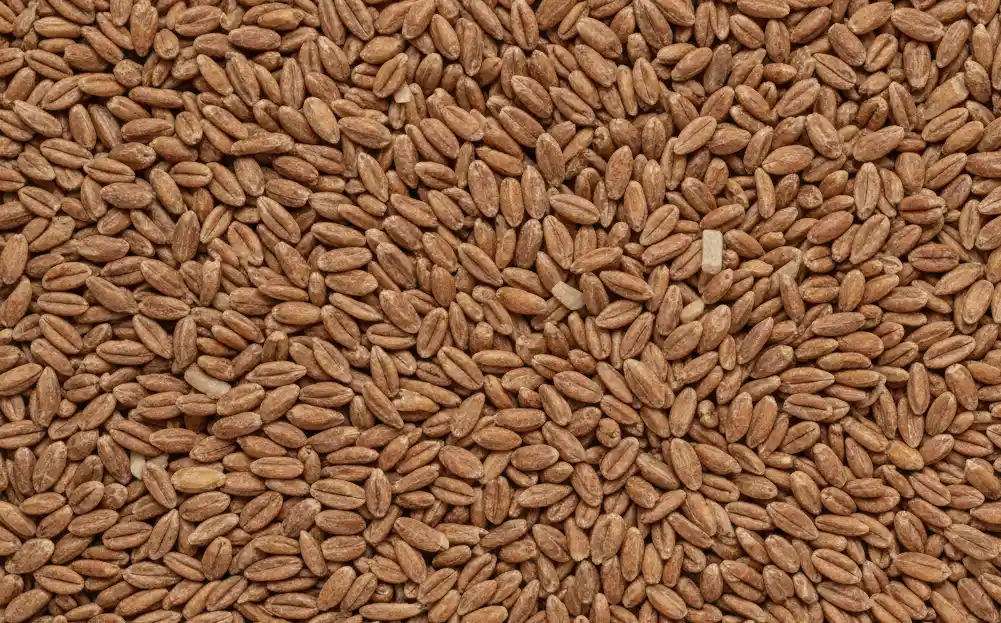
Food manufacturers sourcing rye for EU markets require allergen documentation as gluten-containing cereals fall under mandatory labelling rules. Nutrada lists GFSI-certified rye suppliers from Germany, Poland, and Scandinavia, filterable by form, quality, origin, and moq.
| Field | Detail |
| Botanical name | Secale cereale |
| Available forms | Whole grain, light flour, medium flour, dark flour, whole flour, flakes |
| Origins | Germany, Poland, Scandinavia, Russia |
| Certifications | GFSI, EU Organic, Kosher, Halal |
| Common applications | Rye bread, crispbread, pumpernickel, whisky production |
| Packaging | 25-50kg bags |
| MOQ | 25kg |
| Category | Grains Wholesale |
| Form/Grade | What it means for procurement | Typical application |
| Whole grain | Primary milling input, 18-24 months shelf life | Flour production, whisky distilling |
| Light rye flour | Low extraction rate, mild flavour profile | Commercial baking, light breads |
| Medium rye flour | Medium extraction, balanced flavour | Standard rye bread production |
| Dark rye flour | High extraction rate, strong flavour | Artisan breads, pumpernickel |
| Whole rye flour | Complete grain processing, high fibre | Health-focused baking applications |
| Rye flakes | Rolled groats for direct use | Muesli, breakfast cereals |
Germany and Poland together account for nearly three-quarters of EU rye production, with Germany harvesting 2.6 million tonnes in 2024 according to Eurostat, Germany's Brandenburg and Mecklenburg regions offering the most reliable EU regulatory documentation, while Poland provides significant export volumes with established GFSI certification infrastructure.
Sweden, Finland, and Denmark specialise in quality rye suited for crispbread manufacturing and traditional Nordic baking. Rye cultivation across all EU origins is concentrated in cooler temperate zones where ergot contamination monitoring under Regulation (EU) 2023/915 is well-established practice.
Baltic states and Belarus provide additional supply depth, with harvest windows from August to September across all origins.
Buyers sourcing rye for cereal applications often also evaluate oats within the grains category on Nutrada.
Rye requires storage below 14% moisture to prevent mould development and maintain falling number specifications. Whole grain ships in 25-50kg bags with 18-24 months shelf life under controlled conditions, while flour forms reduce to 12-18 months. Buyers must request ergot alkaloid testing on the Certificate of Analysis as rye is the primary cereal host for Claviceps purpurea contamination. EU Regulation 2021/1399 sets maximum ergot alkaloid limits at 500 µg/kg for unprocessed rye.
Germany and Poland maintain the deepest organic rye supply with dual EU Organic and USDA NOP certification available from established farms. Scandinavian origins offer organic supply for premium crispbread applications, though volumes remain limited compared to conventional production. Organic certification requires additional ergot monitoring as synthetic fungicide restrictions can increase contamination risk.
Consumer packaging includes flour bags from 500g to 2kg, rye flakes in resealable pouches, and crispbread base mixes for retail brands. MOQ for private label typically starts at 500kg per SKU with custom labelling requirements. Buyers must specify the extraction rate for flour products before production begins as this determines flavour intensity and nutritional labelling claims.
European rye processors concentrate in Germany and Poland where milling infrastructure handles both conventional and organic streams. Request ergot alkaloid analysis, falling number reports, and protein content verification as these specs vary significantly between harvest regions. Nutrada lists GFSI-certified rye suppliers from Germany, Poland, and Scandinavia, covering whole grain through finished flours across conventional and organic supply. All orders are placed directly with certified suppliers, with no intermediary.
Last updated: Apr 6, 2026

Find the right supplier for your food ingredients in under a minute with Nutrada. Nutrada - Sourcing made easy.