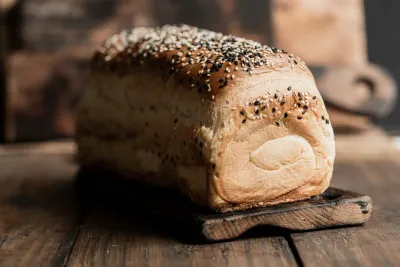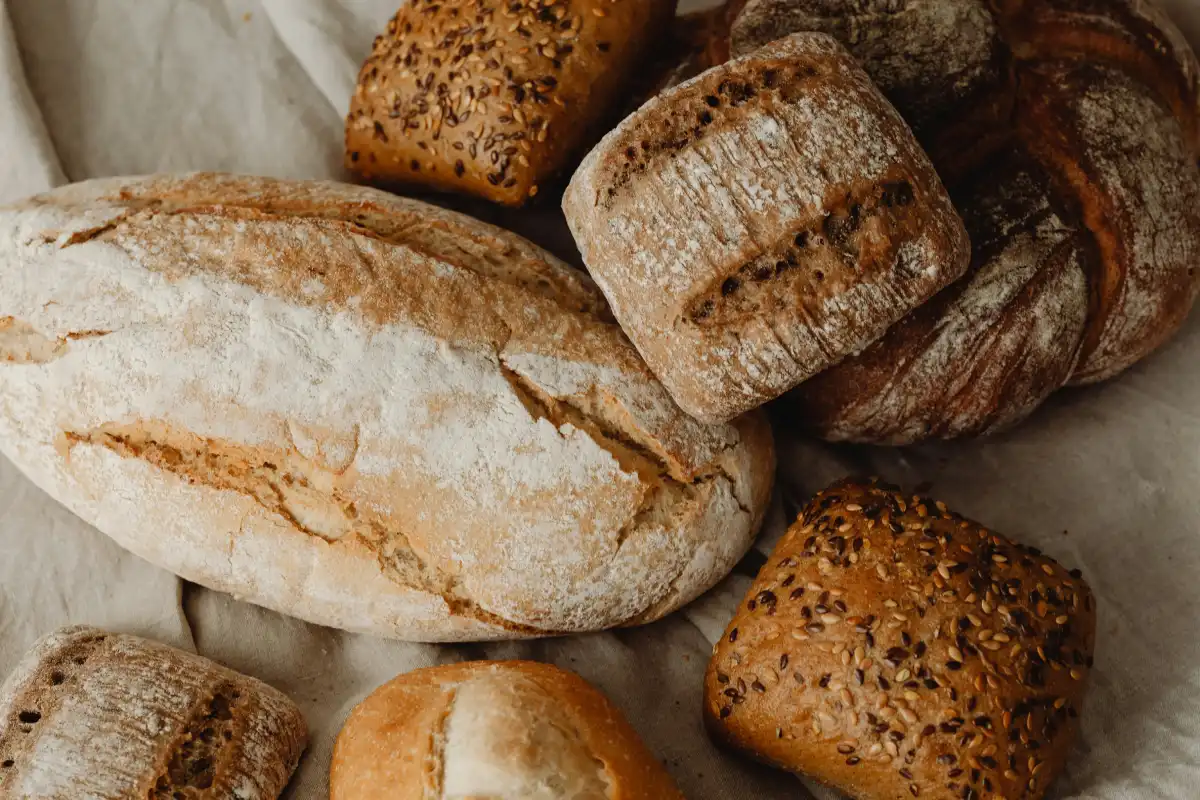
Spelt and wheat are different subspecies of the same hexaploid grass and share most of their genome. The procurement differences come from spelt being a hulled grain with a higher protein content, a different gliadin-to-glutenin ratio, and a production base that is overwhelmingly European and largely organic. Suppliers on Nutrada list GFSI-certified spelt and wheat across European origins, searchable by organic certification, processing form, and minimum order quantity.
In short:
Both belong to Triticum aestivum, the hexaploid bread wheat species. Spelt is classified as the subspecies spelta, and modern bread wheat is the subspecies aestivum. They share the same six chromosome pairs and a high percentage of homologous proteins. From a botanical perspective, spelt is a wheat, and the European seed authorities, EFSA, and the FDA all classify it that way.
The two diverged through different breeding paths. Bread wheat was selected for free-threshing grain, high yield, and dough strength under intensive cultivation. Spelt retained the older, hulled morphology and was largely displaced by bread wheat through the 19th and 20th centuries because of lower yield and the cost of the extra dehulling step. Spelt has returned to commercial European production primarily through organic and artisan bakery channels, where its lower input requirement and traditional positioning support a price premium.
Other ancient wheats (einkorn, Triticum monococcum; emmer, Triticum dicoccum; khorasan, Triticum turanicum) sit alongside spelt as hulled relatives but are different species. Buyers comparing ancient grains beyond spelt typically consider einkorn or emmer for true grain diversification rather than for the spelt-specific procurement profile.
In a controlled trial published in Cereal Chemistry (Wieser et al., 2023), eight varieties each of common wheat, spelt, einkorn, emmer, and durum wheat were grown under the same conditions in Seligenstadt, Germany, and analysed by quantitative protein composition. Median total protein content per 100g of flour was 10.9g in common wheat, 12.9g in spelt, 12.8g in einkorn, 11.7g in emmer, and 14.0g in durum wheat. Spelt and einkorn were significantly higher than common wheat; durum was higher again.
The composition of that protein matters more than the total. Median gliadin content was 4.7g in common wheat and 7.0g in spelt, a substantial difference. Glutenin content was similar (2.0g in common wheat versus 2.2g in spelt). The result is a much higher gliadin-to-glutenin ratio in spelt, which translates to weaker, more extensible dough with less elasticity and lower bread volume after baking.
Practical baking research confirms this. Spelt produces flatter loaves with smaller crumb structure than the same recipe baked with bread wheat. Mixing tolerance is shorter, water absorption is lower, and the dough handles differently on industrial bakery lines. For pure 100% spelt formulations, artisan handling and longer fermentation help compensate. For volume-driven sliced bread or rolls, most commercial bakeries blend spelt with bread wheat or use it as a flavour and label-claim component rather than the structural base.
The gluten functionality difference does not mean spelt is gluten-free. Spelt gluten triggers the same celiac immune response as bread wheat gluten, addressed in a section below. Buyers sourcing spelt for breadmaking should specify both protein content and the cultivar, as gluten quality varies measurably between spelt cultivars. The Belgian variety Cosmos and the Swiss variety Oberkulmer-Rotkorn behave differently in dough.
Spelt has tenacious glumes (the hull layer surrounding each kernel) and a brittle rachis. When the crop is harvested, the grain stays inside the hull rather than threshing free as bread wheat does. The hulled grain is called spelt in the husk or spelt with hull, and it cannot be milled directly into food-grade flour.
A dehulling step is required to separate the kernel from the husk. Two main mechanical methods are used: impact dehullers (where the grain is thrown at speed against an impact ring, breaking the husk) and friction dehullers (where the grain is rubbed between rotating surfaces or screens). Impact dehullers are more common in commercial European processing. Spelt is the easiest of the hulled wheats to dehull (emmer and einkorn are harder), but the process still represents a meaningful processing cost and a material loss of around 25-30% of the harvested weight as discarded husks.
From a procurement perspective, this matters in three ways. First, prices for dehulled spelt are higher than the equivalent farm-gate weight of bread wheat by a factor that includes both the dehulling cost and the lower yield per hectare. Second, the buying form matters: spelt traded "in the husk" trades at a different price than dehulled spelt or spelt flour. Third, purity specifications need to account for residual hull fragments, which can appear in poorly dehulled lots and are a quality issue for finished bakery applications.
Specify the form of spelt at order time: in the husk (raw harvested spelt, trades at the lowest price), dehulled whole grain, pearled (further surface abraded), or milled into flour. Each format has a different processing journey and a different price.
European production dominates the global spelt market. Germany is the largest producer, with the southwestern regions (Baden-Württemberg, Bavaria) and southern Switzerland, Austria, and parts of Belgium accounting for the historic spelt-growing area. Belgium has a particularly concentrated spelt sector, with the Cosmos cultivar dominating Belgian plantings and a meaningful share of Belgian spelt entering animal feed in addition to food channels. France has expanded spelt cultivation in the Rhône-Alpes and Provence regions, and Switzerland produces traditional Oberkulmer-Rotkorn alongside more modern cultivars.
A defining feature of European spelt is its alignment with organic and low-input farming systems. Spelt requires lower nitrogen fertilisation than bread wheat, the hull provides natural protection against some pests and diseases, and the crop is more tolerant of cold and altitude. These traits make it a credible candidate for organic conversion fields, marginal land, and rotation into systems that cannot sustain modern bread wheat varieties without high input use. A significant share of European spelt production carries EU organic certification.
Outside Europe, spelt production is small. The United States grows spelt primarily in Pennsylvania, Ohio, and parts of the Midwest, mostly for organic specialty markets. Canada has limited commercial volumes. There is no equivalent global trade flow comparable to bread wheat. EU buyers sourcing spelt should expect their supplier base to be regional European processors and farmer cooperatives, not international traders.
For buyers consolidating ancient grain procurement, spelt sits alongside einkorn and emmer in the European hulled-wheat category, with overlapping organic supplier networks across Germany, Belgium, and France.
| Specification | Spelt | Bread wheat |
| Botanical name | Triticum aestivum ssp. spelta | Triticum aestivum ssp. aestivum |
| Hulled or free-threshing | Hulled, requires dehulling | Free-threshing |
| Median total protein | ~12.9 g/100 g flour | ~10.9 g/100 g flour |
| Gliadin content | ~7.0 g/100 g flour | ~4.7 g/100 g flour |
| Glutenin content | ~2.2 g/100 g flour | ~2.0 g/100 g flour |
| Dough strength | Weaker, more extensible, lower bread volume | Stronger, more elastic, higher bread volume |
| Main origins | Germany, Belgium, Switzerland, Austria, France | Russia, EU-27, Ukraine, USA, Canada, Australia |
| Typical farming system | Organic and low-input common; lower nitrogen requirement | Conventional, high-input dominant |
| Yield per hectare | Lower; further reduced after dehulling | Higher under high-input cultivation |
| EU allergen status | Wheat (Annex II, Reg. 1169/2011) | Wheat (Annex II, Reg. 1169/2011) |
| Price tier | Premium; organic spelt particularly so | Commodity |
| Typical MOQ | 1-25 tonnes | 25 tonnes and up |
No. Spelt contains the same gluten proteins that trigger celiac disease and wheat allergy. This has been confirmed in peer-reviewed clinical literature, and the European regulatory position reflects it. Regulation (EU) No 1169/2011 Annex II classifies spelt under "Cereals containing gluten, namely: wheat (such as spelt and khorasan wheat), rye, barley, oats". Spelt must be declared in the ingredients list and emphasised through bold, italic, or contrasting font as a wheat-derived allergen.
In the United States, the FDA reached the same conclusion under the Food Allergen Labelling and Consumer Protection Act: spelt must be declared as wheat. There is no regulatory pathway in either jurisdiction for spelt to be sold as wheat-free or gluten-free for human food applications.
A common misconception in consumer-facing channels is that spelt is tolerated by people with wheat sensitivity who react to modern wheat. The clinical evidence does not support this. A 2022 randomised crossover trial in patients with suspected non-celiac wheat sensitivity found no difference in tolerance between bread made with spelt and bread made with common wheat. Buyers writing product label claims for spelt-based bakery, pasta, or cereal must treat spelt as a wheat-derived ingredient for allergen and gluten-free compliance purposes.
Where spelt has a legitimate marketing position is in ancient grain claims, organic positioning, and traditional or artisan bakery framing, all of which can be substantiated. "Wheat-free" or "low-gluten" claims cannot be substantiated.
Most commercial spelt, particularly in Belgium, Germany, and Switzerland, is positioned for the organic and natural-foods bakery channel. The premium is built up from several layered cost factors that compound through the supply chain.
First, organic certification under EU Regulation 2018/848 requires three years of conversion before a field qualifies, fertiliser inputs are restricted to non-synthetic sources, and pest and disease control depends on agronomic practice rather than synthetic pesticides. These constraints produce typically 20-30% lower yields than conventional production. Second, spelt yields are already lower than bread wheat under any system. Third, the dehulling step adds direct processing cost of roughly 5-15% of the dehulled grain price, depending on the operation. Fourth, the supply base is regionally concentrated and lacks the global trade arbitrage that compresses bread wheat prices.
The result is that organic dehulled spelt typically trades at a multiple of conventional bread wheat on a per-tonne basis. This is not a margin extracted from buyers but a reflection of the actual production economics. Buyers sourcing organic spelt should budget for these layered cost factors and verify organic certification documentation (EU Organic logo plus the body code, e.g. BE-BIO-01) at order time.
Specify the form first: in the husk, dehulled whole grain, dehulled pearled, dehulled flour, or other format. Each is a different product. The "spelt" label alone is ambiguous in international trade.
Specify the cultivar where breadmaking quality matters. Cosmos (Belgian) is widely available and yields well but produces softer dough; Oberkulmer-Rotkorn (Swiss) and Ostro are typical artisan cultivars with stronger gluten character. Modern cultivars like Badenkrone target higher yield and may behave differently in finished bakery products.
Verify protein content on the COA, ideally above 13% for breadmaking spelt. Verify moisture below 14.5% at delivery, falling number above 220 (lower numbers indicate sprout damage and poor breadmaking), and the absence of residual hull fragments.
For organic-certified lots, verify the certification body, the certificate validity dates, and that the product code matches the contracted cultivar and form. For non-organic spelt, pesticide residue documentation and mycotoxin testing (deoxynivalenol/DON, ochratoxin A, zearalenone) should accompany shipment, with limits referenced to Regulation (EC) No 1881/2006 contaminants framework.
Buyers building broader grains procurement positions across spelt, ancient wheats, and bread wheat can often consolidate inbound logistics from European mills, particularly when sourcing both organic and conventional volumes from the same region.
Not on a one-to-one basis without adjustment. Spelt absorbs less water than bread wheat, the dough is weaker, and proofing time differs. A direct substitution typically yields a flatter, denser loaf with smaller crumb structure. For commercial-scale bakery, blending spelt at 20-50% with bread wheat usually produces a workable result while preserving the flavour and label-claim advantages of spelt. For 100% spelt artisan bread, longer fermentation, lower hydration, and gentler handling are standard adjustments.
Yes, in controlled trials, but the difference is smaller than commonly claimed in marketing copy. Spelt averages around 12.9% protein versus 10.9% for common wheat under matched cultivation conditions. Both are influenced significantly by growing conditions, with conventional fertilisation pushing protein levels higher in both crops. Durum wheat, used for pasta, has higher protein than either bread wheat or spelt at around 14%.
Lower yield per hectare, the dehulling processing step, regional production concentration in higher-cost European countries, and the heavy weighting toward organic certification all compound. Spelt does not benefit from the global trade flows that keep bread wheat priced as a commodity. Expect spelt to trade at a multiple of bread wheat on a per-tonne basis, with organic spelt at the higher end of that range.
In the EU, you must declare spelt and emphasise it as a wheat allergen under Regulation 1169/2011. Acceptable forms include "spelt (wheat)" or "wheat (spelt)" or "spelt flour (wheat)". Declaring only "spelt" without referencing wheat is not compliant. The regulation requires the wheat reference because consumers with wheat allergy may not recognise spelt as a wheat product. The same logic applies to khorasan, kamut, and other ancient wheat species.
Farro is an Italian culinary term that covers three different hulled wheats: einkorn (farro piccolo), emmer (farro medio), and spelt (farro grande). When an Italian recipe specifies farro, the species depends on regional convention and supplier labelling. Outside Italy, farro most commonly refers to emmer. Buyers importing "farro" should confirm the actual species (Triticum monococcum, Triticum dicoccum, or Triticum spelta) on the supplier specification.


Find the right supplier for your food ingredients in under a minute with Nutrada. Nutrada - Sourcing made easy.