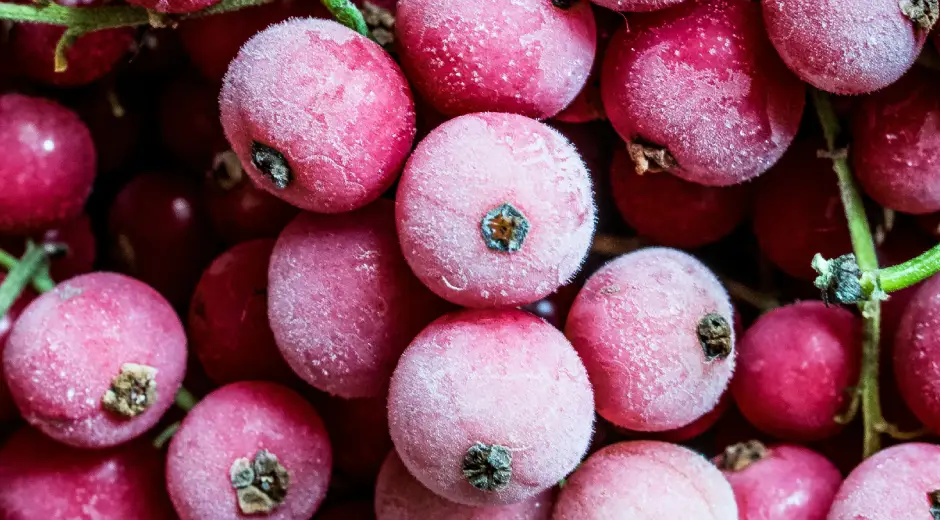
Poland, Germany, and the Netherlands dominate European frozen redcurrant supply, with harvest concentrated between June and August. Find GFSI-certified frozen redcurrants suppliers from these leading origins on Nutrada, filterable by processing method and MOQ.
| Value | Description |
| Botanical name | Ribes rubrum |
| Available forms | Whole berries, crumbles, puree |
| Origins | Poland, Germany, Netherlands, France |
| Certifications | EU Organic, GFSI (BRC, IFS), Kosher, Halal |
| Common applications | Jams, sauces, desserts, beverages, bakery |
| Packaging | 10-25kg cartons, IQF or block frozen |
| MOQ | 500-1000kg typical |
| Category | Frozen Fruits Wholesale |
| Form/Grade | What it means for procurement | Typical application |
| Whole berries IQF | Individual berries frozen separately, free-flowing | Retail packs, dessert garnish, mixed berry blends |
| Whole berries block frozen | Berries frozen together in solid blocks | Industrial jam production, puree processing |
| Crumbles | Broken berry pieces, various sizes | Baking inclusions, granola, cereal toppings |
| Puree | Smooth processed fruit, frozen or chilled | Beverage concentrates, sauce bases, confectionery |
Poland is the leading European producer of redcurrants and the dominant EU frozen redcurrant supplier, with production and IQF processing concentrated in the Lublin (Lubelskie) voivodeship in central-eastern Poland. Harvest runs from late June through July depending on variety and season.
Germany is one of the other primary European redcurrant producing countries; production is concentrated in the north and northwest, with harvest timing broadly similar to or slightly earlier than the Polish season given Germany's milder climate in the main growing areas. The Netherlands is both a significant redcurrant producer, and an advanced IQF processing hub supplying premium whole-berry formats; volumes are smaller than Eastern European origins but quality positioning for fresh-market and premium processing is strong.
Redcurrants oxidize rapidly once thawed, requiring immediate processing or consumption within 24 hours of defrosting. Standard packaging uses 10-25kg polyethylene-lined cartons with moisture barrier protection, palletized for cold chain efficiency. Storage at -18°C maintains quality for 18-24 months, though vitamin C content degrades 15-20% annually even under optimal conditions. Verify the freezing method with suppliers before ordering, IQF maintains individual berry integrity while block freezing reduces packaging costs but requires industrial thawing equipment.
Poland leads EU organic redcurrant certification with established grower networks in Lublin province holding dual EU Organic and USDA NOP status. German organic supply comes primarily from Bavaria and Baden-Württemberg, though volumes fluctuate significantly with weather conditions. Dutch organic redcurrants command premium pricing but offer consistent quality and processing standards suitable for high-end retail applications.
Consumer packaging includes 300g-1kg retail bags, 2.5kg HoReCa packs, and specialty mixed berry combinations with frozen blackcurrants or frozen raspberries. MOQs start at 2-5 tonnes for private label runs, higher than bulk due to packaging line changeover costs. Fix the berry size specification before production, whole berry grades require different sorting equipment than crumble applications.
European processors concentrate in Poland and Germany, where proximity to growing regions reduces cold chain costs and maintains berry quality through shorter transport times. Request batch-specific certificates of analysis covering microbiological parameters, pesticide residues, and Brix levels, redcurrant Brix varies 8-12% depending on harvest timing and variety selection.
Nutrada lists GFSI-certified frozen redcurrants suppliers from Poland, Germany, and the Netherlands, covering whole berries, crumbles, and puree across conventional and organic supply. All orders are placed directly with certified suppliers, with no intermediary.
Last updated: Apr 7, 2026

Find the right supplier for your food ingredients in under a minute with Nutrada. Nutrada - Sourcing made easy.