White and black chia seeds come from the same plant species (Salvia hispanica) and share a nearly identical nutritional profile. The color difference is genetic, not a quality indicator, but it affects pricing, availability, and visual suitability in food manufacturing applications. Nutrada lists GFSI-certified chia seed suppliers across South American origins, searchable by certification, color specification, and minimum order quantity.
In short:
The color of chia seeds is determined by a single gene. Black is the dominant trait; white is recessive. When a field of chia is harvested, roughly 92-95% of the seeds will be black or dark mottled, with 5-8% white seeds mixed in. Growers who want to produce a higher proportion of white seeds need to select and plant white-seeded stock exclusively, which requires careful segregation across growing seasons.
Brown seeds occasionally appear in harvests. These are a sign of immaturity, typically caused by insufficient sunlight, drought, or early frost. Brown seeds should be removed during cleaning because they have lower nutritional density and indicate the crop was harvested before full maturity. A high proportion of brown seeds in a delivered lot is a red flag.
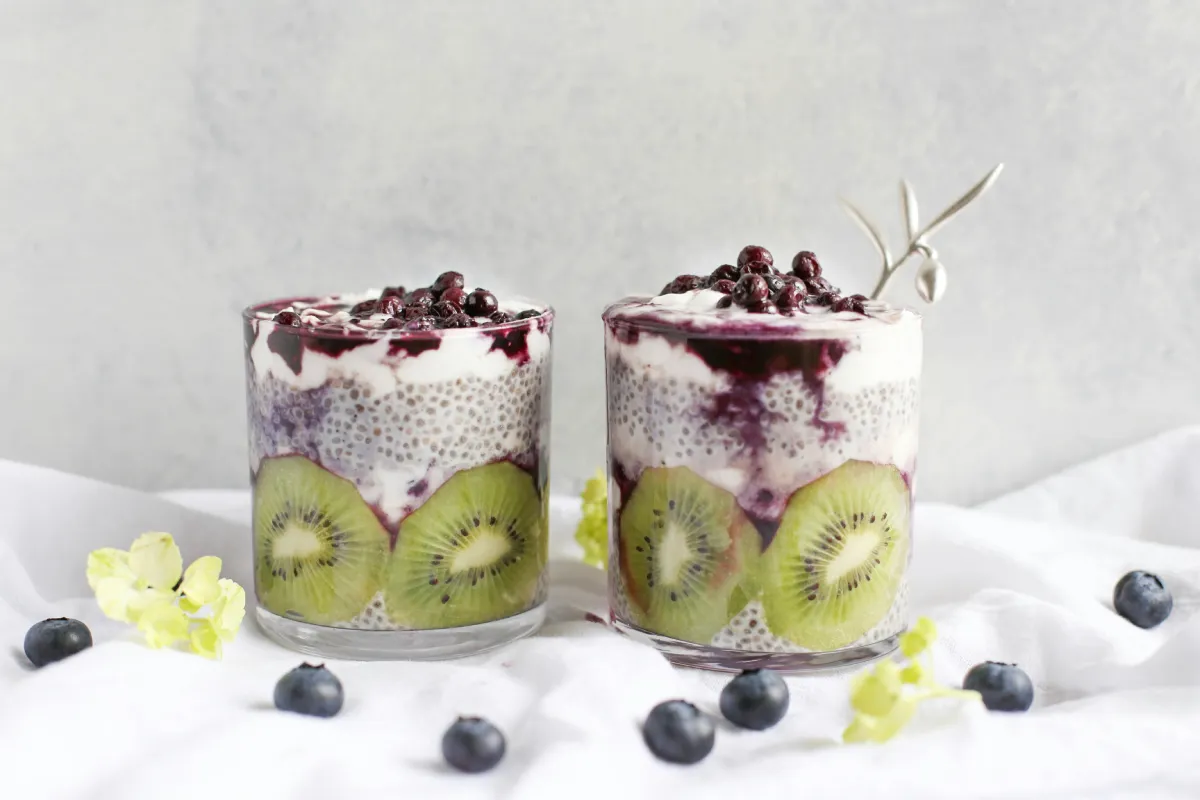
The visual difference matters in food manufacturing. White chia seeds blend into lighter products such as yoghurt toppings, smoothie bowls, light-colored baked goods, and protein bars where visible dark specks would be undesirable. Black chia seeds are the default for applications where color is neutral or where the seeds are not visible in the final product.
Both colors contain approximately 16-17% protein, 30-34% fat (predominantly alpha-linolenic acid, an omega-3 fatty acid), and 25-40% dietary fiber. Chia seeds are considered a complete protein source, containing all nine essential amino acids. Research analysing chia seeds from seven Latin American countries found that nutritional variation between growing regions was more significant than variation between seed colors.
| Specification | Black Chia Seeds | White Chia Seeds |
| Protein | 16-17 g per 100g | 16-17 g per 100g |
| Fat (total) | 30-34 g per 100g | 30-34 g per 100g |
| Omega-3 (ALA) | ~60% of total fat | ~60% of total fat |
| Dietary fiber | 25-40 g per 100g | 25-40 g per 100g |
| Antioxidants | Marginally higher anthocyanins | Marginally higher omega-3 in some studies |
| Seed size | Slightly smaller on average | Slightly larger on average |
| Color | Black, grey, dark mottled | White to beige |
Some studies suggest black seeds have marginally higher anthocyanin content due to the darker pigment, while white seeds may contain slightly more omega-3. In practice, these differences are too small to affect formulation decisions or nutritional labelling. Buyers should focus on origin, crop year, and supplier quality systems rather than color when evaluating nutritional specifications.
Paraguay dominates global chia production and export. In 2024, Paraguay exported nearly 70,000 tonnes, a 41% increase over the prior year. Bolivia ranks second with roughly 12,000 tonnes annually, followed by Argentina. Mexico, the ancestral origin of chia cultivation, still grows the crop but at lower commercial volumes compared to South American producers.
White chia seeds are commercially available from all major origins, but they are always a sorted fraction of a mixed harvest rather than a separate crop. Bolivia is often associated with white chia in trade because Bolivian exporters were among the first to sort and market white seeds as a distinct product line. Bolivia also benefits from stable harvest weather (less frost risk than Argentina), which helps maintain consistent seed quality.
Nutritional composition varies by origin. Peer-reviewed research analysing chia from Argentina, Bolivia, Chile, Ecuador, Mexico, Paraguay, and Peru found that protein content ranged from 21% (Ecuador) to 29% (Bolivia, dark seed), while lipid content was highest in Chilean and Paraguayan seeds. These origin differences are more meaningful for formulation than seed color differences.
Standard export specifications for food-grade chia seeds include moisture below 10% (ideally 7-8% for extended shelf life), purity above 99%, and the absence of brown or immature seeds. For EU-bound shipments, pesticide residue testing against Regulation (EC) No 396/2005 is mandatory. Salmonella and aflatoxin documentation should be requested as standard.
Key buyer specifications to define in purchase contracts:
Chia seeds absorb up to 12 times their weight in water, which makes moisture control critical during shipping and warehousing. Vacuum packaging or moisture-barrier bags are standard for shipments. Shelf life for properly stored chia seeds is 18-24 months.
White chia seeds are more expensive than black, typically 10-25% depending on origin, crop year, and order volume. The premium exists purely because of limited supply: only 5-8% of a natural harvest is white, and additional optical sorting is required to separate white seeds cleanly from black.
Organic-certified chia is more expensive than conventional, regardless of color. The organic premium is particularly relevant for buyers sourcing from Bolivia, where organic production infrastructure is more established than in Paraguay. Argentinian organic chia faces occasional quality risk from frost damage, which can reduce the proportion of mature seeds in a given lot.
Price volatility in chia is driven by weather events in South America (drought or frost during the growing season), currency movements in Paraguay and Argentina, and shifts in demand from major import markets (the EU, US, and increasingly China and Japan). Buyers sourcing both chia seeds and flax seeds can sometimes consolidate orders from the same South American suppliers to reduce logistics costs.
Chia seeds sold as organic in the EU must comply with Regulation (EU) 2018/848, which replaced the older equivalence system with a compliance-based framework as of January 2025. This change has significant implications for South American supply chains, particularly for Bolivian and Paraguayan smallholder cooperatives that previously certified under the equivalence regime.
Under the new regulation, producer groups must meet the EU definition of a "Group of Operators," with individual members farming a maximum of 5 hectares or generating less than €25,000 in turnover. Internal control systems (ICS) must be documented, and certification bodies must inspect at least 5% of group members (up from approximately 2% under the old rules). The transition has increased certification costs throughout the supply chain, which buyers should expect to see reflected in organic chia pricing from the 2025 crop onwards.
For buyers requiring organic certification, request the actual EU organic certificate (not just a claim), verify the certification body is recognised under the new compliance regime, and confirm the Certificate of Inspection (COI) is issued through TRACES for each shipment.
The decision between white and black chia seeds is an application decision, not a nutritional one. White seeds are preferred for products where visual appearance matters: light-colored smoothie bases, white bread inclusions, yoghurt toppings, light granola, and any product where dark specks would look out of place. Black seeds are the default for everything else because they cost less and supply is more reliable.
Some manufacturers use both. A cereal bar producer might specify white chia for the visible outer coating and black chia for the internal formulation where color is irrelevant. This approach captures the visual benefit of white seeds without paying the premium across the entire volume.
Buyers sourcing chia across the broader grains category should note that chia seeds are also available in processed forms including chia oil, chia protein powder, and milled (ground) chia. Ground chia eliminates the color question entirely since the resulting powder is uniformly light brown regardless of seed color.
No. Both colors come from the same plant species and have nearly identical nutritional profiles. Any marginal differences in antioxidant or omega-3 content fall within normal crop variation and do not justify a health-based preference. Choose based on application requirements and budget.
Supply is the sole reason. The white seed gene is recessive, so only 5-8% of a natural harvest is white. Optical sorting to separate white seeds from black adds a processing step and associated cost. The nutritional value does not justify the premium; the price difference reflects scarcity and sorting cost.
Yes. Functionally, they are interchangeable. Both absorb liquid at the same rate, gel identically, and deliver the same nutritional specification. The only consideration is visual. If your product requires a clean, light appearance, white chia is appropriate. If appearance is not a factor, black chia is the cost-effective choice.
For EU market access, look for BRC, IFS, or FSSC 22000 (all GFSI-benchmarked). Organic certification should be EU Organic (Regulation 2018/848) for the European market. Kosher and Halal certification are available from most established South American exporters. Always request actual certificate documents and verify the certification body is currently accredited.
Store in cool, dry conditions (below 20°C, relative humidity below 65%). Chia seeds are hydrophilic and will absorb ambient moisture rapidly, which accelerates oxidation and reduces shelf life. Vacuum-sealed or nitrogen-flushed packaging extends shelf life to 24 months. Once opened, bulk bags should be resealed and used within 6 months.
Further reading:


Find the right supplier for your food ingredients in under a minute with Nutrada. Nutrada - Sourcing made easy.