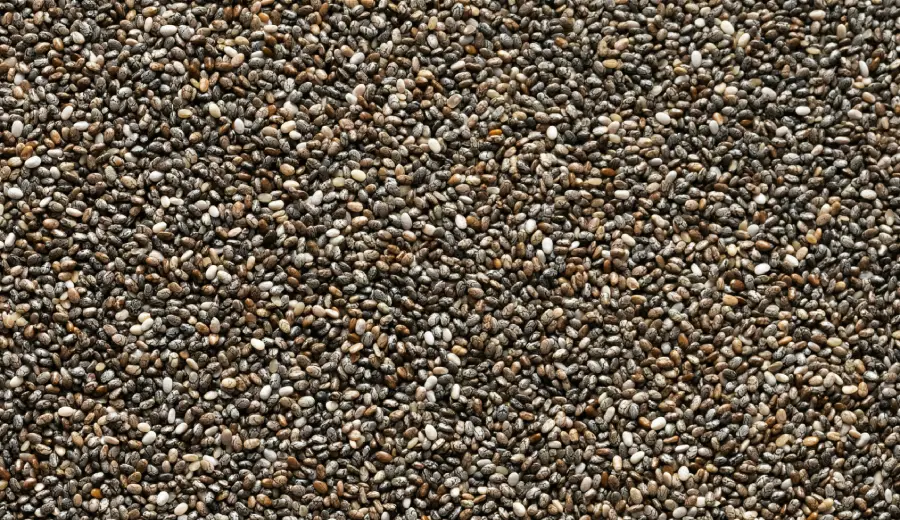
Find GFSI-certified chia seed suppliers on Nutrada offering black and white whole seed, ground chia, and organic-certified formats from Paraguay, Bolivia, and Argentina. Filter by color, origin, certification, and MOQ to compare suppliers and request bulk wholesale quotes directly.
| Botanical name | Salvia hispanica |
| Available forms | Whole, ground/milled, protein, oil |
| Colors | Black, White |
| Applications | Bakery, breakfast cereal, energy bars, beverage manufacturing, vegan baking, dietary supplements |
| Origins | Paraguay, Bolivia, Argentina, Mexico, Australia |
| Harvest season | August to October (South American origins) |
| Certifications | GFSI (BRC, IFS, FSSC 22000), EU Organic, USDA NOP, Halal, Kosher |
| Packaging | 25 kg polypropylene or multi-wall paper bags |
| MOQ | 25 kilogram |
| Category | Grains & Seeds |
When specifying chia seeds, you define both color and form since these are independent procurement specifications, not interchangeable options.
| Form | Procurement relevance | Applications |
| Black whole | Standard commercial grade; highest supply volume and most competitive pricing | Bakery, cereal, beverages, energy bars |
| White whole | Premium positioning; preferred where dark specks are undesirable in the finished product | Light-colored health food products, supplements |
| Ground / milled | Improved dispersion and digestibility; functions as egg replacer in vegan formulations at 1:3 seed-to-water ratio | Plant-based baking, smoothie powders, nutrition blends |
| Chia protein | Defatted concentrate; 30 to 40% protein content depending on processing method | Sports nutrition, plant protein blends, functional food ingredients |
| Chia oil | Cold-pressed; highest ALA (omega-3) concentration of all chia forms | Functional food, dietary supplements, cosmetics formulation |
Paraguay supplied 70% of Europe's chia imports in 2024, according to CBI, with the Netherlands and Germany among the largest importing markets. Bolivia is the second largest supplier of organic chia to Europe, with high-altitude cultivation regions and widely available EU Organic certification. Argentina provides a steady conventional supply at competitive prices. Harvest across South American origins runs from August to October.
Mexico is the original cultivated source and remains a producer, while Australia offers organic-focused supply with shorter lead times but at a higher price point than South American origins. Confirm certificates of origin with suppliers before placing an order, regardless of stated provenance.
The standard bulk format for chia is 25 kg polypropylene or multi-wall paper bags, palletized for 20-foot container shipments of approximately 20 metric tons. Shelf life is 18 to 24 months in cool, dry storage below 20°C. Standard quality checks for incoming bulk orders are: purity percentage (foreign matter), moisture content below 10%, pesticides, Salmonella and E. coli testing.
Chia seeds are susceptible to insect infestation if storage or transport conditions are not controlled. Request fumigation certificates from suppliers for container shipments arriving into EU ports. Confirm that your supplier’s COA covers pesticide residue testing to EU maximum residue limit (MRL) standards before placing a full container order.
Bolivia, Paraguay, and Argentina all have well-established organic chia supply chains with EU Organic and USDA NOP certification widely available. Chia is one of the more cost-competitive organic superfoods because organic farming traditions in these origins are long-established rather than recently transitioned. Bolivian organic supply has a slightly higher price compared to Argentina, driven by higher-altitude growing conditions and stronger organic infrastructure. Before ordering, confirm the certification scope covers the specific harvest year you are procuring.
Private label formats are most commonly resealable pouches of 200 g, 500 g, and 1 kg, with chia pudding mixes and chia-based snack formats growing as private label categories. White chia seeds are sometimes positioned as premium over black in retail formats due to their visual neutrality in finished products.
EU Novel Food labeling requirements apply to chia-containing products. Confirm with your supplier that your intended serving size complies with the applicable per-serving limit before sending in your artwork, as this affects label claims and dosage copy.
Most chia seed processing (cleaning, sorting, and grading) takes place at origin in Paraguay and Bolivia, with European traders and distributors handling import logistics, repackaging, and EU compliance. Direct-from-origin manufacturers offer lower base prices and full origin traceability; European-based importers offer shorter lead times and local EU Organic certification oversight.
Nutrada lists GFSI-certified chia seed manufacturers from Paraguay, Bolivia, Mexico, and Argentina, as well as European importers, covering black and white whole seeds, ground formats, and organic-certified supply across conventional and certified origins.
Further Reading:
Last updated: Apr 17, 2026

Find the right supplier for your food ingredients in under a minute with Nutrada. Nutrada - Sourcing made easy.