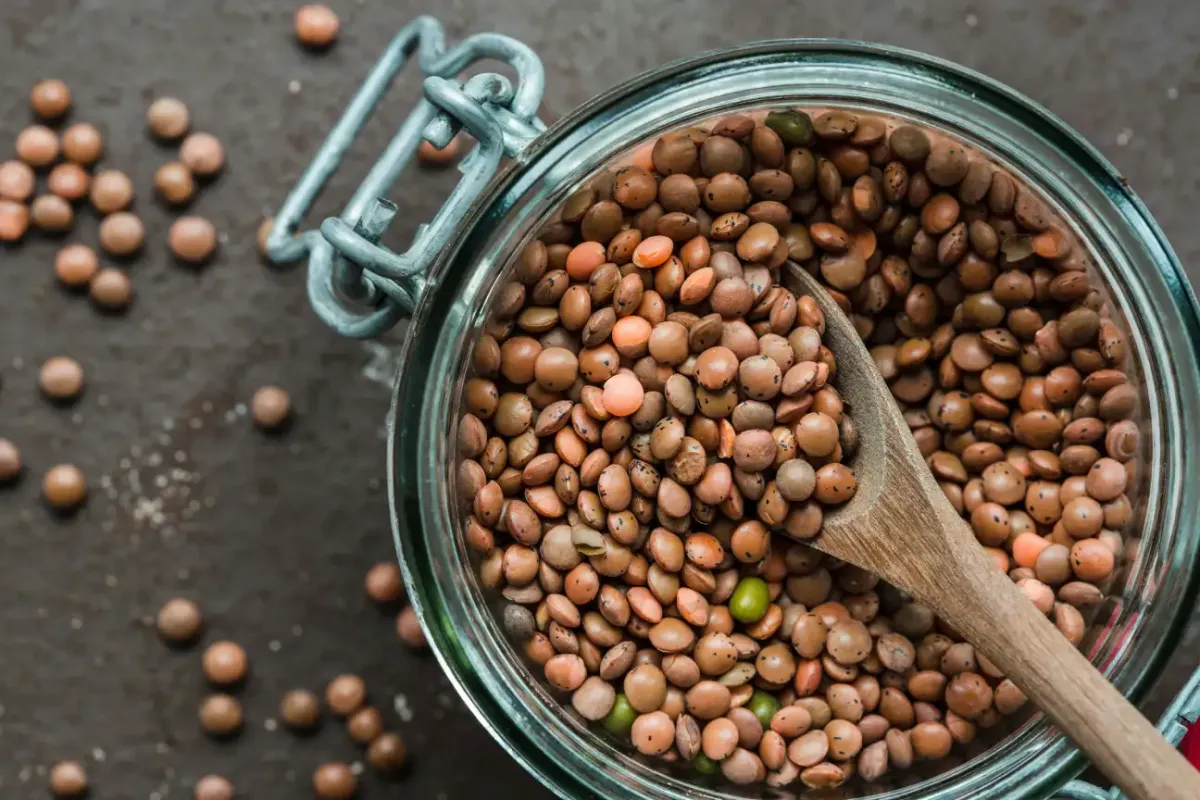
Lentils (Lens culinaris) are among the most protein-dense (non-soy) legumes, with 24-26% protein content by dry weight. Five main types (red, green, brown, yellow, and black (beluga)) are commercially traded, each differing in cooking behavior, color retention, protein content, and price. For food manufacturers, the type of lentil determines whether your end product holds its shape or breaks down into a smooth puree.
In short:
The distinction between lentil types goes beyond color. Cooking behavior, flavor profile, and suitability for food manufacturing applications differ significantly.
Red lentils are the most traded variety globally. When cooked, they lose their orange-red color and become golden-yellow, breaking down into a smooth consistency. This makes them ideal for soups, baby food, and products where a uniform texture matters more than visual integrity. Turkish and Canadian red lentils dominate supply. You can easily find red lentils in bulk from verified suppliers on Nutrada.
Green lentils include standard green varieties and the premium French Puy lentil (Lentille verte du Puy), which has AOC/PDO protection. Standard green lentils from Canada cost less than Puy lentils but offer similar cooking properties. For food manufacturing, Canadian green lentils provide the best value without sacrificing quality. Check out the Nutrada supplier database to find green lentil wholesalers.
Brown lentils are the most common variety in Western supermarkets. They hold their shape reasonably well but become slightly softer than green varieties. A practical all-rounder for canned lentil products and ready meals. Brown lentil wholesalers can be bought through Nutrada from multiple certified suppliers.
Yellow lentils behave similarly to red lentils, they cook quickly and disintegrate. In South Asian cuisine, yellow lentils (toor dal, chana dal, moong dal) form the base of numerous dhal preparations. For European food manufacturers producing Indian-style ready meals, the specific type of yellow lentil matters, each has a subtly different flavor profile.
Black beluga lentils are the premium variety, named for their resemblance to beluga caviar. They hold their shape firmly and cook with a slight earthiness. Priced at 2-3x brown or green lentils. They’re used for premium product lines.
From a nutritional standpoint, the differences between green and red lentils are modest. Green lentils contain slightly more fiber (about 11g per 100g dry vs 10g for red) and marginally more protein (25-26% vs 24-25%). Red lentils have a slight edge in iron content.
The meaningful difference is in the processing: red lentils are typically sold dehusked (split), which removes some fiber. Whole red lentils with their husk intact have nutritional profiles very similar to green lentils. For food manufacturers, the choice between green and red lentils should be driven by the desired end-product texture and appearance rather than nutritional claims.
Both types qualify as high-protein, high-fiber ingredients suitable for health-positioned products. They’re also naturally gluten-free and serve as plant-based protein sources in vegan formulations.
When sourcing lentils for food manufacturing, several parameters beyond type and color determine quality and suitability.
Size grading uses screen sizes measured in millimeters or 64ths of an inch. Canadian lentils are graded as No. 1, No. 2, and No. 3 based on defects, foreign material, and appearance. Always specify your grade requirement upfront.
Moisture content should preferably be no higher than 16% for safe storage. Lentils above this threshold are prone to mold and insect infestation during transit and warehousing.
Split vs whole: Red and yellow lentils are commonly sold as split (dehusked) lentils, which cook faster and produce smoother textures. Green, brown, and black lentils are typically sold whole. Some suppliers offer split green lentils for specific applications.
Pesticide residues are a key concern for European import. Canada, the world’s largest lentil exporter, permits pre-harvest glyphosate application (desiccation). Maximum residue levels (MRLs) differ between Canadian domestic standards and EU regulations. Always request pesticide residue test results and verify compliance with EU MRLs before importing. This is one area where we’ve seen shipments get rejected at the port.
Glyphosate MRL non-compliance is one of the most common import rejection triggers for Canadian lentils entering the EU. Our overview of food safety regulations covers the broader regulatory framework importers need to navigate.
All lentil varieties are covered on the lentils wholesale page, with suppliers filtered by certification and origin.
Marginally different. Green lentils have slightly more fiber and protein, but the gap is small. Red lentils are usually sold split (dehusked), which reduces fiber. For food manufacturing, pick based on your product's texture needs, the nutritional marketing story works for both.
Black beluga lentils are the least commonly traded variety, with prices being 2-3x higher than brown or green lentils. French Puy lentils (Lentille verte du Puy) hold PDO status and are limited to production in the Le Puy region of France, making them rare by definition. Spanish Pardina lentils are another niche variety with limited availability.
All lentil colors provide similar macronutrient profiles: 24-26% protein, high fiber, rich in iron and folate. Green lentils retain the most fiber when sold whole. The healthiest lentil for your product depends on whether you need the whole lentil (more fiber) or split/dehusked (faster cooking, smoother texture).
Green lentils, slightly: 25-26% vs 24-25% for red. The difference varies by origin and growing conditions.


Find the right supplier for your food ingredients in under a minute with Nutrada. Nutrada - Sourcing made easy.