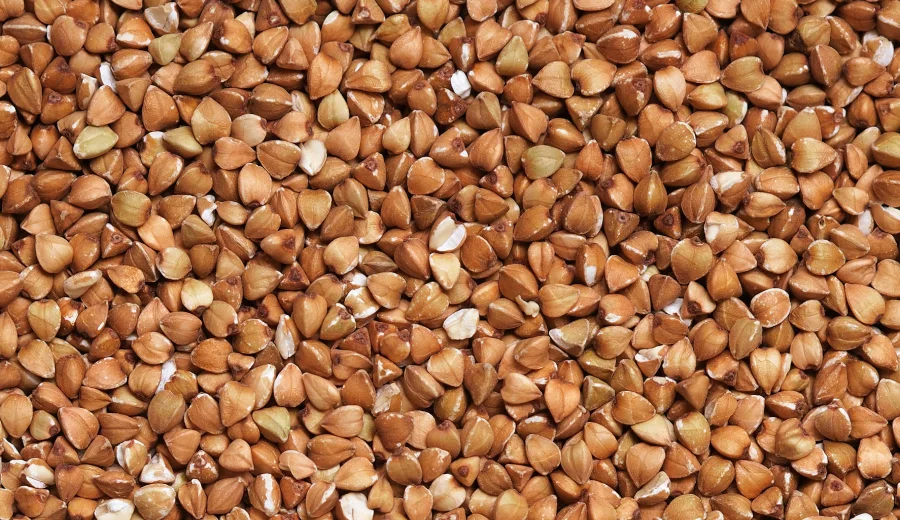
Russia and China dominate global buckwheat supply, but sourcing from either origin reliably is a recurring procurement challenge for European buyers. Nutrada lists GFSI-certified bulk buckwheat suppliers across all major origins, including French and Polish alternatives, covering groats, kasha, flour, and flakes in conventional, organic and certified gluten-free options, so you can easily contact the right source before supply becomes an issue.
| Botanical name | Fagopyrum esculentum (not a grass; related to rhubarb and sorrel) |
| Available forms | Hulled groats (raw / green), roasted groats (kasha), buckwheat flour (light or dark), buckwheat flakes, buckwheat hulls |
| Key origins | Russia, China, France (Brittany), Poland, Lithuania, Japan |
| Gluten status | Naturally gluten-free; cross-contamination risk if processed alongside wheat. Confirm dedicated line status. |
| Applications | Gluten-free flour blends, soba noodles, pancake mixes, porridge (kasha), granola, beer and spirits |
| Certifications | GFSI (BRC, IFS, FSSC 22000), EU Organic, certified gluten-free, non-GMO |
| Packaging | 25 kg or 50 kg polypropylene bags |
| MOQ | From 25 kg (varies by form and supplier) |
| Category | Grains & Seeds |
Buckwheat (Fagopyrum esculentum) is a pseudo-cereal, not a grass, and contains no gluten in its native state. However, cross-contamination during milling is common when processed on shared equipment with wheat; for certified gluten-free applications, confirm that the supplier operates a dedicated buckwheat processing line with documented gluten testing. The processing form determines flavour intensity and application: roasted groats (kasha) have a strong, nutty flavour that dominates in blended products, while raw green groats are mild and neutral.
| Form | Key characteristic | Primary application |
| Hulled groats (raw/green) | Mild, slightly earthy flavour; pale green colour | Porridge, salads, grinding into flour, cooking as grain |
| Roasted groats (kasha) | Strong nutty flavour; brown colour from Maillard reaction | Eastern European kasha dishes, breakfast cereals, stuffings |
| Buckwheat flour | Hull excluded; lighter colour and milder flavour | Pancakes, crepes, gluten-free baking blends |
| Buckwheat flakes | Rolled and steamed; quick hydration | Breakfast cereals, muesli, gluten-free porridge blends |
Buckwheat flour extraction rate determines colour and flavour intensity: light flour (hull excluded) is standard for pancake and crepe mixes, while dark flour (hull included) is the correct specification for traditional soba noodles and heritage-grain positioned products. Specify light or dark when ordering; these are distinct products with different flavour profiles and visual appearance in the finished product.
Buckwheat groats are hygroscopic and should be stored in cool, dry conditions with moisture below 14%; above this threshold, mould risk increases significantly during extended storage. Standard packaging is 25 to 50 kg polypropylene bags. Shelf life for whole groats is 18 to 24 months; flour shelf life is shorter at 6 to 12 months due to higher surface area and fat oxidation from the germ.
The Northern Hemisphere buckwheat harvest runs August to October. Russian and Chinese harvests set global pricing; European (French and Polish) buckwheat carries a higher price but provides supply chain predictability and shorter transit times into EU markets.
Buckwheat's low input requirements and short growing season make it well-suited to organic farming; conventional pesticide use on buckwheat is lower than on most cereal crops, which is why organic price differences are more modest than for other grains. China and France are the primary certified organic buckwheat sources for European buyers.
Eastern European organic buckwheat from Poland and Lithuania offers competitive pricing under EU Organic certification. Request EU Organic certificate and gluten test results for any organic buckwheat intended for gluten-free labelled products.
Buckwheat groats in 500 g and 1 kg pouches, buckwheat flour in 500 g and 1 kg bags, and buckwheat flakes are part of the standard private label range. Gluten-free and ancient grain positioning drives retail interest; confirm certified gluten-free testing is in place before making the claim, as standard buckwheat processed alongside wheat will not qualify.
Soba noodles are a growing private label format but require a distinct manufacturing process from groat or flour supply; this is a co-manufacturing project, not a simple repacking service.
Russia is the dominant buckwheat production origin but export availability is subject to policy intervention which can disrupt European supply at short notice; buyers relying on Russian-origin buckwheat should maintain a qualified European alternative supplier or carry sufficient safety stock to absorb a supply gap.
China is a major buckwheat exporter, particularly for whole forms for the Japanese soba noodle market; Chinese-origin buckwheat is competitively priced but requires confirmed gluten-free testing if used in certified gluten-free applications, as shared processing with wheat is common in Chinese grain facilities.
France, particularly Brittany, is the premium European origin with strong artisan food market positioning and certified organic supply. Poland and Lithuania are growing European sources with GFSI-certified processing and established EU Organic supply chains.
Nutrada lists GFSI-certified buckwheat suppliers from Russia, China, France, Poland, and Lithuania, covering groats, kasha, flour, and flakes in conventional and organic-certified options.
Last updated: Apr 6, 2026

Find the right supplier for your food ingredients in under a minute with Nutrada. Nutrada - Sourcing made easy.