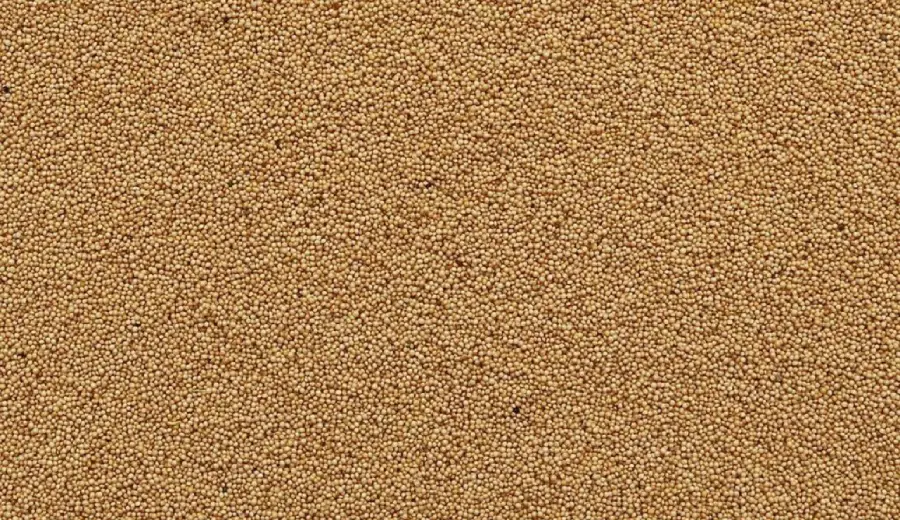
Find GFSI-certified amaranth suppliers on Nutrada offering whole grain, flour, and puffed forms from India, Peru, and Mexico. All amaranth suppliers list form, origin and gluten-free certification so procurement teams can compare suppliers and request bulk quotes directly.
| Value | Description |
| Botanical name | Amaranthus spp. |
| Available forms | Whole grain, flour, puffed, flakes |
| Origins | India, Peru, Mexico, Bolivia, China, USA, Ukraine, Ethiopia |
| Certifications | GFSI, EU Organic, USDA NOP, Non-GMO, Gluten-free, Kosher |
| Common applications | Gluten-free baking, breakfast cereals, energy bars, extruded snacks, baby food, plant-based products |
| Packaging | 25 kg |
| MOQ | 25 kg to 25 MT |
| Category | Grains Wholesale |
| Form/Grade | What it means for procurement | Typical application |
| Whole grain | Requires Sortex cleaning to meet 99.9% purity spec; protein 13-16% is batch-variable | Porridge, grain blends, popping base for puffed snacks |
| Flour | Moisture must stay below 10% to prevent rancidity; shelf life 6-12 months vs 12-18 for whole grain | Gluten-free baking (must blend with other flours due to lack of gluten), tortillas, thickener |
| Puffed/popped | Processing adds 20-30% to ingredient cost; verify puffing method (hot air vs oil) affects nutrition label claims | Cereal bars, breakfast cereals, confectionery inclusions |
| Flakes | Rolled format for faster rehydration; moisture threshold same as whole grain (10-12%) | Muesli, instant porridge, granola |
India is the largest global amaranth producer, with commercial cultivation concentrated in Rajasthan, Maharashtra, and Gujarat where dry climate suits the crop's drought tolerance.
Peru and Bolivia supply Andean amaranth with traditional cultivation methods at 2,500-3,800m altitude, where cooler temperatures produce higher lysine content (15-17% protein vs 13-15% for lowland types).
Mexico maintains commercial production in Puebla and Tlaxcala states, where Aztec heritage positions the crop for fair-trade and origin-labeling programs.
Ukraine has emerged as a secondary origin for conventional amaranth flour since 2018, with harvest timing (August-September) offsetting Indian supply gaps. China and Ethiopia supply regional markets, but limited GFSI-certified capacity for EU export.
Amaranth grain is hygroscopic and moisture content above 12% triggers mold risk during sea freight. Suppliers pack in 25 kg or 50 kg polypropylene bags, with 1 MT big bags available for high-volume orders. Buyers must confirm Sortex cleaning (99.9% purity) and foreign matter testing (target <0.5%) before finalizing an order, as manual cleaning after import adds 8-12% to landed cost.
India, Peru, and Bolivia hold dual EU Organic and USDA NOP certification for amaranth. Andean origins (Peru, Bolivia) have deeper organic supply and fair-trade infrastructure, while Indian organic amaranth is more price-competitive but lead times extend 2-3 weeks during monsoon season (July-August).
Retail formats include resealable pouches (250g, 500g, 1kg) for whole grain, paper bags or stand-up pouches for flour, and flow-wrap sachets for puffed amaranth in breakfast cereals. Ancient grain blends (amaranth with quinoa or chia seeds are the most common retail format. MOQ for private label starts at 500 kg units SKU, but for blends it may be higher. Buyers must specify whether it is handled in a gluten-free facility before production, as cross-contamination during processing is the primary allergen risk.
Amaranth suppliers are based in India (largest concentration of APEDA and FSSAI certified facilities), Peru (organic and fair-trade certified), and Mexico (small-scale certified processors).
Nutrada lists GFSI-certified amaranth suppliers from India, Peru, Mexico, and Bolivia, covering whole grain, flour, and puffed forms across conventional and organic supply. All orders are placed directly with certified suppliers, with no intermediary.
Further reading:
Last updated: Apr 29, 2026

Find the right supplier for your food ingredients in under a minute with Nutrada. Nutrada - Sourcing made easy.