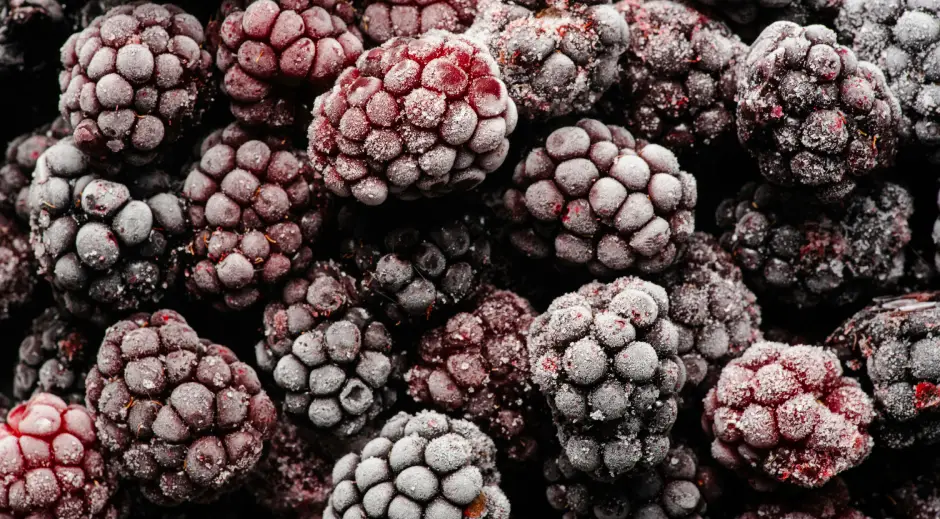
Verifying radiation monitoring compliance is the first challenge when sourcing frozen blackberries in bulk from Eastern European origins. Nutrada lists GFSI-certified frozen blackberries suppliers with batch-specific radiation certificates so procurement teams can compare IQF whole berries and puree formats directly.
| Value | Description |
| Botanical name | Rubus fruticosus |
| Available forms | IQF whole, IQF puree, BQF |
| Origins | Serbia, Poland, Bulgaria, Mexico, Chile |
| Certifications | GFSI (BRCGS, IFS, FSSC 22000), EU Organic, GlobalGAP, Kosher, Halal |
| Common applications | Jams, bakery, smoothies, yogurt, confectionery |
| Packaging | 10-20 kg poly bags |
| MOQ | 20kg |
| Category | Frozen Fruits Wholesale |
| Form | What it means for procurement | Typical application |
| IQF whole | Individual berries flash-frozen at -35°C to -40°C without blanching | Bakery applications, retail packs, yogurt inclusions |
| IQF puree | Pureed berries flash-frozen to prevent ice crystal formation | Smoothie bases, jam production, confectionery fillings |
| Variety | What it means for procurement | Typical application |
| Cultivated (Chester, Triple Crown) | Consistent size and sweetness, predictable supply volumes | Food service, retail applications requiring uniform appearance |
| Wild-harvested | Stronger flavor profile, requires radiation monitoring for Eastern European origins | Premium jams, artisanal products where flavor intensity matters |
Serbia is the benchmark origin for IQF blackberries in the EU market, with well-established processing infrastructure, GFSI-certified cold storage facilities, and year-round supply from frozen inventory.
Serbian IQF blackberries are predominantly the Thornfree variety, with colour specifications tolerating up to 10% red-coloured drupelets in IQF class and up to 20–30% in confiture grade, buyers should specify their acceptable ratio in purchase orders. Poland provides supplementary EU capacity with a harvest and processing window running June through August, drawing on the same seasonal window as Serbia.
For winter supply, Mexico is the main source of blackberries entering the European market between December and March, though this is predominantly air-freighted fresh fruit rather than IQF; buyers requiring frozen formats year-round should confirm Mexican processor capability and cold chain certification before placing orders.
Buyers sourcing wild blackberries or wild Vaccinium fruits such as bilberries or cranberries from Serbia or other Chernobyl-affected third countries must note that Commission Implementing Regulation (EU) 2020/1158 requires official certificates confirming caesium-137 levels remain below 600 Bq/kg before entry into the EU, a requirement extended to processed products containing these wild fruits from February 2024. This obligation applies to wild-harvested Vaccinium species and wild mushrooms; cultivated blackberries from certified Serbian processors are not subject to this certificate requirement.
Frozen blackberries are highly susceptible to cold chain breaks - temperature excursions above -18°C cause ice crystal enlargement that destroys the berry structure and creates mushy texture upon thawing. Standard packaging uses 10-20 kg polyethylene bags within corrugated outer cartons for palletized shipment. Store at -18°C with 18-24 months shelf life under continuous frozen storage. Check the CoA for radiation levels before ordering Eastern European wild-harvested berries, as compliance limits differ by destination market.
Bulk buyers of frozen blackberries also consider frozen strawberries for mixed berry applications and frozen raspberries for similar IQF processing requirements.
Serbian and Polish origins offer EU Organic certified frozen blackberries with established supply chains for both cultivated and wild-harvested varieties. Dual EU Organic and USDA NOP certification is available from Serbian suppliers who maintain separate organic handling lines. Bulgarian organic supply remains limited compared to conventional volumes from the same region.
Consumer packaging formats include stand-up pouches from 300g to 1kg, clear plastic tubs for retail display, and resealable bags for food service portions. Private label MOQ typically starts at 5-10 pallets depending on packaging complexity. Confirm the IQF process temperature with your supplier before production - flash-freezing below -35°C prevents cell damage that would affect the final product texture after consumer thawing.
European frozen blackberries manufacturers concentrate in Serbia, Poland, and Bulgaria where berry cultivation and wild harvesting provide direct supply access. Request batch-specific radiation monitoring certificates for wild-harvested Eastern European berries, cold chain temperature logs showing continuous -18°C maintenance, and microbiological testing results including yeast and mold counts. Nutrada lists GFSI-certified frozen blackberries suppliers from Serbia, Poland, and Bulgaria, covering IQF whole and puree formats across conventional and organic supply. All orders are placed directly with certified suppliers, with no intermediary.
Last updated: Apr 7, 2026

Find the right supplier for your food ingredients in under a minute with Nutrada. Nutrada - Sourcing made easy.