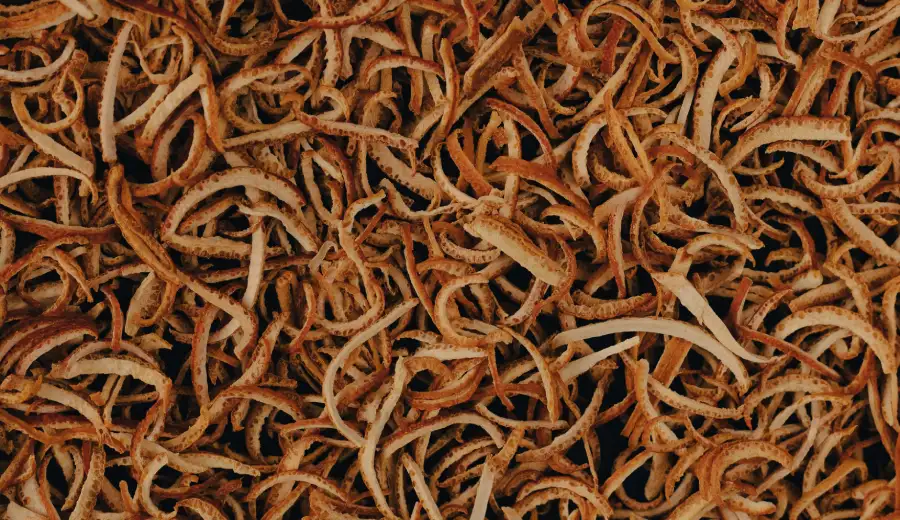
Food manufacturers sourcing orange peel for EU markets require pesticide residue compliance and sulphur dioxide declaration standards. Nutrada lists GFSI-certified orange peel suppliers from Spain, Italy, and Turkey, filterable by certification, form, and MOQ.
| Field | Detail |
| Botanical name | Citrus sinensis (sweet orange), Citrus aurantium (bitter orange) |
| Available forms | Dried slices, diced peel, granulated, powder, candied peel |
| Origins | Spain, Italy, Turkey, Egypt, South Africa, USA |
| Certifications | GFSI (BRCGS, IFS, FSSC 22000), EU Organic, Kosher, Halal |
| Common applications | Tea blends, bakery, confectionery, cocktail garnish, gin botanicals |
| Packaging | 5-25 kg bags or cartons |
| MOQ | 25-100 kg (slices), 100-500 kg (bulk peel) |
| Category | Dried Fruits Wholesale |
Orange peel procurement starts with species selection: sweet orange (Citrus sinensis) for general flavouring versus bitter orange (Citrus aurantium) for specialty applications like gin botanicals and traditional European confectionery.
| Form/Grade | What it means for procurement | Typical application |
| Dried slices/wheels | 5-10mm thickness, 18-22% max moisture | Decorative garnish, herbal teas |
| Diced peel | Uniform pieces, 6-8% max moisture | Bakery inclusions, spice blends |
| Granulated peel | Coarse granules, enhanced oil retention | Seasoning mixes, meat marinades |
| Powder | Fine grind, 6-8% max moisture, high surface area | Beverage flavouring, sauces |
| Candied peel | Sugar-coated, higher moisture, extended shelf life | Premium confectionery, stollen |
Processing method affects oil retention and aroma intensity. Air-dried retains more essential oils than heat-dried, while freeze-dried preserves maximum flavour compounds but carries higher pricing.
Spain is the primary EU source of dried orange peel, with the Valencia region producing sweet orange varieties and Seville specialising in bitter orange (Citrus aurantium), which is used in traditional liqueur, marmalade, and flavouring applications.
Turkey is a significant and cost-competitive supplier with established drying infrastructure, but buyers sourcing Turkish citrus peel should be aware that oranges, mandarins, and lemons from Turkey have been subject to increased EU border controls for pesticide residues under Regulation (EU) 2021/2246, which increased the frequency of identity and physical checks on Turkish citrus.
Orange peel is highly sensitive to moisture absorption, requiring storage below 15 degrees Celsius with maximum humidity of 60% to prevent mold development. Standard bulk packaging uses food-grade polyethylene-lined bags or cartons from 5-25 kg to maintain protective atmosphere. Check the moisture content on the certificate of analysis before ordering, levels above 18% for slices or 8% for powder significantly shorten shelf life from the standard 12-24 months. Verify essential oil retention levels with suppliers, as aroma intensity directly impacts the flavour strength in final applications. For related dried citrus ingredients, see our lemon peel suppliers which offer similar processing methods and quality standards.
Spain and Italy maintain the strongest EU Organic certification infrastructure for orange peel, with established organic citrus growing regions and processing facilities. Turkey offers organic options but with more limited supply depth compared to conventional grades. Dual EU Organic and USDA NOP certification is readily available from Spanish suppliers, while Italian organic peel often carries premium positioning for blood orange varieties.
Retail formats include resealable pouches from 50-500g for consumer spice blends, glass jars for premium tea ingredients, and sachets for single-serve beverage applications. MOQ for private label runs higher than bulk, typically 500-1000 kg minimum depending on packaging complexity. Confirm sulphur dioxide declaration requirements before production starts, as EU Regulation 1129/2011 mandates labeling when SO2 exceeds 10 mg/kg in dried fruit products.
European manufacturers concentrate in Spain, Italy, and Turkey where citrus processing infrastructure aligns with fruit production regions, enabling direct access to fresh raw materials with reduced logistics costs. Request batch-specific certificates of analysis covering pesticide residue panels, moisture content, and essential oil levels, plus microbiological testing for pathogenic bacteria.
Nutrada lists GFSI-certified orange peel suppliers from Spain, Italy, and Turkey, covering dried slices, granulated, and powder forms across conventional and organic supply. All orders are placed directly with certified suppliers, with no intermediary.
Last updated: Apr 6, 2026

Find the right supplier for your food ingredients in under a minute with Nutrada. Nutrada - Sourcing made easy.