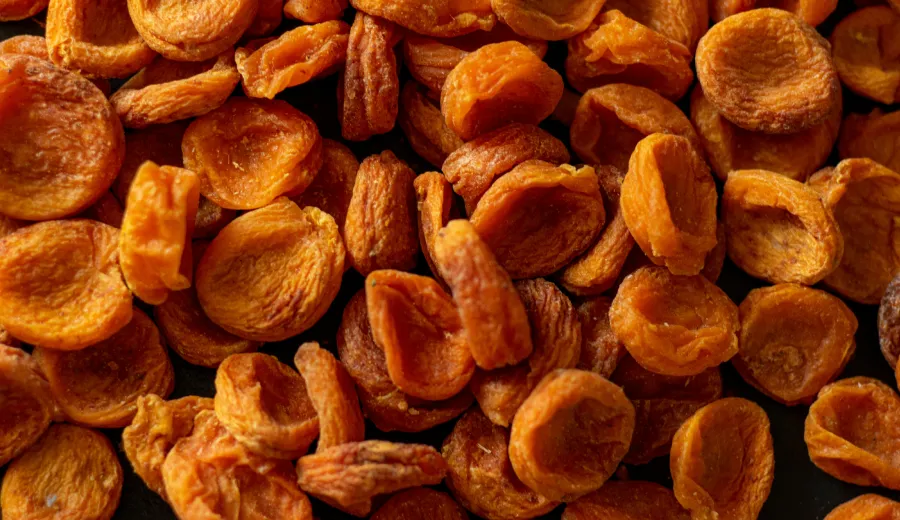
Verifying SO2 content is the first challenge when sourcing apricots in bulk. Nutrada lists GFSI-certified apricot suppliers with declared SO2 levels so procurement teams can compare and request quotes directly.
| Field | Detail |
| Botanical name | Prunus armeniaca |
| Available forms | Dried halves, whole dried, diced, paste, powder |
| Origins | Turkey (Malatya), Iran, USA (California), Uzbekistan, Spain, Pakistan (Hunza) |
| Certifications | GFSI, EU Organic, USDA NOP, Kosher, Halal, SO2-free |
| Common applications | Confectionery, bakery, muesli, cheese boards, energy bars, preserves |
| Packaging | 10-12.5kg cartons, 10-25kg bags |
| MOQ | 100-500kg for standard grades |
| Category | Dried Fruits Wholesale |
Dried apricot procurement starts with choosing between sulphured bright orange halves or organic unsulphured dark brown products. Conventional dried apricots contain up to 2000 mg/kg SO2 which must be declared on EU food labels under Regulation 1129/2011.
| Form/Grade | What it means for procurement | Typical application |
| Halabi/Malatya halves | Standard commodity grade, golden-orange, SO2-treated | Confectionery inclusions, bakery glazes |
| Jumbo/Large whole | Premium grade, larger size, brighter colour | Retail cheese board pairings |
| Organic unsulphured | Dark brown, chewy texture, no SO2, clean label | Health food segment, natural energy bars |
| Hunza (Pakistan) | Small whole apricots, intense flavour, organic | Specialty retail, premium trail mixes |
| Californian dried | Premium quality, tart-sweet profile | High-end confectionery applications |
Turkey dominates global dried apricot supply from Malatya province, ranking first in dried apricot exports with a share of around 67% according to FAOSTAT trade data, with the major export destinations including the USA, France, and Germany.
Harvest is concentrated in July–August. Iran ranks second but focuses primarily on domestic and regional markets rather than EU export. The USA produces premium Californian apricots in smaller volumes for high-end applications. Uzbekistan has emerged as an alternative origin for buyers seeking to diversify from Turkish dependency, with growing GFSI infrastructure supporting EU export.
Pakistan's Hunza Valley produces specialty organic apricots using traditional sun-drying methods, with availability running April through September. Prunes are another stone fruit dried through comparable processing methods and are available from the same suppliers in the Dried Fruits category on Nutrada.
Dried apricots are hygroscopic and prone to quality degradation above 30% moisture content. Standard packaging uses 10-12.5kg cartons or 10-25kg bulk bags with 18-24 months shelf life when stored below 20°C and 65% relative humidity. Check moisture levels on the Certificate of Analysis before accepting delivery as high moisture leads to mould development and texture changes.
Turkey and Uzbekistan both hold EU Organic certification for dried apricot supply, with Turkish organic volumes significantly deeper than Uzbek alternatives. Organic apricots appear dark brown due to natural drying without SO2 treatment, requiring buyers to confirm colour expectations with retail customers before ordering.
Consumer packaging formats include resealable pouches, glass jars, and retail bags from 100g to 1kg sizes for branded products. MOQ for private label typically starts at 500kg per SKU. Buyers must specify SO2-free or conventional before production begins as this determines both colour profile and regulatory labelling requirements.
Most dried apricot manufacturers operate from Turkey and Uzbekistan with established GFSI certification covering both conventional and organic processing lines. Request batch-specific Certificates of Analysis showing moisture content, SO2 levels, and aflatoxin testing results before placing orders. Nutrada lists GFSI-certified apricot suppliers from Turkey, Uzbekistan, and California, covering dried halves and whole forms across conventional and organic supply. All orders are placed directly with certified suppliers, with no intermediary.
Last updated: Apr 6, 2026

Find the right supplier for your food ingredients in under a minute with Nutrada. Nutrada - Sourcing made easy.