Four types of quinoa dominate commercial trade: white, red, black, and tricolor (a blend of all three). Each has distinct cooking properties, visual characteristics, and pricing that matter for food manufacturing and retail formulation. Nutrada lists GFSI-certified quinoa suppliers from Peru, Bolivia, and European growing regions, searchable by color, certification, and order volume.
In short:
White quinoa (sometimes called ivory or golden quinoa) is the most widely produced and traded variety. It has the mildest flavour profile, a light nutty taste, and a soft, fluffy texture when cooked. White quinoa cooks in approximately 12-15 minutes, making it the fastest of the three colors to prepare.
In B2B trade, white quinoa is the default specification when a purchase order simply says "quinoa" without a color qualifier. It is used across the widest range of food applications: ready meals, soup bases, grain bowls, baby food, cereals, flour blending, and as a rice substitute in reformulated products. Peru is the largest exporter of white quinoa to the EU, with yields generally higher than Bolivia due to lower-altitude coastal growing regions.
Standard export specifications for white quinoa include moisture below 12% (ideally 10-11%), saponin content below 0.06% (washed and desaponified), purity above 99%, and grain size above 1.6mm diameter. Protein content typically ranges from 12-16% depending on growing altitude and conditions.
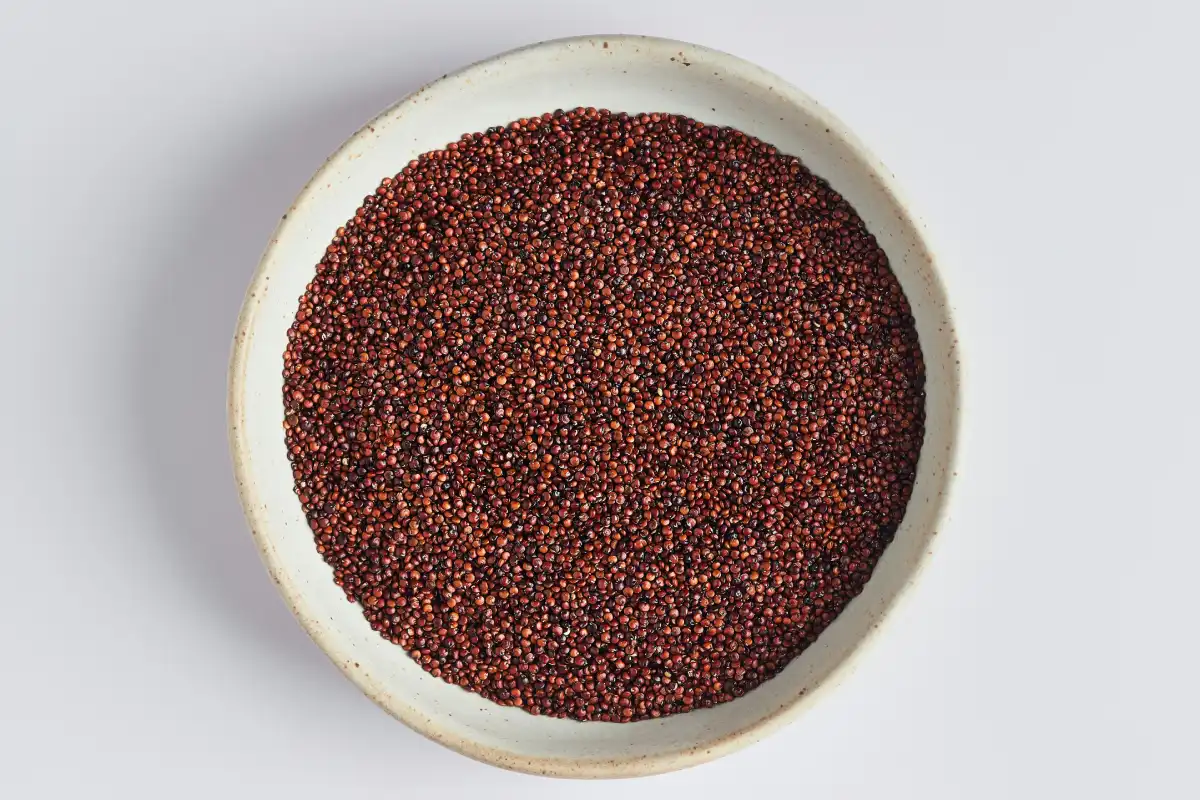
Red quinoa has a more pronounced earthy and slightly nutty flavour compared to white. Its colour ranges from vivid orange-red in raw form to a brownish-red after cooking. Red quinoa retains its shape better during cooking, which makes it the preferred choice for cold salads, grain bowls, and any application where the grain needs to maintain a firm, distinct texture after processing or reheating.
Red quinoa is typically slightly more expensive than white (5-15%), largely because production volumes are smaller and processing requires separate cleaning and sorting lines to maintain color purity. Peru and Bolivia both produce red quinoa. Some research suggests that red varieties contain higher levels of phenolic compounds and antioxidants due to the pigmentation, though this is a consumer marketing point rather than a B2B procurement specification.
For food manufacturers, the main operational consideration is that red quinoa takes 1-3 minutes longer to cook than white and produces a firmer finished texture. Formulation teams developing ready-to-eat products should adjust cooking times accordingly to avoid either undercooking (gritty texture) or overcooking (colour bleed into surrounding ingredients).
Black quinoa is the least common of the three primary colours in commercial trade. It has the earthiest, slightly sweetest flavour and a crunchier texture even when fully cooked. The dark colour comes from higher anthocyanin content in the seed coat.
Black quinoa was originally developed through crossbreeding quinoa with a related species (Chenopodium berlandieri, commonly known as lamb's quarters). The resulting variety produces plants that are taller than standard quinoa with deep purple to black seeds. Commercial production remains limited compared to white and red varieties, which keeps prices higher.
In food manufacturing, black quinoa is used primarily for visual contrast: tricolor blends, premium grain bowls, and products where a visually striking appearance adds perceived value. It is rarely specified as a standalone ingredient in large-volume food production due to cost and limited supply.
Royal quinoa (Quinua Real in Spanish) is not a separate colour variety but a designation based on growing altitude and geography. Royal quinoa is grown exclusively above approximately 3,600 metres (12,000 feet) near the Salar de Uyuni salt flats in the Bolivian Altiplano. The harsh conditions at this altitude, including extreme temperature swings, intense UV radiation, and poor soil, produce a distinctly larger, rounder grain with a nuttier flavour and fluffier cooked texture.
The Royal designation carries a significant price premium over standard Peruvian or lower-altitude Bolivian quinoa. This premium reflects both the genuine quality difference (grain size, cooking performance) and the limited production capacity of the Altiplano region. Royal quinoa is available in white, red, and black, though white Royal is the most commonly traded.
Buyers should be aware that "Royal" is not a regulated term in the same way a Protected Geographical Indication (PGI) would be. There is no single certification body that guarantees Royal origin. Verifying the claim requires traceability documentation back to the specific growing cooperatives in the Salar de Uyuni region.
| Specification | White | Red | Black | Royal (Bolivian) |
| Colour (raw) | Ivory to pale gold | Orange-red to dark red | Deep purple to black | Any colour; larger grain |
| Colour (cooked) | Translucent white | Brownish-red | Dark brown to black | Depends on variety |
| Flavour | Mild, slightly nutty | Earthy, nuttier | Earthy, slightly sweet | Nuttiest, fullest |
| Cooking time | 12-15 minutes | 15-18 minutes | 15-20 minutes | 15-18 minutes |
| Texture (cooked) | Soft, fluffy | Firm, holds shape | Crunchy, firm | Fluffy, distinct grains |
| Protein | 12-16% | 12-16% | 12-15% | 13-16% |
| Main origins | Peru, Bolivia | Peru, Bolivia | Peru, Bolivia, US | Bolivia (Altiplano) |
| Price tier | Standard | Standard + 5-15% | Premium | Premium |
| Primary application | Manufacturing, flour, baby food | Salads, ready meals, grain bowls | Visual contrast, tricolor blends | Premium retail, food service |
| Typical MOQ | 1-25 tonnes | 1-25 tonnes | 1-10 tonnes | 1-10 tonnes |
Quinoa seeds have a natural coating of saponin, a bitter-tasting compound that functions as the plant's built-in pest deterrent. Saponin must be removed before human consumption because it produces a soapy, unpleasant taste and can cause mild gastrointestinal irritation if ingested in quantity.
Commercial quinoa is de-saponified through a wet washing process, dry abrasion (polishing), or a combination of both. Washed quinoa is the standard for export to the EU and North America. The industry target is saponin content below 0.06% in the finished product. Buyers should always verify whether the quinoa they are purchasing has been pre-washed, as unwashed quinoa requires additional processing before it can be used in food manufacturing.
Some breeding programmes are developing low-saponin or "sweet" quinoa varieties that require less processing. Ecuador's Tunkahuan variety is one example, though commercial volumes remain small. For procurement purposes, always specify "washed/desaponified" on purchase orders and request saponin level documentation on the Certificate of Analysis (COA).
Peru and Bolivia together supply over 99% of the EU's quinoa imports. Understanding the differences between these two origins is essential for procurement planning.
Peru became the leading quinoa exporter to Europe from 2014 onwards. Peruvian production benefits from higher yields per hectare (driven by lower-altitude coastal growing regions with irrigation), established port infrastructure, and a competitive conventional supply chain. According to CBI market analysis, the EU imported approximately 17,000 tonnes from Peru in 2019, making France, the Netherlands, the UK, and Italy the primary buying countries.
Bolivia's strength is in organic and Royal quinoa. The Altiplano highlands produce quinoa at lower yields than Peru, but the extreme altitude generates a premium product. Bolivia's quinoa is often grown by smallholder cooperatives with strong organic certification infrastructure. EU imports from Bolivia reached nearly 10,000 tonnes in 2019, with the volume trending upward.
The shift to EU Organic Regulation 2018/848 (compliance-based framework, effective January 2025) has created additional certification costs for both origins. For Bolivian smallholder cooperatives in particular, the new "Group of Operators" definition and increased inspection requirements (5% of members vs the previous 2%) mean organic quinoa pricing is likely to rise from the 2025 crop onwards.
Quinoa procurement across the broader grains category requires attention to a few specific quality checkpoints.
Buyers sourcing quinoa alongside complementary pseudocereals like amaranth can often source from overlapping origin regions (Peru, Bolivia) and negotiate consolidated logistics.
No. Tricolor quinoa is a blend of white, red, and black seeds mixed in a roughly equal ratio. It is not a distinct plant variety. Tricolor blends are assembled during processing and are popular in retail because they look visually appealing and allow consumers to experience all three flavours. For food manufacturers, tricolor is more expensive per kilo than white because it includes the higher-priced red and black fractions.
Quinoa is naturally gluten-free. It is a pseudocereal from the Amaranthaceae family, not a grass like wheat, barley, or rye. This makes it suitable for celiac-safe and gluten-free product formulations. However, cross-contamination during harvest, transport, or processing is possible if quinoa is handled on shared equipment with wheat-based products. For gluten-free claims, request documentation confirming the supply chain is segregated or that the finished product tests below 20 ppm gluten.
Bolivia's quinoa is predominantly grown at high altitudes by smallholder cooperatives, resulting in lower yields per hectare and higher production costs. The Royal designation (altitude above 3,600m) adds a quality premium based on larger grain size and superior cooking characteristics. Additionally, Bolivia's organic certification infrastructure, while well-established, now faces higher compliance costs under EU Regulation 2018/848.
Yes. Quinoa flour is milled from whole quinoa seeds and retains the full nutritional profile. It is used in gluten-free baking, pasta production, baby food, and as a protein-enrichment ingredient in cereal blends. Quinoa flour should be specified as pre-washed (saponin-free) before milling. It has a slightly nutty flavour that works well in combination with other gluten-free flours such as rice, buckwheat, or amaranth.
Properly dried quinoa (below 12% moisture) stored in cool, dry conditions has a shelf life of 24-36 months. Quinoa flour has a shorter shelf life of 6-12 months due to fat oxidation after milling. Store in sealed containers away from direct light and heat. Vacuum packaging extends flour shelf life significantly.
Further reading:


Find the right supplier for your food ingredients in under a minute with Nutrada. Nutrada - Sourcing made easy.