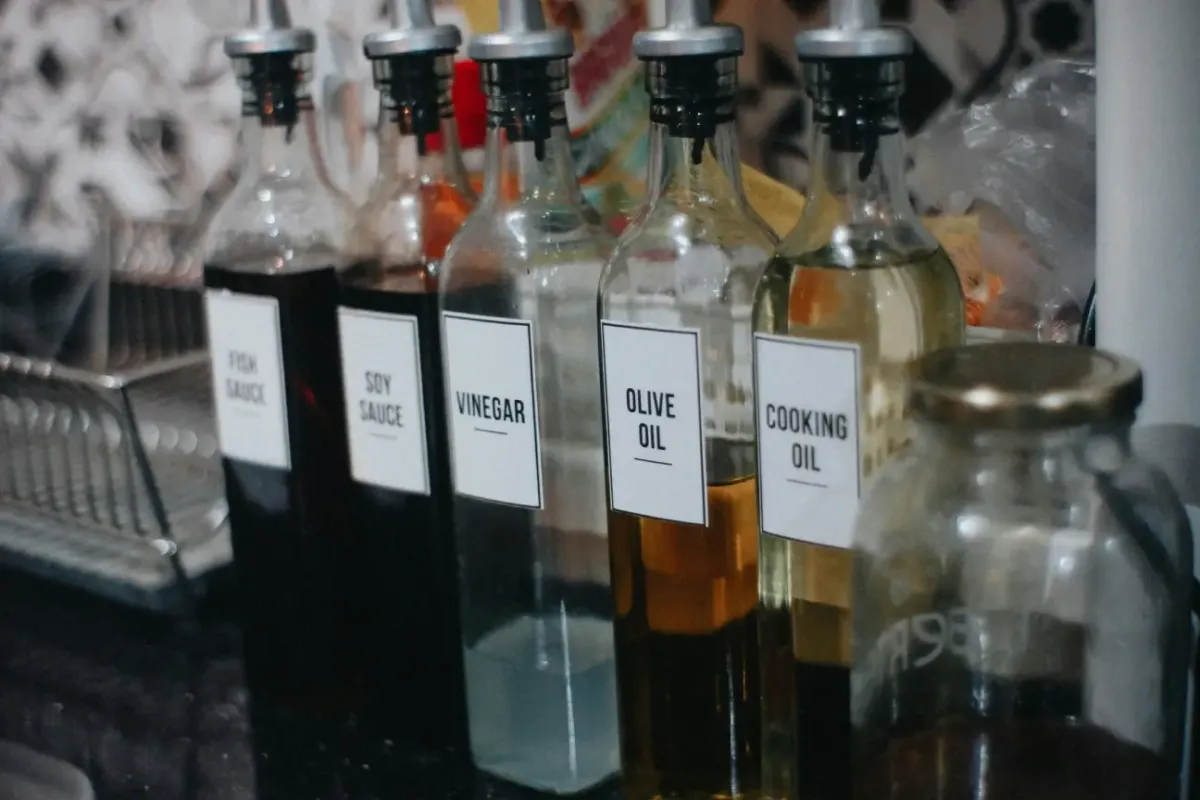
Edible oils for food manufacturing are classified by source (seed, nut, fruit, or kernel), extraction method (cold-pressed, expeller-pressed, or solvent-extracted), and refinement level (crude, refined, or virgin). Nutrada lists over 40 edible oil types from certified suppliers across Europe. Selecting the right oil depends on your product’s heat requirements, flavor profile, shelf life targets, and label claims.
Three things to know before sourcing:
Edible oils are broadly grouped into four categories based on their botanical source.
Seed oils: sunflower, rapeseed (canola), soybean, safflower, sesame, flaxseed. These are the volume products in the food manufacturing industry. Sunflower oil in bulk is one of the most traded edible oils in Europe, valued for its neutral flavor and high smoke point when refined (230°C).
Fruit oils: olive, avocado, palm. Olive oil is unique among edible oils because the premium grades (extra virgin, virgin) are mechanically extracted without heat or solvents. Bulk olive oil pricing ranges from €2-3/L for refined to €5-12/L for extra virgin, depending on origin and harvest year. Palm oil (sourced from the fruit of the oil palm) is the world’s most produced edible oil.
Nut oils: almond, hazelnut, walnut, peanut, macadamia. These are specialty oils used for flavor rather than volume. Pricing reflects this: nut oils typically run €8-30/L, positioning them for premium products, dressings, and confectionery applications.
Kernel and other oils: coconut, palm kernel, MCT, rice bran, grape seed. Coconut oil in bulk is the most significant in this group, valued for its solid-at-room-temperature property and use in confectionery coatings, plant-based products, and cosmetics crossover.
Coconut oil deserves its own deep-dive because of the significant differences between virgin, RBD, fractionated, and MCT variants. See our complete guide on coconut oil types for detailed specifications and procurement advice.
The extraction method is arguably the most important specification for procurement because it determines flavor, nutritional profile, and cost.
Cold-pressed oils (also called “first cold press” for olive oil) are extracted mechanically at temperatures below 27°C. However the 27°C threshold is specifically an EU/IOC regulation for olive oil only. For other seed/nut oils, "cold-pressed" generally means below 40-50°C, not 27°C. The process preserves polyphenols, tocopherols, and characteristic flavors, but cold-press extraction recovers only 30-40% of available oil, compared to 90%+ for solvent extraction. This drives the price up.
Solvent extraction uses food-grade hexane to dissolve oil from the seed or nut meal. The hexane is then evaporated, and the oil is refined (degummed, neutralized, bleached, deodorized; the “RBD” process). The result is a neutral-tasting, high-smoke-point oil suitable for frying and industrial food production. Nearly all high-volume seed oils (sunflower, rapeseed, soy) are solvent-extracted unless labeled otherwise.
In our trading experience, the most common procurement mistake is specifying “cold-pressed” when the product application doesn’t require it. If you’re manufacturing a frying oil or a product where oil flavor is masked by other ingredients, refined solvent-extracted oil delivers identical functionality at a fraction of the cost.
Smoke point determines the maximum temperature at which an oil can be used before it breaks down, producing off-flavors and potentially harmful compounds. For food manufacturing, this is a functional specification, not a marketing feature.
High-oleic variants of sunflower and safflower oil deserve particular attention. These are bred to contain 80%+ oleic acid (vs 20-30% in standard varieties), which dramatically improves heat stability and shelf life. High-oleic sunflower oil is increasingly replacing partially hydrogenated oils in European food manufacturing as trans-fat regulations tighten.
Browse all oil types on the oils wholesale category page. On our marketplace you can filter suppliers by extraction method, certification, and origin.
Beyond extraction method and smoke point, request these parameters in every quotation:
Free fatty acid (FFA) content indicates oil freshness and refining quality. For refined oils, FFA should be below 0.1%. For virgin olive oil, EU regulations allow up to 2.0% (extra virgin: 0.8%). High FFA suggests poor raw material quality or degraded oil.
Peroxide value (PV) measures primary oxidation. The EU limit for EVOO is 20 meq/kg, and high-quality oils often score below 10. For refined oils, <5 is a reasonable quality target but isn't a universal regulatory standard.
Fatty acid composition confirms the oil type and identifies adulteration. Sunflower oil spiked with cheaper palm oil will show an abnormal fatty acid profile. The Codex Alimentarius standards define acceptable ranges for each oil type.
Iodine value indicates the degree of unsaturation. Important for applications where oxidative stability matters (snack seasonings, long-shelf-life products).
Four categories: seed oils (sunflower, rapeseed, soybean), fruit oils (olive, avocado, palm), nut oils (almond, hazelnut, walnut), and kernel oils (coconut, palm kernel, MCT). Seed oils handle the volume; nut and fruit oils serve premium applications.
Health claims depend on fatty acid composition. Olive oil (high in monounsaturated oleic acid) has EU-approved health claims. High-oleic sunflower oil offers similar fatty acid benefits with a higher smoke point and lower cost. For manufacturing, functionality often matters more than health positioning. Match the oil to your product’s processing temperature and shelf-life requirements.
Refined oils are solvent-extracted and processed through degumming, bleaching, and deodorizing, resulting in neutral flavor and high smoke points. Cold-pressed oils are mechanically extracted below 27°C, retaining natural flavors and nutrients but with lower yields and higher costs. Refined oils suit high-temperature processing; cold-pressed oils suit premium, flavor-forward products.
Nut oils cost €8-30/L compared to €1-3/L for seed oils because of lower extraction yields, higher raw material costs, and smaller production volumes. Almonds, hazelnuts, and walnuts are primarily sold as whole nuts. Oil is a secondary product. Allergen management adds further processing costs for manufacturers.


Find the right supplier for your food ingredients in under a minute with Nutrada. Nutrada - Sourcing made easy.