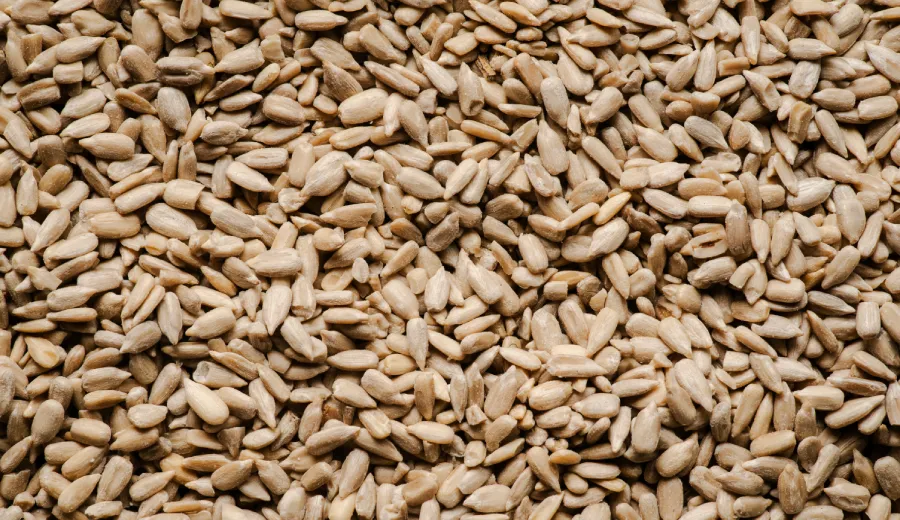
Sunflower seeds are sourced in hulled kernels and in-shell forms, two procurement decisions that require different supplier qualifications. Filter by confectionery versus oilseed type on Nutrada to find GFSI-certified suppliers and request bulk quotes.
| Field | Detail |
| Botanical name | Helianthus annuus |
| Available forms | Hulled kernels, in-shell striped, roasted, dehulled |
| Origins | Ukraine, Argentina, Bulgaria, Romania, Moldova |
| Certifications | GFSI, EU Organic, Non-GMO, Kosher, Halal |
| Common applications | Bakery toppings, trail mixes, muesli, granola |
| Packaging | 25-50kg bags, vacuum sealed recommended |
| MOQ | 500kg minimum, volume discounts at 10+ metric tons |
| Category | Grains Wholesale |
| Form/Grade | What it means for procurement | Typical application |
| Confectionery (striped hull) | Large seeds with white/grey striped shells, consumed whole | Snacking, bakery toppings |
| Oilseed (black hull) | Small seeds, high oil content, primarily for processing | Oil extraction, bird feed |
| Hulled/shelled kernels | Primary food ingredient form, shell removed | Bakery products, trail mixes, muesli |
| Roasted kernels | Pre-processed, extended shelf life | Ready-to-eat applications |
| Dehulled kernels | Raw kernels without shell, requires further processing | Ingredient manufacturing |
Ukraine dominates global sunflower seed production from the Kharkov and Dnepropetrovsk regions, but supply has faced significant disruption since 2022 due to ongoing conflict. CBI market intelligence confirms that European buyers have shifted procurement to Argentina for counter-seasonal supply and expanded sourcing from Bulgaria and Romania within the EU. Argentina harvests March-May, providing supply when Ukrainian harvest from August-September faces uncertainty. Moldova and Kazakhstan offer additional supply diversity, with processing infrastructure that meets GFSI requirements for European food manufacturers.
High polyunsaturated fatty acid (PUFA) content creates oxidation risk during storage, requiring temperatures below 15°C and vacuum packaging for optimal shelf life. Standard packaging uses 25-50kg polypropylene bags, though vacuum sealing prevents rancidity in the linoleic acid fraction. Buyers should verify moisture content stays below 8-9% and request peroxide value testing on the CoA, as sunflower seeds deteriorate rapidly once moisture or temperature limits are exceeded.
EU Organic and USDA NOP certified sunflower seeds are available from Ukraine, Argentina, and expanding EU production in Bulgaria and Romania. Argentine origins offer dual-certification depth with established organic processing infrastructure, while Ukrainian organic supply faces ongoing availability constraints. EU organic production provides supply security but typically at premium pricing compared to conventional grades.
Consumer packaging formats include 50-500g pouches for snacking applications, resealable jars for bakery use, and portion packs for trail mix components. MOQ for private label starts at 1000 units for standard packaging formats. Buyers must specify roasting level before production, as confectionery-grade kernels require different heat treatment than ingredient-grade seeds.
European processors concentrate in Bulgaria, Romania, and Germany, with Argentine facilities serving as alternative supply for EU markets. Documentation to request includes batch-specific CoA, microbiological reports testing for Salmonella and E.coli, and aflatoxin analysis per shipment. Nutrada lists GFSI-certified sunflower seeds suppliers from Ukraine, Argentina, and EU origins, covering hulled kernels and in-shell forms across conventional and organic supply. All orders are placed directly with certified suppliers, with no intermediary.
For other grain ingredients, explore Sesame Seeds for Middle Eastern and Asian origins with similar oil content properties and storage requirements.
Last updated: Apr 6, 2026

Find the right supplier for your food ingredients in under a minute with Nutrada. Nutrada - Sourcing made easy.