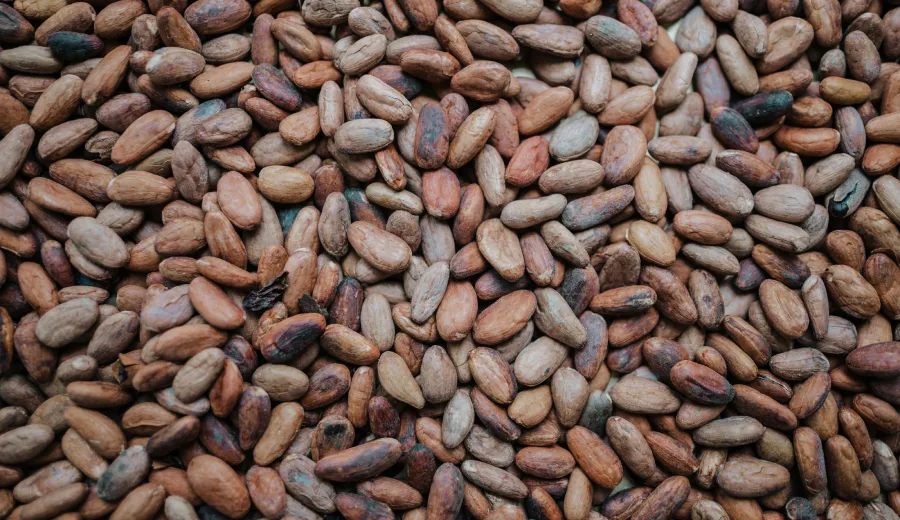
Different cacao varieties require different supplier qualifications. Filter by origin and fermentation grade on Nutrada to find GFSI-certified suppliers and request bulk quotes. Nutrada lists cacao beans suppliers from West Africa, South America, and Southeast Asia, offering raw dried beans, fermented and dried beans, and roasted beans. Suppliers hold Fairtrade, Rainforest Alliance, and EU Organic certifications.
| Value | Description |
| Botanical name | Theobroma cacao |
| Available forms | Raw dried beans, fermented and dried beans, roasted beans, whole beans |
| Origins | West Africa (Côte d'Ivoire, Ghana), South America (Ecuador, Peru, Venezuela), Central America (Dominican Republic, Nicaragua), Southeast Asia (Indonesia, Philippines) |
| Certifications | USDA Organic, EU Organic, Fairtrade, Rainforest Alliance, Kosher, HACCP |
| Common applications | Chocolate production, cocoa liquor manufacturing, cocoa butter extraction, bean-to-bar chocolate, single-origin chocolate |
| Packaging | 60-70 kg jute bags, 25 kg PE-lined cartons |
| MOQ | 500 kg to 100 metric tons |
| Category | Cacao |
Procurement teams must decide between three botanical varieties before requesting quotes.
| Form/Grade | What it means for procurement | Typical application |
| Criollo | Fine-flavor beans representing 5% of global supply. Premium pricing. Lower yields. | Single-origin dark chocolate, premium confectionery |
| Forastero | 75% of global production. Bulk pricing. Reliable supply from West Africa. | Mass-market chocolate, cocoa powder production |
| Trinitario | Hybrid variety. Mid-tier pricing. Flavor complexity between Criollo and Forastero. | Craft chocolate, mid-range confectionery |
Nacional (Arriba) beans from Ecuador and CCN-51 clones represent distinct flavor profiles within the Forastero category.
West Africa produces 75% of global cacao supply, with Côte d'Ivoire and Ghana dominating bulk Forastero exports. Côte d'Ivoire holds GFSI infrastructure across major growing regions, supporting containerized shipments above 25 metric tons. Ecuador supplies Nacional beans from altitudes between 200-400 meters, where cool nights develop floral aromatics that West African Forastero does not match. Peru and the Dominican Republic maintain dual EU Organic and USDA NOP certification depth for Trinitario varieties. EUDR deforestation compliance became mandatory for European buyers in 2024, requiring traceability documentation from all origins. Indonesia and the Philippines supply bulk Forastero at lower cost than African origins, but fermentation consistency varies by supplier.
Cacao beans are hygroscopic and absorb moisture above 60% relative humidity, which triggers mold growth. Suppliers ship in 60-70 kg jute bags or 25kg boxes for moisture protection during containerized transport. Buyers must verify the cut test results for every batch. The cut test reveals internal bean color and confirms fermentation completion before beans enter production. Slaty beans (gray interior, unfermented) above 3% in Grade 1 lots indicate poor post-harvest handling and produce off-flavors in finished chocolate.
Ecuador, Peru, and the Dominican Republic hold the deepest EU Organic and USDA NOP certified supply for cacao beans. Madagascar and Belize offer dual-certified Trinitario beans, but supply volumes remain limited compared to South American origins. West African suppliers hold organic certification primarily in Ghana and Togo, though volumes lag behind conventional production from the same regions.
Private label cacao beans are available in 100 gram, 500 gram and 1 kg units with custom branding. MOQ starts at 500 to 1000 pieces per size. Buyers must fix the roast profile or confirm raw bean delivery before production begins, as this decision affects flavor development and cannot be reversed after packaging.
Cacao beans manufacturers are based in West Africa, South America, and Southeast Asia, where proximity to growing regions reduces logistics delays. Request batch-specific Certificates of Analysis covering ochratoxin A levels (must be below 2 ppb), heavy metals compliance, and microbiological reports for salmonella and E. coli.
Fermentation rate documentation confirms the percentage of well-fermented beans in each lot, which determines final chocolate flavor.
Nutrada lists GFSI-certified cacao beans suppliers from West Africa, South America, and Central America, covering raw dried, fermented and dried, and roasted beans across conventional and organic supply. All orders are placed directly with certified suppliers, with no intermediary.
Further reading:
Last updated: Apr 6, 2026

Find the right supplier for your food ingredients in under a minute with Nutrada. Nutrada - Sourcing made easy.