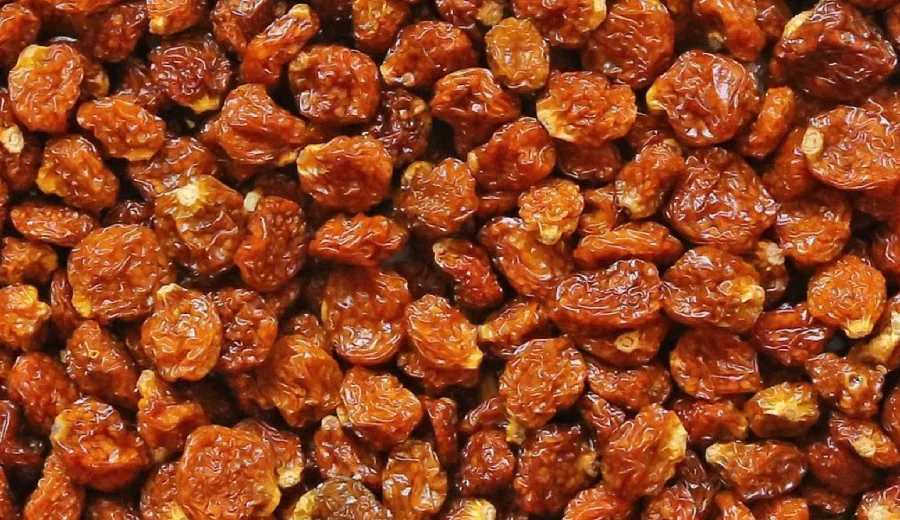
Nutrada lists GFSI-certified Inca berries suppliers with documented vitamin profiles so procurement teams can compare dried berry specifications and request quotes directly. Known as golden berries or cape gooseberries, these Physalis peruviana fruits offer natural antioxidant positioning.
| Field | Detail |
| Botanical name | Physalis peruviana |
| Available forms | Dried whole berries, spray-dried powder |
| Origins | Peru, Colombia, Ecuador, South Africa |
| Certifications | EU Organic, USDA Organic, Fair Trade, Kosher |
| Common applications | Trail mixes, energy bars, supplements, confectionery |
| Packaging | 20kg bulk bags |
| MOQ | 20kg |
| Category | Superfoods Wholesale |
| Form | What it means for procurement | Typical application |
| Dried whole berries | Sun-dried or dehydrated with 12-month shelf life | Trail mixes, granola, chocolate coating |
| Spray-dried powder | Fine powder for beverage solubility | Supplement capsules, smoothie mixes |
Dried whole berries represent the primary trade form with their characteristic sweet-tart flavor profile and chewy texture. Spray-dried powder requires different supplier qualifications since it targets supplement manufacturers needing consistent particle size.
Peru dominates global Inca berry exports with established organic certification infrastructure and premium positioning in European markets. Colombian suppliers offer competitive pricing from high-altitude farms above 2,000 metres, where cooler temperatures concentrate the fruit's natural beta-carotene. Ecuador provides smaller volumes but maintains consistent quality standards for dried berry processing. South African Cape region producers focus on greenhouse cultivation, though volumes remain limited compared to Andean origins. Harvest timing runs April to October, creating seasonal supply windows that affect MOQ requirements across origins.
Inca berries require moisture control below 15% to prevent mold development during storage. Standard packaging uses 20kg vacuum-sealed bags with nitrogen flushing to preserve the golden-orange color and prevent oxidation. Check the latest harvest date on supplier documentation since dried berries lose their characteristic sweet-tart balance after 18 months. Bulk buyers should verify beta-carotene levels through batch-specific testing, as nutrient density varies significantly between hand-picked and mechanical harvesting methods.
Peru and Colombia maintain the deepest organic certification infrastructure for Inca berries, with established farms holding both EU Organic and USDA NOP credentials. Ecuadorian organic supply focuses on smaller farm cooperatives with Fair Trade dual-certification options. South African organic volumes remain limited to specialty greenhouse operations.
Consumer packaging includes standup pouches from 100g to 500g, resealable bags for snacking, and portion-controlled sachets for trail mix components. MOQ for private label typically starts at 500kg compared to 100kg for bulk orders. Fix your target moisture specification before production begins, as this determines the drying method and affects the final texture profile your customers will experience.
European manufacturers source primarily from Peruvian suppliers for consistent quality and established phytosanitary documentation. Request batch-specific CoA covering beta-carotene levels, moisture content, and microbiological parameters including yeast and mold counts. German and Dutch processors often blend Inca berries with Goji Berries for superfruit mixes requiring matched nutrient profiles. Nutrada lists GFSI-certified Inca berries suppliers from Peru and Colombia, covering dried whole berries and powder forms across conventional and organic supply. All orders are placed directly with certified suppliers, with no intermediary.
Last updated: Apr 6, 2026

Find the right supplier for your food ingredients in under a minute with Nutrada. Nutrada - Sourcing made easy.