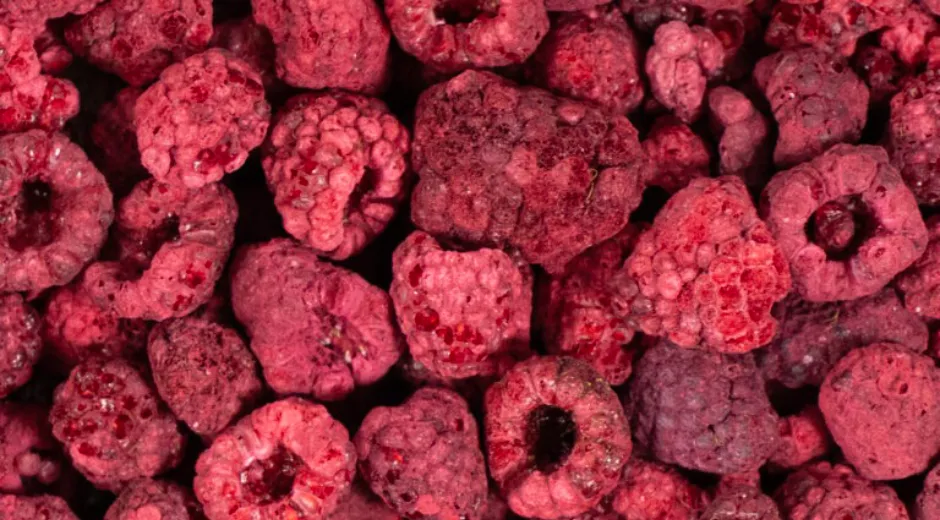
Nutrada lists GFSI-certified Freeze-Dried raspberry suppliers from Serbia, Poland, and Chile, filterable by certification, quality, and MOQ.
| Value | Description |
| Botanical name | Rubus idaeus |
| Available forms | Whole berries, powder |
| Origins | Serbia, Poland, Chile, USA |
| Certifications | GFSI, EU Organic, USDA NOP, Kosher, Halal |
| Common applications | Breakfast cereal, granola, bakery inclusions, confectionery |
| Packaging | 5-25kg vacuum-sealed bags |
| MOQ | 20kg |
| Category | Freeze-Dried Fruits Wholesale |
| Form | What it means for procurement | Typical application |
| Whole berries | High-grade format maintaining structural integrity and bright red colour retention; maximum 4-5% moisture | Breakfast cereals, granola, premium trail mixes |
| Powder | Ground freeze-dried berries; concentrated flavour and colour; easier storage and handling | Smoothie mixes, yoghurt flavouring, bakery applications |
Serbian raspberry production centres in the Čačak and Arilje regions deliver the majority of European freeze-dried raspberry supply, with processing infrastructure that has grown substantially since 2015 to meet growing cereal manufacturer demand. Polish harvest runs July through September, providing substantial frozen and freeze-dried raspberry to EU food manufacturers through short intra-EU logistics chains. Chilean counter-seasonal harvest from December through March enables year-round supply and holds both USDA NOP and EU organic certification infrastructure for berry exports. China produces the largest raspberry volumes globally but EU imports face enhanced MRL scrutiny, with RASFF notifications including pesticide residue exceedances that require additional supplier verification.
Freeze-Dried raspberry requires moisture-controlled storage below 25 degrees Celsius at under 65% relative humidity to prevent colour degradation and clumping. Vacuum-sealed bags from 5-25kg maintain the crisp texture and vibrant red colour for 18-24 months when stored correctly. Buyers must verify anthocyanin levels on the Certificate of Analysis for functional food applications, as colour intensity directly correlates with antioxidant retention.
Serbian and Polish suppliers hold EU Organic certification for Freeze-Dried raspberry, with Poland offering dual EU-USDA certification for export markets. Chile maintains strong organic infrastructure for counter-seasonal supply, though organic volumes represent a smaller portion of total freeze-dried output compared to conventional production.
Retail packaging includes stand-up pouches, resealable jars, and portion sachets from 50g to 500g for direct consumer sales. MOQ for private label typically starts at 500kg compared to 100kg for bulk supply. Buyers must confirm vitamin C retention claims before production begins, as levels can differ considerably between freeze-drying equipment and storage conditions.
European manufacturers concentrate in Serbia and Poland where processing infrastructure supports both Freeze-Dried blackberries and raspberry lines from overlapping growing regions. Request batch-specific certificates of analysis including ellagic acid content, microbiological reports, and pesticide screening results covering the new acetamiprid limits. Breakfast cereal manufacturers commonly source raspberry with Freeze-Dried blueberries for mixed berry formulations.
Nutrada lists GFSI-certified Freeze-Dried raspberry suppliers from Serbia, Poland, and Chile, covering whole berries and powder across conventional and organic supply. All orders are placed directly with certified suppliers, with no intermediary.
Last updated: Apr 10, 2026

Find the right supplier for your food ingredients in under a minute with Nutrada. Nutrada - Sourcing made easy.