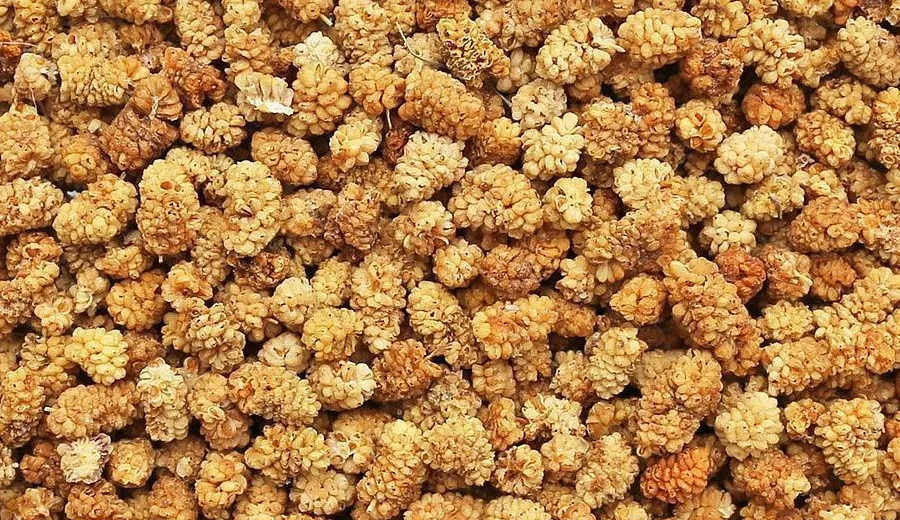
Mulberry is sourced in white and black varieties, a procurement decision that requires different supplier qualifications. Filter by species and moisture content on Nutrada to find GFSI-certified suppliers and request bulk quotes.
| Field | Detail |
| Botanical name | Morus alba (white mulberry), Morus nigra (black mulberry) |
| Available forms | Dried whole berries, powder, freeze-dried |
| Origins | Turkey, China, Afghanistan, Pakistan, Iran |
| Certifications | GFSI, EU Organic, USDA NOP, Kosher, Halal |
| Common applications | Trail mixes, bakery inclusions, smoothie powders, functional foods |
| Packaging | 5-25 kg bags |
| MOQ | 20kg |
| Category | Dried Fruits Wholesale |
| Form/Grade | What it means for procurement | Typical application |
| White mulberry (Morus alba) | Milder, sweeter flavor profile. Lower price point. Cream-white color after drying. | Natural snacking, trail mixes where mild sweetness required |
| Black mulberry (Morus nigra) | Higher anthocyanin content. More intense flavor. Premium pricing tier. Dark purple-black color. | Functional food applications, antioxidant positioning |
| Dried whole berries | Standard commercial form. Moisture maximum 18-20%. | Primary B2B format for snacking and bakery inclusion |
| Powder | Milled from dried berries. Extended shelf life. | Smoothie blends, supplement applications |
| Freeze-dried | Premium processing method. Higher cost but enhanced flavor retention. | High-end trail mixes, breakfast cereals |
Turkey is the leading exporter of dried mulberry globally, with production spread across a broad growing area including the Malatya, Elazığ, and Tokat regions. All three main mulberry species — white (Morus alba), black (Morus nigra), and red (Morus rubra), are cultivated in Turkey, which has a documented mulberry cultivation history of more than 400 years and is considered one of the most important centers of mulberry genetic diversity, as confirmed by PMC.
Afghanistan, Pakistan, and Tajikistan contribute additional white mulberry supply along the historic Silk Road growing corridor, with harvest running primarily from May through August across all origins; this seasonal concentration means buyers should confirm available stock and forward contracts before the harvest window rather than after.
Procurement teams co-specifying dried mulberry alongside other anthocyanin-rich dark berries also evaluate dried blackberries and dried blackcurrants, given the overlapping functional food and supplement applications.
Dried mulberries are hygroscopic and require storage below 15 degrees Celsius with relative humidity under 65% to prevent clumping and maintain the 12-18 month shelf life. Standard packaging uses 5-25 kg polyethylene bags with vapor barriers inside cardboard cartons for moisture protection during transport. Check the moisture percentage on each batch CoA before confirming orders, mulberry moisture can vary from 15-25% between suppliers, affecting both shelf life and texture consistency in finished products.
Buyers should verify the variety of black mulberries before making a purchase, because the use of black carrot juice or sour cherry concentrate to colour lighter mulberries to black is a common practice.
Turkey and China both offer EU Organic certified mulberry supply, with Turkish suppliers typically maintaining dual EU and USDA NOP certification for broader market access. Chinese organic mulberry supply runs deeper for volume buyers but with longer lead times compared to Turkish organic sources. Iranian black mulberry producers hold limited organic certification infrastructure compared to Turkish suppliers.
Consumer packaging formats include resealable pouches, trail mix containers, and supplement capsules for powdered forms. Private label MOQ typically starts at 500 kg minimum per SKU compared to bulk purchasing. Buyers must specify white versus black mulberry species before production starts as the color, flavor profile, and nutritional claims differ significantly between varieties.
Mulberry processors concentrate in Turkey's Eastern Anatolia region and China's eastern provinces, with Turkish manufacturers offering smaller batch flexibility compared to Chinese volume-focused operations. Request batch-specific CoAs showing moisture content, microbiological testing, and pesticide residue analysis for each shipment. Processing facilities in Afghanistan and Pakistan require additional verification of GFSI compliance and cold-chain capabilities for European export.
Nutrada lists GFSI-certified mulberry suppliers from Turkey, China, and Central Asia, covering white and black varieties across conventional and organic supply. All orders are placed directly with certified suppliers, with no intermediary.
Last updated: Apr 6, 2026

Find the right supplier for your food ingredients in under a minute with Nutrada. Nutrada - Sourcing made easy.