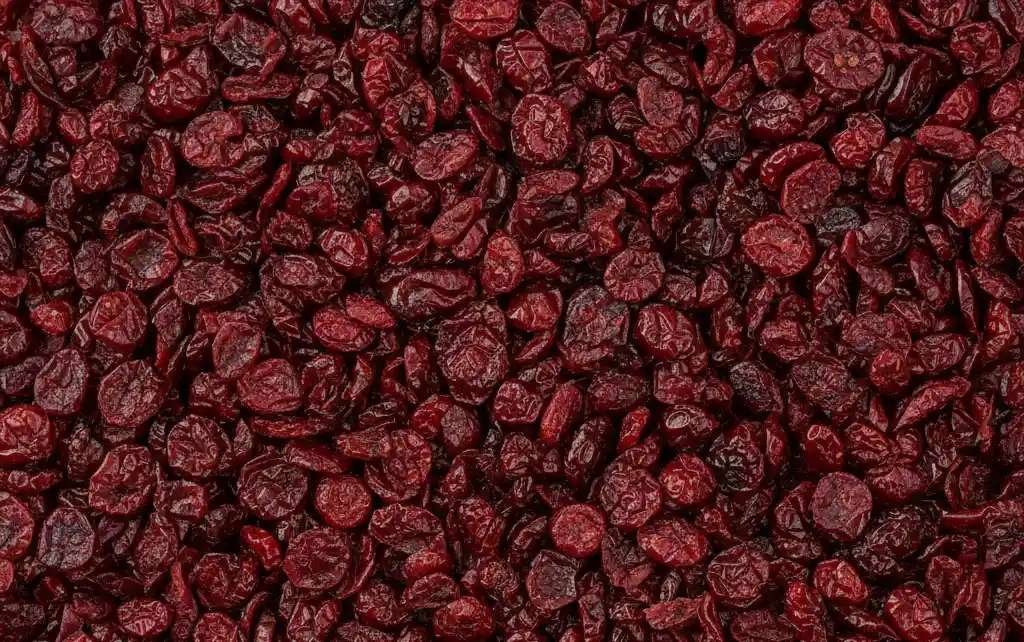
Cranberries are sourced in sweetened and unsweetened forms, which are two procurement decisions that require different supplier qualifications. Filter by sweetener type on Nutrada to find GFSI-certified suppliers and request bulk quotes.
| Field | Detail |
| Botanical name | Vaccinium macrocarpon |
| Available forms | Sweetened whole dried, unsweetened dried, sliced, powder, juice concentrate |
| Origins | USA (Wisconsin, Massachusetts, New Jersey, Oregon, Washington), Canada (Quebec, British Columbia), Chile |
| Certifications | GFSI (BRCGS, IFS, FSSC 22000), EU Organic, USDA NOP, Kosher, Halal, Non-GMO |
| Common applications | Bakery inclusions, trail mixes, breakfast cereals, dietary supplements, confectionery |
| Packaging | 5-25kg bags |
| MOQ | 25kg |
| Category | Dried Fruits Wholesale |
| Form/Grade | What it means for procurement | Typical application |
| Sweetened dried cranberries (apple juice infused) | Cleaner label positioning, high-value product category | Organic bakery products, premium trail mixes |
| Sweetened dried cranberries (cane sugar infused) | Standard commercial grade, cost-effective | Mass market cereals, standard bakery inclusions |
| Unsweetened dried cranberries | Extremely tart, requires end-product formulation adjustment | Supplement extracts, functional food ingredients |
| Cranberry powder (spray-dried) | Concentrated form, requires rehydration protocols | Beverage mixes, supplement capsules |
| Sliced dried cranberries | Specific size profile for visual appearance | Premium granola bars, artisan baked goods |
The United States produces approximately two-thirds of the world's cranberry supply, with Wisconsin accounting for around 60% of the US crop and Massachusetts a further 25%, according to the USDA Economic Research Service. Both states harvest between September and October, with Wisconsin operating large-scale bog systems and Massachusetts maintaining the traditional wet-harvest flooding method.
Oregon and Washington contribute smaller volumes in the Pacific Northwest. Ocean Spray, the major US growers' cooperative, handles a significant share of US crop flow and is a relevant factor in pricing dynamics for buyers purchasing at scale.
Canada provides secondary supply, primarily from Quebec and British Columbia, and accounts for almost all cranberry imports into the United States, reflecting the close cross-border supply relationship.
Procurement teams specifying tart, anthocyanin-rich dried fruit alongside cranberries also evaluate dried blueberries and dried blackcurrants for overlapping applications in bakery, confectionery, and functional food formulations.
Dried cranberries absorb moisture rapidly above 60% humidity, requiring sealed packaging to maintain 16-20% moisture content. Store below 20 degrees Celsius in dry conditions for 12-18 months shelf life, though quality degrades to 8-10 months if stored above 25 degrees Celsius. Bulk packaging arrives in 5-25kg multilayer bags with moisture barrier lining. Verify the sweetener type on each CoA, as apple juice infusion versus cane sugar affects ingredient labeling and organic certification validity.
USA and Canadian origins both hold dual EU Organic and USDA NOP certification for organic cranberry supply. Organic cranberries require organic sweetener infusion, either organic cane sugar or organic apple juice concentrate. Wisconsin and Massachusetts organic bogs maintain consistent year-round availability, while Canadian organic supply shows seasonal variation based on harvest conditions.
Retail packaging formats include stand-up pouches (100-500g), clear PET jars, and resealable bags for direct consumer sale. Trail mix and snack pack formats require specific piece size consistency for automated filling equipment. MOQ increases to 500kg minimum for private label runs. Specify the sweetener type prominently on front-of-pack labeling, as apple juice infused achieves higher-value positioning over sugar-sweetened variants.
Cranberry processing facilities concentrate in Wisconsin and Massachusetts near growing regions, with smaller operations in Pacific Northwest states. Canadian manufacturers in Quebec and British Columbia focus on organic and specialty grades. Documentation to request includes batch-specific CoA, microbiological reports, and PAC (proanthocyanidin) content analysis for functional applications.
Nutrada lists GFSI-certified cranberry suppliers from North American origins, covering sweetened and unsweetened forms across conventional and organic supply. All orders are placed directly with certified suppliers, with no intermediary.
Last updated: Apr 6, 2026

Find the right supplier for your food ingredients in under a minute with Nutrada. Nutrada - Sourcing made easy.