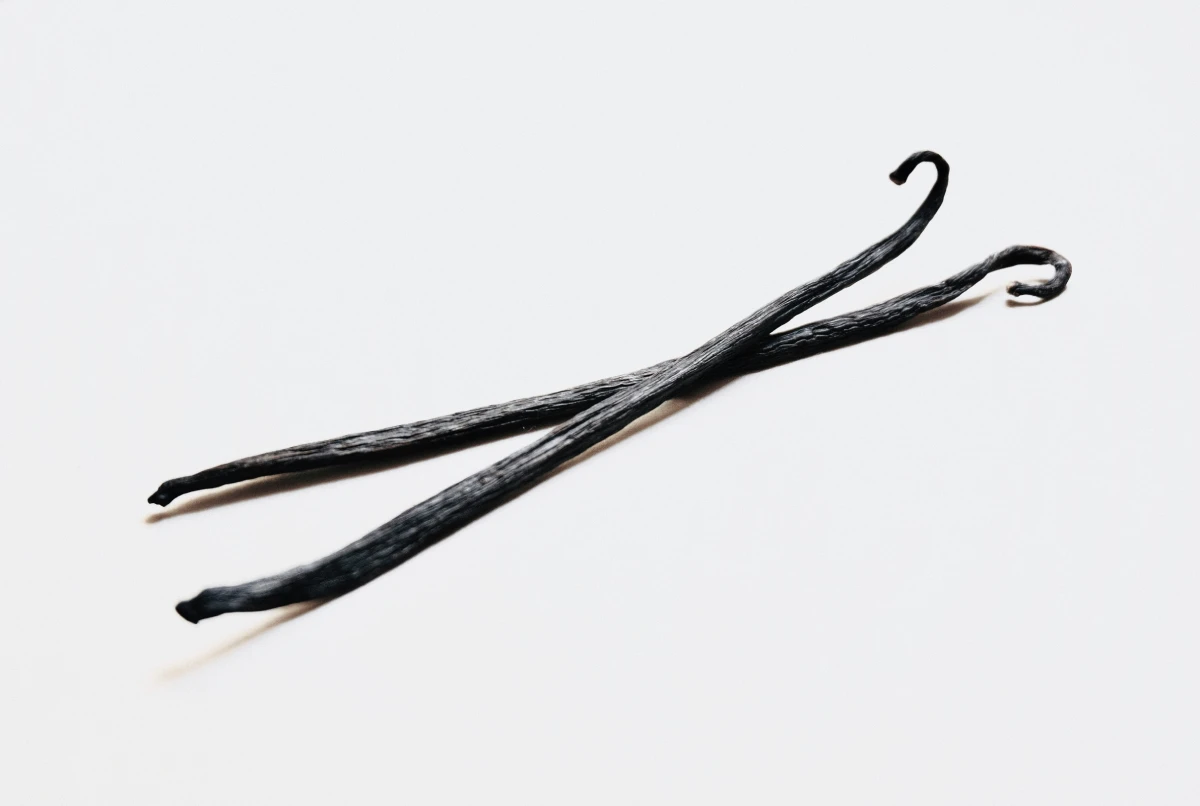
Vanilla is traded in several commercial forms: whole beans (Grade A and Grade B), pure extract (single to 10-fold concentration), powder, paste, and oleoresin. For food manufacturers, the choice depends on application, vanillin content requirements, heat stability, label claims, and budget: natural vanilla extract costs roughly 10–20x more per unit of flavour than synthetic vanillin.
In short:
Vanilla is one of the most price-volatile ingredients in the herbs and spices category. Madagascar’s dominance (70–80% of supply) means that cyclones, political instability, or crop disease in a single country can swing global prices by 200–300% within a season.
The curing process adds to cost and lead time. Fresh green vanilla beans must be cured over 3–6 months through a cycle of blanching, sweating, drying, and conditioning. This labour-intensive process (vanilla is the world’s second most expensive spice after saffron by weight) cannot be accelerated without compromising quality.
For procurement risk management, food manufacturers should consider blending strategies: using pure vanilla extract for label claims and premium positioning, combined with natural vanillin (fermentation-derived) for cost-effective flavour boosting. Multi-origin sourcing (Madagascar + Indonesia + Uganda) also reduces single-source dependency.
| Parameter | Grade A (Gourmet) | Grade B (Extract) |
| Moisture content | 25–35% | 15–25% |
| Appearance | Plump, oily, flexible | Drier, thinner, may be brittle |
| Vanillin content | 1.5–2.5% (dry basis) | 1.5–2.5% (dry basis) |
| Typical use | Pastry, visible bean specks, retail products | Extract production, industrial flavouring |
| Price | Premium (highest) | 20–40% below Grade A |
In industrial food manufacturing, Grade B beans represent the best value for extract production. Grade A’s higher moisture content means you are paying a premium for water that will be discarded during extraction. The vanillin content between grades is comparable, typically 1.5–2.5% on a dry-weight basis.
The three main origins produce distinct flavour profiles. Madagascar (Bourbon) vanilla is creamy, sweet, and the global benchmark, supplying 70–80% of world production. Tahitian vanilla (V. tahitensis) has floral, fruity notes and commands the highest prices but represents a tiny fraction of global supply. Indonesian vanilla is smokier, woodier, and typically 20–40% cheaper than Madagascar.
Vanilla extract is made from vanilla beans and contains the full spectrum of flavour compounds (200+ identified). Vanilla flavouring typically contains only vanillin, either natural (fermentation-derived) or synthetic, without the complex secondary flavour notes. Labelling regulations differ: “vanilla extract” requires actual bean extraction.
Fold strength indicates concentration relative to single-fold extract. Single-fold uses 100g of vanilla beans per litre of solvent. 2-fold uses twice that amount, 10-fold uses ten times. Industrial manufacturers use higher folds to reduce volume and shipping costs while maintaining flavour intensity.
In the EU, vanillin from fermentation (ex-ferulic acid) can be labelled as “natural flavouring.” However, it cannot be called “vanilla” flavouring unless it comes from vanilla beans. For products claiming “real vanilla” or showing vanilla seeds, actual bean-derived extract or powder is required.
Madagascar’s climate and soil are ideal for Vanilla planifolia. The country has over a century of cultivation expertise and established curing infrastructure. However, this concentration creates supply chain fragility, the 2017 Cyclone Enawo destroyed significant production and triggered a price spike to over $600/kg.


Find the right supplier for your food ingredients in under a minute with Nutrada. Nutrada - Sourcing made easy.