Sulfur dioxide (SO₂) is the most widely used preservative in dried fruit production. It prevents enzymatic browning, inhibits mould growth, and extends shelf life from months to years. EU Regulation 1333/2008 permits SO₂ in dried fruit at levels up to 2,000 mg/kg for certain products, while products containing more than 10 mg/kg SO₂ must declare it as an allergen under Regulation 1169/2011. For food manufacturers, SO₂ levels affect product colour, shelf life, allergen labelling, and suitability for organic and natural-label product lines.
In short:
EU Regulation 1333/2008, Annex II, sets maximum SO₂ levels for dried fruit by product type:
| Dried Fruit Category | Max. SO₂ (mg/kg) | Dried Fruit Category | Max. SO₂ (mg/kg) |
| Dried coconut | 200 | Dried bananas | 1,000 |
| Dried tomatoes | 200 | Other dried fruit | 1,000 |
| Dried figs | 400 | Sultanas, raisins | 2,000 |
| Dried peaches, apples, pears | 600 | Dried apricots | 2,000 |
Allergen labelling threshold: Under EU Regulation 1169/2011, any food product containing more than 10 mg/kg of sulfites must declare “sulfites” or “sulphur dioxide” in the ingredient list, highlighted as an allergen (bold, uppercase, or otherwise distinguished). Since conventionally sulphured dried fruit contains 200–2,000 mg/kg SO₂, this declaration is effectively mandatory for all sulphured products.
This allergen declaration requirement is a key driver for the growing demand for unsulphured dried fruit in food manufacturing. Products marketed as “no allergens” or targeting allergen-free production lines cannot use sulphured dried fruit.
SO₂ serves three functions in dried fruit preservation:
The choice between sulphured and unsulphured dried fruit affects labelling, shelf life, target market, and storage requirements.
| Parameter | Sulphured | Unsulphured |
| Colour | Bright, consistent (orange apricots, golden sultanas) | Darker, natural browning |
| Shelf life | 18–24 months | 6–12 months |
| Moisture | 15–25% | 10–18% |
| Microbial risk | Lower (SO₂ inhibits mould/yeast) | Higher — tighter storage control needed |
| Allergen labelling | Required (>10 mg/kg SO₂ triggers sulfite declaration) | Not required |
| Organic eligibility | No — SO₂ not permitted under EU organic (2018/848) | Yes |
| Baby food eligibility | No (EU Directive 2006/125/EC) | Yes |
| Clean label | No | Yes |
| Price | Baseline | 10–30% higher price (shorter shelf life, higher waste risk) |
For organic product lines: EU organic regulation (2018/848) does not permit sulfur dioxide as an additive. All organic dried fruit is inherently unsulphured. This means shorter shelf life and different visual characteristics must be factored into procurement planning.
For baby food: EU Directive 2006/125/EC sets significantly lower limits for food additives in products intended for infants and young children. Practically, this means baby food dried fruit must be unsulphured or have SO₂ levels well below 10 mg/kg.
At permitted EU levels, SO₂ in dried fruit is considered safe for the general population. However, sulfite-sensitive individuals (estimated 1% of the population, higher among asthmatics) can experience adverse reactions. This is why allergen labelling is mandatory above 10 mg/kg.
SO₂ levels can be partially reduced by washing or soaking dried fruit, but this introduces moisture and changes texture. It is not a reliable method for achieving precise SO₂ targets. If low SO₂ is required, buy unsulphured products from the outset rather than attempting to change the sulphured product.
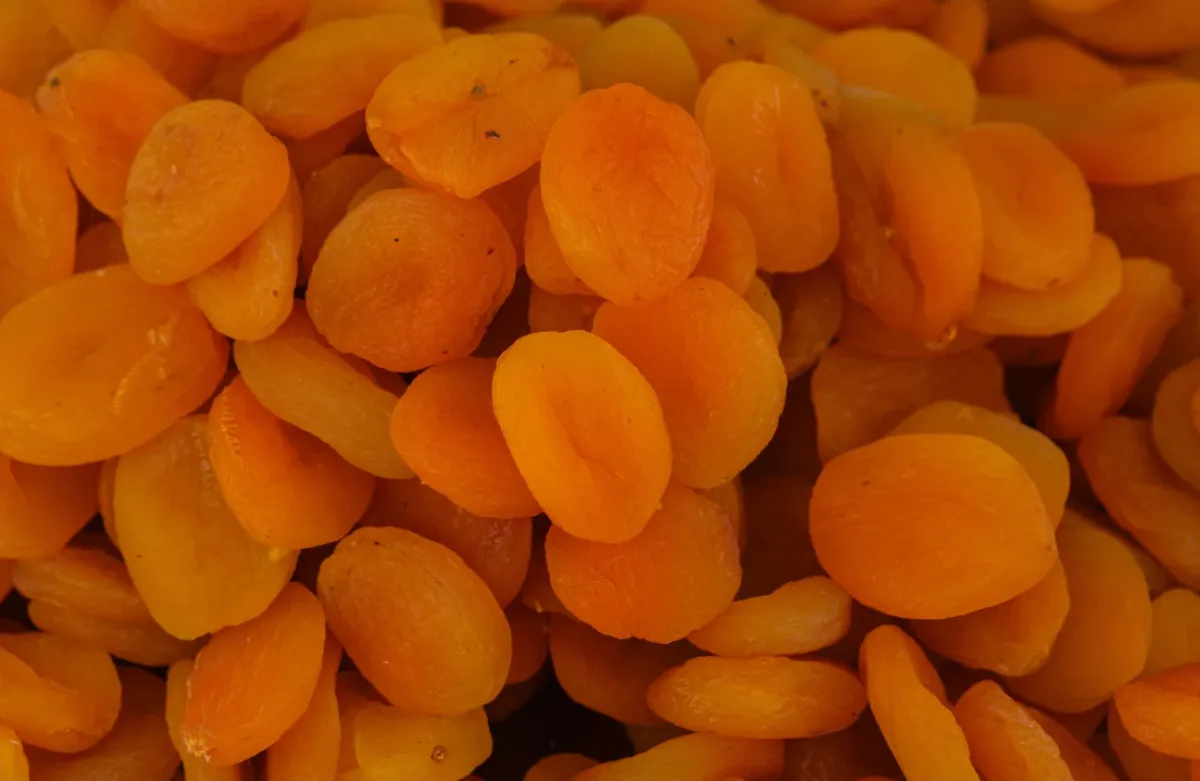
Without SO₂ to inhibit polyphenol oxidase enzymes, apricots undergo enzymatic browning during drying. The Maillard reaction also contributes to darkening at drying temperatures. The brown colour does not indicate lower quality, it is the natural result of drying without a colour-preserving agent. The flavour profile shifts toward deeper, more caramelised notes.
Sulphured dried fruit: 18–24 months at ambient temperature. Unsulphured: 6–12 months at ambient, up to 18 months refrigerated. For supply chain planning, unsulphured product requires tighter inventory management and potentially cold storage to maintain quality throughout the shelf life.

Find the right supplier for your food ingredients in under a minute with Nutrada. Nutrada - Sourcing made easy.