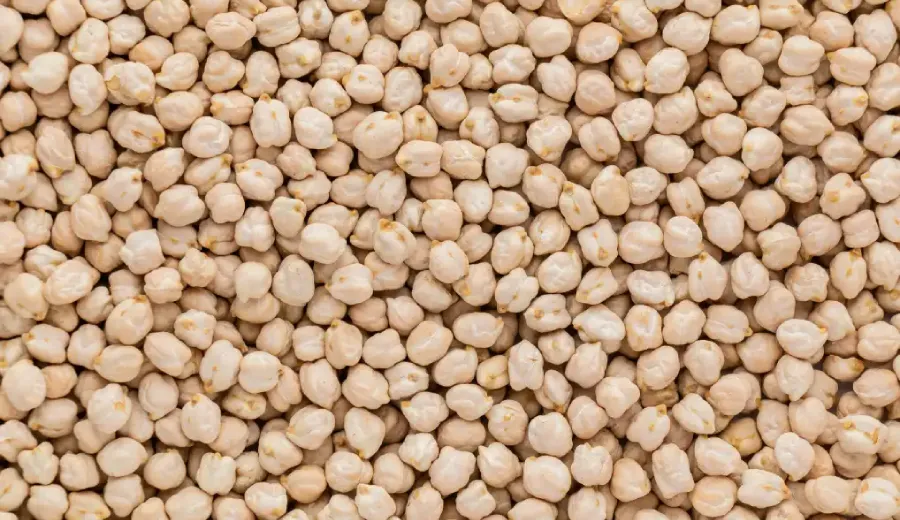
Kabuli and Desi chickpeas are not interchangeable in most manufacturing applications — specifying the wrong type creates formulation problems that a certificate of origin will not resolve. Nutrada lists GFSI-certified bulk chickpea suppliers from Australia, Canada, India, and Turkey, filterable by type and form, so you can match the supplier to your specification before placing an order.
| Botanical name | Cicer arietinum |
| Main types | Kabuli (large, cream-coloured), Desi (small, dark, rough skin) |
| Available forms | Whole dried, split, chickpea flour (besan), chickpea flakes, chickpea pasta |
| Key origins | Australia, Canada, India, Turkey, Pakistan, Argentina |
| Applications | Hummus, falafel, canned goods, snacks, gluten-free flour, plant-based protein, pasta |
| Certifications | GFSI (BRC, IFS, FSSC 22000), EU Organic, USDA NOP, non-GMO |
| Packaging | 25 kg or 50 kg polypropylene bags; 1,000 kg big bags |
| MOQ | From 25 kg (varies by form and supplier) |
| Category | Peas |
The two commercial types differ in size, skin, protein content, and processing behaviour. Both are traded as whole dried chickpeas, but their downstream uses diverge significantly. The Codex Standard for Chickpeas (CXS 171-1989) defines quality parameters including moisture, foreign matter, and defect tolerances applicable to both types.
| Type | Size | Skin | Protein % | Primary application |
| Kabuli | Large (8–12 mm) | Smooth, cream | 17–20% | Hummus, canned chickpeas, whole-grain snacks, salads |
| Desi | Small (5–7 mm) | Rough, dark brown | 20–25% | Chickpea flour (besan), split chickpeas (chana dal), protein extraction |
Chickpea flour produced from Desi chickpeas (besan) has distinct functional properties from flour milled from Kabuli: higher protein content, darker colour, and a more pronounced earthy flavour. For gluten-free bakery applications requiring a neutral-flavour base, Kabuli-milled flour is the better specification despite its lower protein content.
Chickpeas are relatively shelf-stable but moisture control during storage is critical: above 13% moisture, moulds including aflatoxin-producing species can develop during extended storage. Standard bulk format is 25 to 50 kg polypropylene bags or 1,000 kg big bags, palletised for container shipping. A standard 20-foot container holds approximately 22 to 24 MT of bagged chickpeas depending on packing density. Request the following documentation before approving a bulk order:
Australia and Canada harvest from October to January and March to August respectively, providing complementary supply windows. Australian Kabuli chickpeas are the benchmark quality reference for European canning and hummus manufacturers.
India is the primary source of certified organic Desi chickpeas for European buyers, with established EU Organic certification across several production regions. Canada, particularly Saskatchewan, offers certified organic Kabuli chickpeas under both EU Organic and USDA NOP standards with strong food safety documentation. Turkey supplies organic chickpeas primarily for the conventional dried-goods retail segment in Europe. For EU imports, request the Certificate of Inspection for each shipment in addition to the producer's annual organic certificate.
Dried chickpeas in 400 g, 500 g, and 1 kg retail pouches are the standard private label format for the dried-goods aisle. Canned chickpeas (typically 400 g drained weight) require a co-packer with retort processing capability, which is a separate procurement category from dried bulk.
Chickpea pasta is a growing private label format: the pasta is typically manufactured from chickpea flour and requires a dedicated gluten-free production line if positioned as gluten-free. Confirm whether your packaging claims ‘100% chickpea flour’ or a blend, as blends with lentil or pea flour are common in lower-cost chickpea pasta products.
India is the dominant source of Desi chickpeas and chickpea flour for European buyers, supplying both conventional and organic-certified material, though EU food safety documentation requires more rigorous supplier qualification than for Australian or Canadian origins; pesticide MRL compliance records are less standardised and require third-party verification.
Nutrada lists GFSI-certified chickpea suppliers from Australia, Canada, India, and Turkey, covering Kabuli and Desi varieties in whole, split, and flour forms across conventional and organic options.
Also available on Nutrada:
Chickpea Protein: chickpea protein concentrate and isolate for plant-based food applications
Last updated: Apr 6, 2026

Find the right supplier for your food ingredients in under a minute with Nutrada. Nutrada - Sourcing made easy.