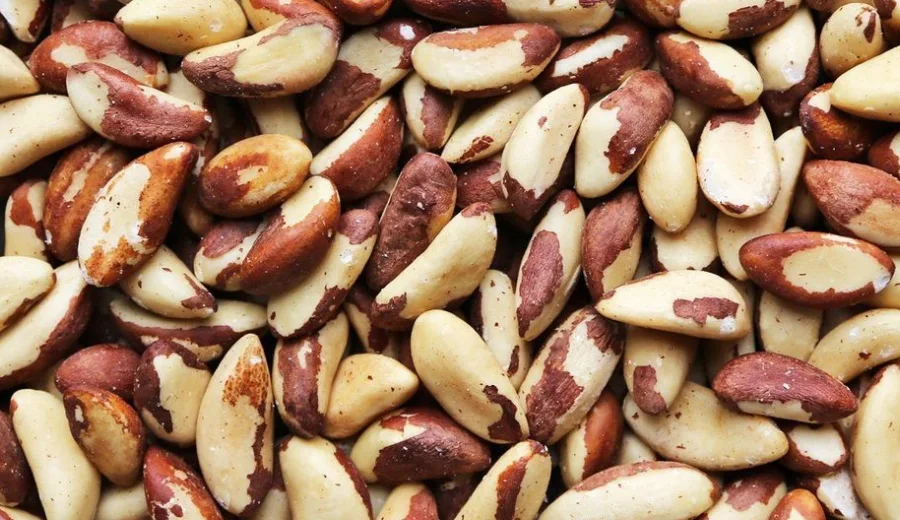
Confirming selenium content is the first challenge when sourcing Brazil nuts in bulk. Nutrada lists GFSI-certified Brazil nuts suppliers with batch-specific analysis so procurement teams can compare selenium levels and request quotes directly. Find suppliers offering shelled kernels, chopped, meal, and oil from Bolivia, Peru, and Brazil with full traceability documentation.
| Field | Detail |
| Botanical name | Bertholletia excelsa |
| Available forms | In-shell, shelled whole kernels, chopped, sliced, meal, oil, butter |
| Origins | Bolivia, Peru, Brazil |
| Certifications | GFSI, EU Organic, USDA NOP, Fair Trade, FairWild |
| Common applications | Snacks, confectionery, bakery inclusions, selenium supplementation |
| Packaging | 20kg vacuum-packed cartons |
| MOQ | 500kg minimum |
| Category | Nuts Wholesale |
Brazil nuts reach procurement teams in seven forms, each requiring different supplier qualifications for food safety control.
| Form | What it means for procurement | Typical application |
| In-shell | Higher aflatoxin risk, longer shelf life, USDA grades apply | Retail packaging, premium gift mixes |
| Shelled whole kernels | AFI specifications, size grading (large/medium/small) | Snacking, chocolate inclusions |
| Chopped/sliced | Controlled piece size, enhanced mixing properties | Bakery inclusions, granola |
| Meal/flour | Fine grinding, oil content management | Gluten-free baking, protein supplementation |
| Oil | Cold-pressed or refined, peroxide value specs | Culinary applications, cosmetics |
Bolivia produces approximately 50% of global Brazil nuts from the Beni and Pando departments, with suppliers maintaining better drying infrastructure to control aflatoxin formation during the December-March harvest season. Peru supplies 25-30% from Madre de Dios region, where collection timing depends on Amazon flood patterns that can delay forest access by weeks. Brazil contributes 20% despite the product's name, primarily from Para and Amazonas states where supply chain disruption affects availability due to enhanced EU import controls. All commercial Brazil nuts are wild-harvested from trees reaching 50 meters in height, making supply inherently weather-dependent with no plantation cultivation possible. The nuts require specific Amazonian ecosystem services including orchid bee pollination and agouti seed dispersal that cannot be replicated commercially.
Brazil nuts absorb moisture through their porous shells during rainy season collection, creating high aflatoxin risk that requires immediate proper drying after harvest. Suppliers package shelled kernels in 20kg vacuum-sealed cartons under modified atmosphere to prevent oil rancidity during the 24-month shelf life at 0-10°C storage. Procurement teams must verify batch-specific CoA for aflatoxin levels (B1 max 5 μg/kg, total max 10 μg/kg) and selenium content, which varies from 8-83 μg per nut depending on soil conditions and individual tree genetics.
Bolivia and Peru maintain EU Organic and USDA NOP certification infrastructure for wild-harvested Brazil nuts, requiring chain of custody documentation from forest collection through processing facilities. Brazil offers organic certification but with less consistent supply depth due to forest access challenges during certification audits. Wild-harvested Brazil nuts are inherently pesticide-free, making organic certification primarily a documentation and traceability requirement rather than production practice verification.
Consumer packaging formats include resealable pouches from 100g to 1kg, glass jars for premium positioning, and portion-control sachets for health supplement channels focusing on selenium content messaging. MOQ increases to 1000kg minimum for private label due to specialized packaging line setup and label printing requirements. Buyers must establish selenium content claims before production starts, as nutritional variability between batches prevents standardized "per serving" selenium guarantees.
Processors operate primarily in Bolivia (La Paz region) and Peru (Lima) with GFSI certification covering wet processing, drying, and sorting operations that directly impact aflatoxin control. Documentation to request includes batch-specific CoA, microbiological reports confirming absence of Salmonella and E.coli, and selenium analysis from accredited laboratories. Nutrada lists GFSI-certified Brazil nuts suppliers from Bolivia, Peru, and Brazil, covering shelled kernels, chopped forms, and meal across conventional and organic supply. All orders are placed directly with certified suppliers, with no intermediary.
Last updated: Apr 6, 2026

Find the right supplier for your food ingredients in under a minute with Nutrada. Nutrada - Sourcing made easy.