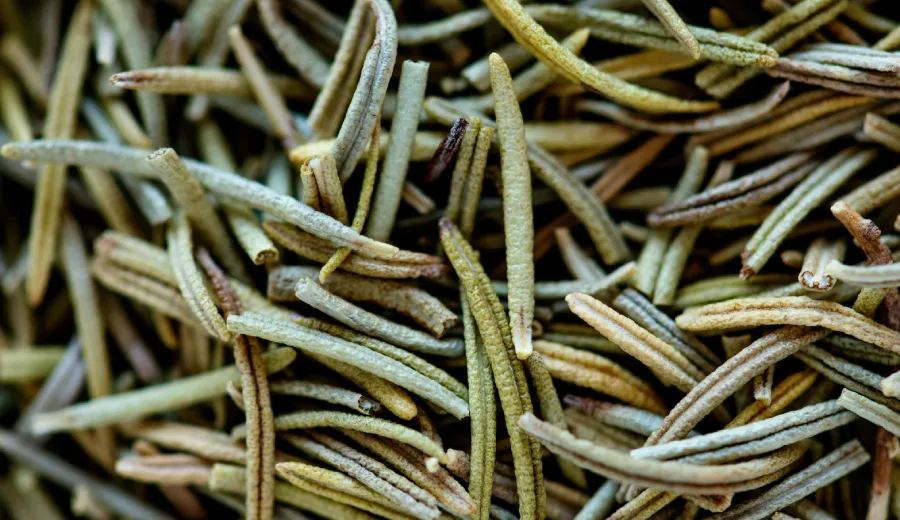
Nutrada lists GFSI-certified rosemary suppliers with powder, extract, and cut forms. Find rosemary wholesalers from Morocco, Spain, and Tunisia across organic and conventional qualities.
| Value | Description |
| Botanical name | Salvia rosmarinus |
| Available forms | Dried cut/sifted, ground, rosemary extract E392 |
| Origins | Morocco, Spain, Albania, Greece, Tunisia |
| Certifications | GFSI (BRCGS, IFS, FSSC 22000), EU Organic, Kosher, Halal |
| Common applications | Culinary seasoning, natural food antioxidant, ready meal formulations |
| Packaging | 5-25 kg bags |
| MOQ | 25kg |
| Category | Herbs Wholesale |
Rosemary suppliers on Nutrada offer two distinct B2B product streams with different specifications and applications.
| Form | What it means for procurement | Typical application |
| Dried cut/sifted | Visual herb pieces, volatile oil 1.0-2.5%, moisture max 10-12% | Mediterranean seasoning blends, lamb marinades, visual herb mixes |
| Ground rosemary | Powder form for uniform distribution, same oil specifications | Ready meal seasonings, processed food formulations |
| Rosemary extract E392 | Standardised carnosic acid 3-6%, natural antioxidant approval | Clean-label food preservation, replacing synthetic BHA/BHT |
The extract grade requires carnosic acid content verification on each Certificate of Analysis, while culinary grades focus on volatile oil percentages and visual appearance standards.
Morocco accounts for the largest share of rosemary exported to European buyers, with both wild-harvested and cultivated supply from Atlas Mountain regions creating supply concentration risk during adverse weather seasons. Spain produces rosemary across Andalusia, Murcia, and the Balearic Islands with established processing infrastructure for rosemary extract E392 production, while Tunisia provides geographic diversification from the northern Tell region. Moroccan rosemary oil carries a superior specification profile for its camphor-rich chemotype, particularly valued in extract applications. Mediterranean suppliers often carry both thyme suppliers and sage suppliers from overlapping cultivation regions. Dried rosemary falls under Regulation (EC) No 396/2005 for pesticide maximum residue limits, requiring full EU pesticide panel testing per production lot.
Rosemary is hygroscopic and requires storage below 20 degrees Celsius at under 65% relative humidity to prevent volatile oil degradation and maintain shelf life of 18-24 months. Suppliers pack dried rosemary in 5-25 kg food-grade bags with inner PE liners for moisture protection. Buyers must verify volatile oil content on the Certificate of Analysis, as percentages vary substantially between harvest lots and directly impact flavor intensity in finished products.
Morocco, Spain, and Tunisia maintain EU Organic certification infrastructure for rosemary production. Spanish organic rosemary offers dual EU Organic and USDA NOP certification from established suppliers, while Moroccan organic supply depth varies seasonally based on wild-harvest availability.
Private label rosemary is available in glass jars, standing pouches, and blended herb mix sachets for retail presentation. Suppliers require higher MOQ for private label packaging compared to bulk supply. Buyers must specify cut size requirements before production begins, as consumer preference varies between fine-cut seasoning applications and whole-leaf visual presentation.
Rosemary manufacturers are concentrated in Morocco and Spain, with processing facilities near cultivation regions to minimise volatile oil loss during transport. Request batch-specific Certificate of Analysis, microbiological reports, and pesticide residue panels covering the full EU MRL scope for herbs and spices.
Nutrada lists GFSI-certified rosemary suppliers from Morocco, Spain, and Tunisia, covering dried cut and extract E392 across conventional and organic supply. All orders are placed directly with certified suppliers, with no intermediary.
Last updated: Apr 10, 2026

Find the right supplier for your food ingredients in under a minute with Nutrada. Nutrada - Sourcing made easy.