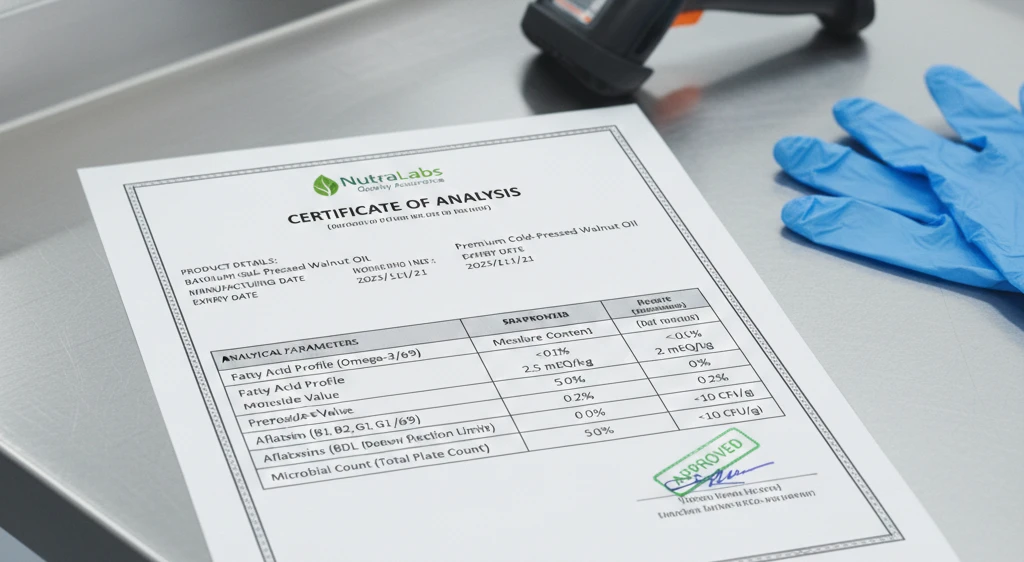
A Certificate of Analysis (COA) is the primary quality document in food ingredient trading. It reports the analytical test results for a specific batch of product, confirming that the ingredient meets agreed specifications. For procurement teams, reading a COA correctly means knowing which parameters matter for your ingredient category, recognising red flags that suggest an unreliable or fabricated document, and cross-referencing results against EU regulatory limits and your own purchase specifications.
In short:
Experienced procurement professionals develop an eye for COAs that look “too perfect” or contain inconsistencies:
Every result exactly at the specification limit. Real analytical results show natural variation. If moisture is specified as “max 12%” and the COA reports “12.0%” on every batch, the results are likely fabricated or adjusted.
No batch/lot number or generic batch numbers. A COA without a traceable lot number is worthless for traceability purposes. Generic numbers like “2025/001” shared across multiple deliveries suggest the COA is being recycled.
In-house testing only with no third-party verification. Supplier self-testing creates an obvious conflict of interest. For high-risk ingredients, request independent laboratory analysis or split-sample testing.
Outdated or vague test methods. If the COA says “moisture: oven method” without specifying the ISO/AOAC method number, you cannot verify the testing protocol. Modern COAs should reference specific standardised methods.
Analysis date far from production date. A COA analysed months before or after the production date suggests the results may not represent the actual batch. Shelf-life-sensitive parameters (peroxide value, FFA, microbiological) change over time.
Missing or untraceable laboratory. If you cannot verify that the listed laboratory exists and holds ISO 17025 accreditation for the relevant tests, treat the COA with suspicion. Search the laboratory’s name in national accreditation body databases.
Every ingredient category has parameters that matter beyond the standard microbiological and contaminant tests. Here's what to look for by category.
| Ingredient Category | COA Parameters |
| Oils | Peroxide value, FFA, iodine value, colour (Lovibond), fatty acid profile, trans fat content |
| Herbs & spices | Essential oil content, ASTA colour (paprika/chili), coumarin (cinnamon), SHU (chili), food fraud authentication |
| Nuts & seeds | Aflatoxin (B1 + total), peroxide value, moisture, shell fragment content, ethylene oxide residue |
| Frozen fruits & vegetables | Core temperature, Brix (fruit), size/cut tolerance, drip loss, pesticide residues |
| Proteins | Protein content (dry basis), amino acid profile, solubility, heavy metals, allergen testing |
| Juice & concentrates | Brix, acidity (ratio), sugar profile (HPLC), essence content, Codex compliance |
| Dried fruits | SO₂ level, moisture/water activity, aflatoxin, pesticide residues, colour grade |
| Beans & pulses | Moisture, defect %, foreign matter, cooking time uniformity, pesticide residues |
A robust COA verification process includes these steps:
In-house COAs provide useful data but carry an inherent conflict of interest. For routine parameters on low-risk ingredients from trusted suppliers, in-house results are acceptable. For high-risk ingredients, food safety parameters (aflatoxins, Salmonella, pesticides), and new suppliers, always request or conduct independent third-party analysis.
ISO 17025 is the international standard for testing and calibration laboratories. Accredited laboratories demonstrate competence in specific test methods, maintain quality management systems, and participate in proficiency testing. Results from ISO 17025-accredited labs carry legal weight and are accepted by regulators and auditors.
Retain COAs for at least the shelf life of the ingredient plus one year, or as required by your GFSI standard (BRC requires minimum one year beyond shelf life). Digital archiving linked to batch/lot numbers enables rapid retrieval during audits or incidents.
If a COA is missing a parameter from your purchase specification, request the supplier to provide supplementary analysis before accepting the delivery. Common omissions include water activity (aw), specific allergen testing, and authenticity markers. Your purchase contract should specify which COA parameters are mandatory.
Source quality-verified ingredients from GFSI-certified suppliers on Nutrada. Every supplier profile includes certification details and quality documentation standards.

Find the right supplier for your food ingredients in under a minute with Nutrada. Nutrada - Sourcing made easy.