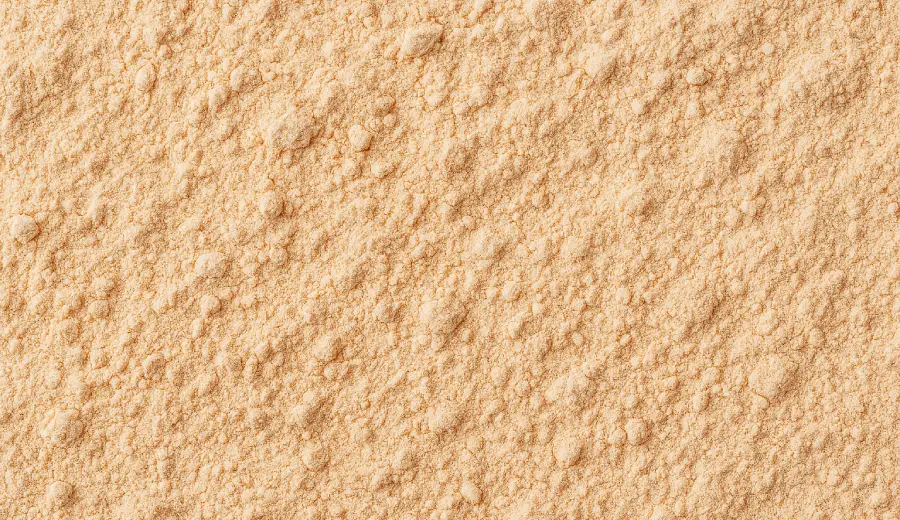
Verifying vitamin C content is the first challenge when sourcing baobab in bulk. Nutrada lists GFSI-certified baobab suppliers with 6x vitamin C of oranges so procurement teams can compare and request quotes directly. Baobab suppliers on Nutrada offer fruit powder from sub-Saharan Africa with prebiotic fibre content up to 50% for beverage and supplement applications.
| Field | Detail |
| Botanical name | Adansonia digitata |
| Available forms | Fruit powder, seed oil |
| Origins | Senegal, Ghana, Malawi, Mozambique, Zimbabwe, South Africa, Tanzania, Kenya |
| Certifications | USDA Organic, EU Organic, Kosher, FSSC 22000, Fair Trade |
| Common applications | Beverages, bakery, dairy, supplements, baby food, confectionery |
| Packaging | 20-25 kg food-grade bags |
| MOQ | 100 kg |
| Category | Superfoods Wholesale |
| Form | What it means for procurement | Typical application |
| Fruit powder | Wild-harvested pulp, minimally processed, naturally dehydrated | Beverages, smoothies, functional drinks |
| Seed oil | Cold-pressed from baobab seeds, cosmetic and food grade | Premium food applications, cosmetics |
The fruit naturally dehydrates on the tree, requiring minimal processing compared to other superfoods like Acai or Maca.
Sub-Saharan Africa dominates global baobab supply through wild-harvesting operations across eight primary origins. Senegal and Ghana provide consistent EU-destined volumes through established export infrastructure, while Malawi offers Fair Trade certified supply with community development programs. Zimbabwe and South Africa supply from mature tree populations above 1,000 meters elevation, which produces higher mineral density fruit according to Baobab Exports processing data. Tanzania and Kenya provide seasonal volumes dependent on rainfall patterns, creating supply concentration risk during drought years. Wild-harvesting supports local communities but makes supply volumes weather-dependent compared to cultivated superfoods.
Baobab fruit powder is hygroscopic and requires storage below 20 degrees Celsius with maximum 8% moisture to maintain shelf life up to 24 months. Standard packaging uses 20-25 kg food-grade bags with inner food-safe liners. Check the vitamin C content on the latest CoA before ordering, as levels vary by harvest season and storage time since processing.
Senegal, Ghana, and Malawi hold both EU Organic and USDA NOP certification for wild-harvested baobab fruit powder. South African suppliers typically offer EU Organic only, while Mozambique and Zimbabwe supply conventional grades with organic certification development ongoing.
Consumer packaging includes pouches, jars, sachets for direct consumption, and single-serve sachets for beverage mixing. MOQ for private label starts at 500 kg due to custom packaging requirements. Fix the prebiotic fibre claim on your label before production starts, as different suppliers test different fibre fractions.
Manufacturers concentrate in Netherlands and California warehouses for EU and US distribution, with processing facilities located near African harvest regions. Request batch-specific CoA, microbiological reports, and vitamin C analysis from suppliers. Ask for Fair Trade documentation where community support claims appear on your final product labeling. Nutrada lists GFSI-certified baobab suppliers from sub-Saharan Africa, covering fruit powder and seed oil across conventional and organic supply. All orders are placed directly with certified suppliers, with no intermediary.
Last updated: Apr 6, 2026

Find the right supplier for your food ingredients in under a minute with Nutrada. Nutrada - Sourcing made easy.