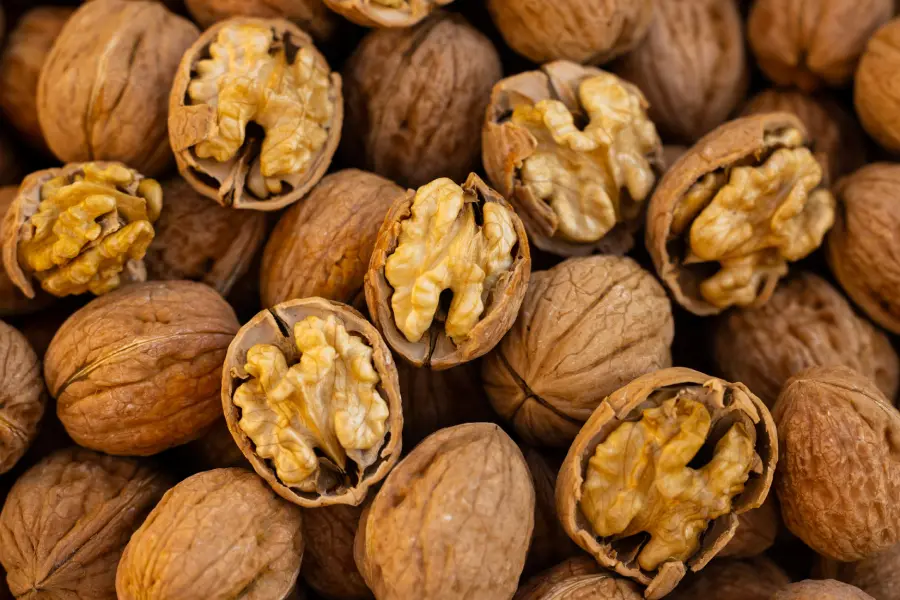
Whole walnut halves and broken pieces are not interchangeable, sourcing the wrong grade for visual applications means you cannot sell at the price you calculated. Nutrada lists GFSI-certified walnut suppliers from California, Chile, China, and Turkey, filterable by grade and form, so you can match the right supplier to your specification before placing an order.
| Botanical name | Juglans regia (Persian / English walnut) |
| Commercial grades | LH80 (Light Halves 80%), LH50, LQ&B (Light Quarters & Brokens), Combo (Halves & Pieces) |
| Available forms | In-shell, shelled halves, quarters, pieces, chopped, walnut meal, cold-pressed walnut oil |
| Key origins | China, USA (California), Chile, Turkey, Ukraine, Moldova |
| Applications | Confectionery, bakery, granola, nut mixes, walnut milk, sauces, protein bars |
| Certifications | GFSI (BRC, IFS, FSSC 22000), EU Organic, USDA NOP, non-GMO |
| Packaging | 10 kg or 20 kg vacuum-sealed cartons; 25 kg cartons for pieces |
| MOQ | From 25 kg (varies by grade and supplier) |
| Category | Nuts |
Commercial walnut grading is based on the percentage of intact halves and colour class. Grade determines application suitability and pricing: LH80 has a significant higher price over LQ&B because whole halves are required for visual-quality applications such as chocolate coating and premium retail packs, where broken pieces are a reject, not a substitution.
Colour grading (extra light, light, light amber, amber) affects flavour intensity and shelf-life perception; lighter kernels indicate lower tannin content and milder flavour, preferred in most European retail and confectionery markets.
| Grade | Halves % | Colour | Primary application |
| LH80 (Light Halves 80%) | ≥80% whole halves | Light (extra light preferred) | Premium retail, chocolate enrobing, garnish |
| LH50 (Light Halves 50%) | ≥50% whole halves | Light | Bakery, granola, mixed nut products |
| LQ&B (Light Quarters & Brokens) | Quarters and pieces | Light | Sauces, spreads, energy bars, chopped toppings |
| Combo (Halves & Pieces) | Mixed | Light to medium | Cost-effective bulk input for baking and manufacturing |
In-shell walnuts are traded primarily from Ukraine, Moldova, and China for markets where in-shell cracking is part of the processing chain. Shelled halves from California and Chile dominate the European food manufacturing import market.
Walnuts have a high polyunsaturated fat content (approximately 47% of total fatty acids as linoleic acid), which makes them more susceptible to oxidative rancidity than most other tree nuts. Vacuum packaging is standard for halves and quarters. The standard bulk format is 10 to 20 kg vacuum-sealed cartons; shelf life is 12 to 20 months at cool, dry storage below 15°C.
The California harvest runs from September to November and drives the majority of European annual purchasing contracts. Chilean walnuts are harvested through April to June and they offer a useful supply cycle alternative for buyers seeking to manage price risk across calendar years.
California is the largest source of USDA NOP-certified organic walnuts, with dual EU/USDA certification available from established Californian producers.
Chile is a growing source of certified organic walnuts with strong export infrastructure and lower unit cost than California for equivalent grades.
Ukraine and Moldova produce organic walnuts under EU Organic certification at lower price points, primarily in LH50 and LQ&B grades. Request the Certificate of Inspection (COI) for each shipment alongside the producer's organic certificate for EU import compliance.
Private label walnut formats include 250 g, 500 g, and 1 kg resealable pouches in halves, halves and pieces, and chopped variants.
Walnut halves in transparent packaging benefit from LH80 or premium LH50 grade, where visual presentation is part of the consumer proposition.
Chopped and piece formats are typically LQ&B grade, suitable for baking-positioned products.
Walnut flour (finely milled from blanched kernels) is a growing private label format for gluten-free baking; this is a distinct procurement item from standard shelled walnuts and requires a separate specification.
China is the dominant commodity-grade walnut supplier, covering all grades from LH80 halves to pieces and chopped at lower unit cost than California or Chile, but with greater variability in colour grading and less consistent food safety documentation; supplier qualification is more involved than for California or Chilean origins.
Nutrada lists GFSI-certified walnut suppliers from California, Chile, China, and Turkey, covering LH80 through LQ&B grades in conventional and organic-certified options.
Last updated: Apr 6, 2026

Find the right supplier for your food ingredients in under a minute with Nutrada. Nutrada - Sourcing made easy.