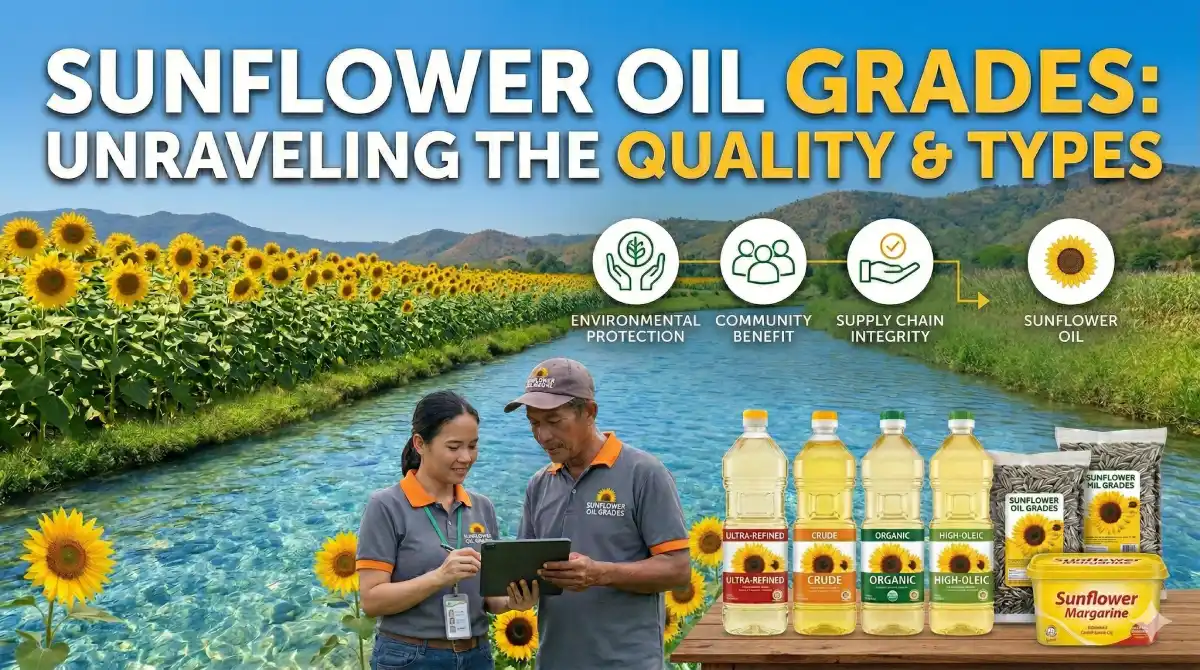
Sončnično olje is traded in three distinct types based on fatty acid composition: standard (linoleic, 60–70% linoleic acid), mid-oleic (NuSun, 55–75% oleic acid), and high-oleic (80%+ oleic acid). For food manufacturers, the type of Sončnično olje affects how well it handles heat, how long products stay fresh, and what goes on the label. Visokooleinsko Sončnično olje has become the go-to replacement for partially hydrogenated oils because it is trans-fat-free and performs well in frying.
In short:
The three grades differ primarily in fatty acid composition. Higher oleic acid content means better heat and shelf stability, but at a higher price.
| Parameter | Standard (Linoleic) | Mid-Oleic (NuSun) | High-Oleic |
| Oleic acid | 14–39% | 55–75% | 80%+ |
| Linoleic acid | 48–74% | 15–35% | <10% |
| Oxidative stability | Low | Moderate | High (3–5x standard) |
| Frying life | Shortest | Moderate | Longest |
| Shelf stability | Shortest | Moderate | Longest |
| Smoke point | ~230°C | ~230°C | ~230°C |
| Trans fat | Zero | Zero | Zero |
| Price | Baseline | 5–10% premium | 10–20% premium |
| Main use | Dressings, general cooking, cost-driven applications | Balanced frying and shelf life where premium isn't justified | Industrial frying, snacks, PHO replacement, extended shelf-life products |
The critical difference is oxidative stability. Standard Sončnično olje’s high polyunsaturated fat content (linoleic acid) makes it prone to oxidation, reducing frying life and creating off-flavours in stored products. Visokooleinsko Sončnično olje’s monounsaturated profile resists oxidation similar to Oljčno olje, without the olive flavour or cost.
Mid-oleic Sončnično olje occupies a practical middle ground that is often overlooked. With 55–75% oleic acid content, it offers meaningfully better oxidative stability than standard linoleic Sončnično olje while costing less than true high-oleic grades. For applications where extreme frying stability is not required (baked goods, dressings, sauces) mid-oleic delivers a sensible cost-performance balance. The main limitation is supply availability: mid-oleic varieties are less widely planted than either standard or high-oleic, making consistent year-round procurement more challenging.
MOAH/MOSH (mineral oil aromatic/saturated hydrocarbons) testing is increasingly expected by European retailers and is likely to become mandatory in the near future. Mineral oil contamination can enter the oil supply chain from jute bags, printing inks, lubricants in processing equipment, or environmental contamination. For proactive procurement, start requesting MOAH/MOSH analysis on every vegetable oil shipment now, ahead of regulation, to establish baseline data and identify any supplier-level issues before they become a compliance problem.
3-MCPD and glycidyl esters are contaminants formed during the refining process, particularly at high deodorisation temperatures. EU Regulation2020/1322sets maximum limits for glycidyl fatty acid esters in vegetable oils at 1,000 μg/kg. Reputable refineries have adjusted their deodorisation parameters to stay well below these limits, but not all suppliers have made the investment. Request 3-MCPD and GE analysis alongside your standard COA parameters, if a supplier resists providing this data, it may indicate their refining process has not been optimised for these contaminants.
No. They come from differentsonflower seedvarieties bred for different fatty acid compositions. High-oleic varieties contain 80%+ oleic acid vs 14–40% in standard. The resulting oils have significantly different oxidative stability, frying performance, and shelf life. Always verify the fatty acid profile on the COA.
In many frying and snack applications, yes. Visokooleinsko Sončnično olje provides comparable oxidative stability to palm olein. However, it is liquid at room temperature, so it cannot directly replacepalmin stearinin applications requiring solid fat (margarine, confectionery coatings) without additional processing.
Ukraine and Russia together supplied over 60% of global Sončnično olje. The 2022 conflict caused severe supply disruption, price spikes of 50–100%, and forced European manufacturers to diversify. Supply has partially recovered, but many buyers have permanently diversified their sourcing to include Argentina, Turkey, and EU domestic production.
Refined standard Sončnično olje has a shelf life of 12–18 months in sealed, cool, dark storage. Visokooleinsko Sončnično olje lasts 18–24 months due to superior oxidative stability. Once opened or heated, monitor peroxide value regularly to assess remaining useful life.


Najdite pravega dobavitelja sestavin za živila v manj kot eni minuti z Nutrado. Nutrada - nabava poenostavljena.